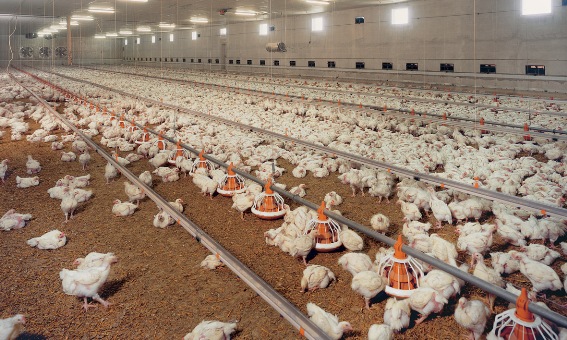


The numbers: stability on farms, chaos in the skies
Between 29 November 2025 and 27 February 2026, 406 outbreaks in domestic poultry were recorded across 32 European countries. Looking at our farms, the figure is “normal” (within what can be expected in this new era of endemicity), but when we look up, the data are alarming: 2,108 detections in wild birds. That is three times more than last year and five times more than two years ago. We have never had so much viral load circulating overhead in the past five years.
EFSA REPORT | QUARTERLY SUMMARY
Winter 2025–26: HPAI detections in wild birds triple the previous year’s figure, and avian influenza reaches European dairy cattle for the first time
Today, Friday 20 March 2026 at 15:46, we enter astronomical spring, which will be with us until 21 June. This, together with the fact that just days ago EFSA, the ECDC and the EU Reference Laboratory for Avian Influenza (EURL) published their 36th quarterly report on the situation regarding the greatest threat hanging over European chickens and hens — highly pathogenic avian influenza (HPAI) — has led us to analyse the document and summarise its main findings here.
The report, published on 11 March 2026, covers the period from 29 November 2025 to 27 February 2026 and confirms that H5N1 circulation in waterfowl has reached its highest level in five years, with nearly 16 million birds culled on European holdings and first serological evidence of exposure in dairy cattle in the Netherlands. The full document is available in the official EFSA PDF (63 pages). Below, we present the key points for the professional poultry sector.
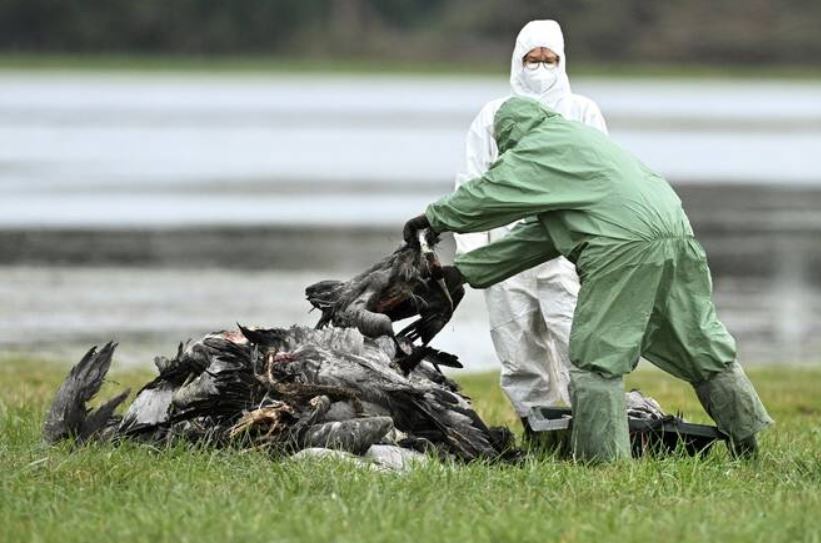
H5N1 circulation in European wildlife is without recent precedent.
Overview: 2,514 detections in 32 countries, but a downward trend
Between 29 November 2025 and 27 February 2026, 2,514 HPAI A(H5) detections were reported in domestic (406) and wild (2,108) birds across 32 European countries. Although the absolute figures remain high, the weekly number of detections has followed a sustained downward trend since the peak recorded in late November 2025, in line with the usual seasonal pattern heading into spring.
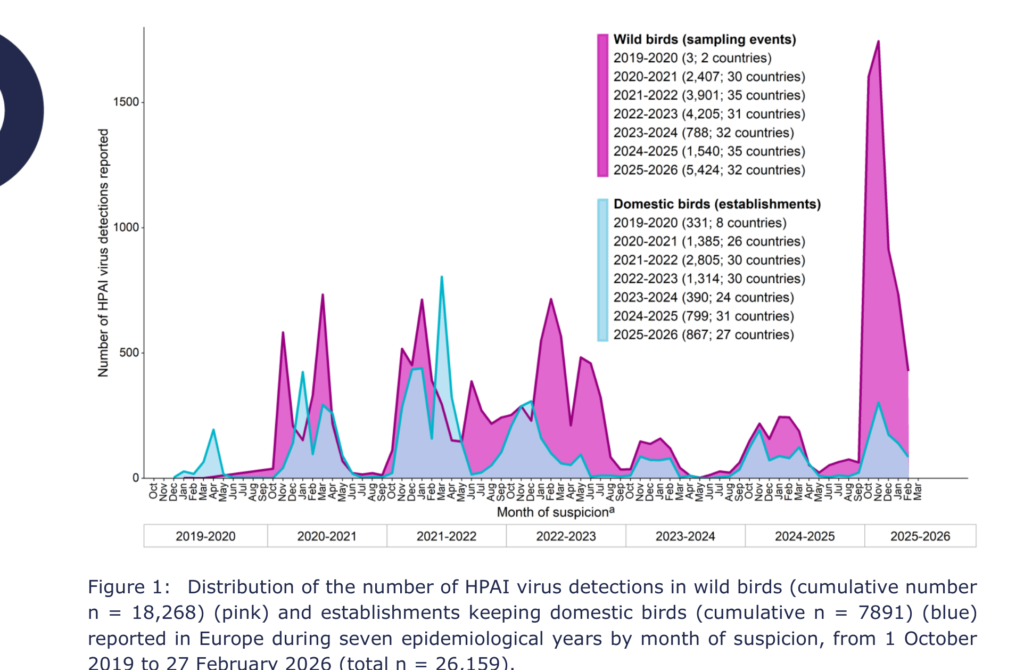
Figure 1. Cumulative HPAI detections in wild birds (pink) and domestic poultry holdings (blue) in Europe over seven epidemiological years (Oct 2019 – Feb 2026). Source: EFSA, ADIS and WOAH-WAHIS.
The most significant finding of this quarter: detections in wild birds tripled those of the same period the previous year and were almost five times higher than two years ago. This speaks to a level of viral circulation in wildlife without recent precedent for this time of year, with waterfowl as the primary species affected.
2,108 detections in wild birds in a single quarter:
three times more than the same period in 2024–25
and
almost five times more than in 2023–24.
Period summary card
| Indicator | Data |
| Period | 29 November 2025 – 27 February 2026 |
| Report | EFSA AI Report XXXVI (pub. 11 March 2026) |
| Countries affected | 32 |
| Total HPAI A(H5) detections | 2,514 |
| In poultry | 289 outbreaks in 18 countries |
| In captive birds | 117 outbreaks |
| In wild birds | 2,108 detections |
| Birds dead/culled on farms | ~15.9 million (+27% vs previous quarter) |
| Dominant subtype | A(H5N1) — 99.7% of poultry outbreaks |
Primary outbreaks (poultry) | 82% (direct introduction from wildlife) |
| Secondary outbreaks (poultry) | 9% (farm-to-farm) |
Detections in mammals | Slight increase; first serological finding in dairy cattle (NL) |
| Human cases (period) | 10 (none fatal); Cambodia 1 H5N1, China 8 H9N2 + 1 H10N3 |
| Risk to the general population (ECDC) | LOW |
| Risk to occupationally exposed individuals | LOW–MODERATE |
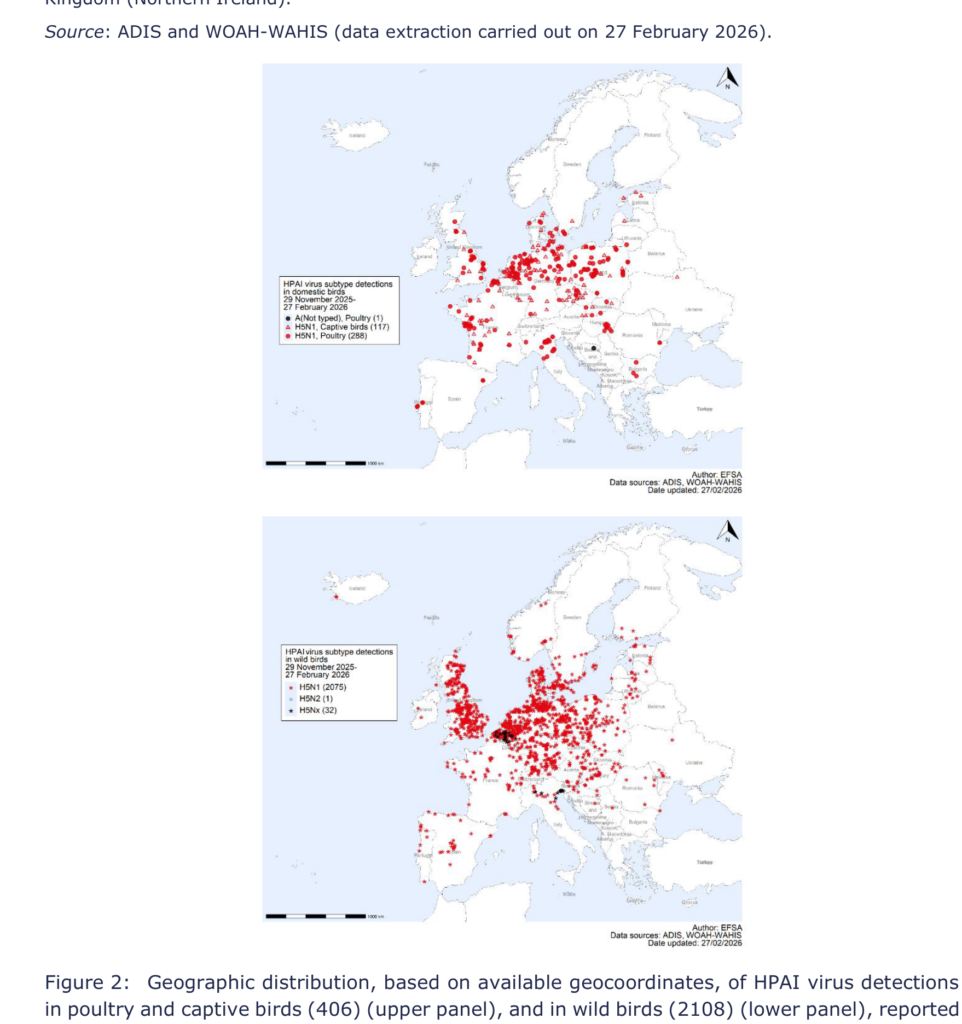
Figure 2. Geographical distribution of HPAI detections in poultry and captive birds (upper panel) and in wild birds (lower panel), by subtype, Nov 2025 – Feb 2026. Source: EFSA.
Nearly 16 million birds culled in a single quarter: the economic and productive cost of avian influenza to European poultry farming remains enormous.
Poultry: 289 outbreaks, nearly 16 million birds culled
During the period under review, 289 outbreaks in poultry were recorded across 18 countries. The most affected countries by number of outbreaks were Poland (59), Germany (51), France (39), Italy (37), the United Kingdom (25), the Netherlands (22), Belgium (11) and Hungary (11). In total, nearly 16 million birds died or were culled, a 27% increase on the previous quarter. Poland and Germany accounted for 38% of outbreaks and 45% of birds culled.
82% of outbreaks were classified as primary, i.e. independent introductions attributable to indirect contact with wild birds, and only 9% as secondary (farm-to-farm transmission). This is a key distinction: despite the very high level of viral circulation in wildlife, containment measures appear to be limiting the spread between holdings.
82% of poultry outbreaks were primary introductions from wildlife.
Farm-to-farm transmission was infrequent: only 9%.
Biosecurity and confinement measures are working.
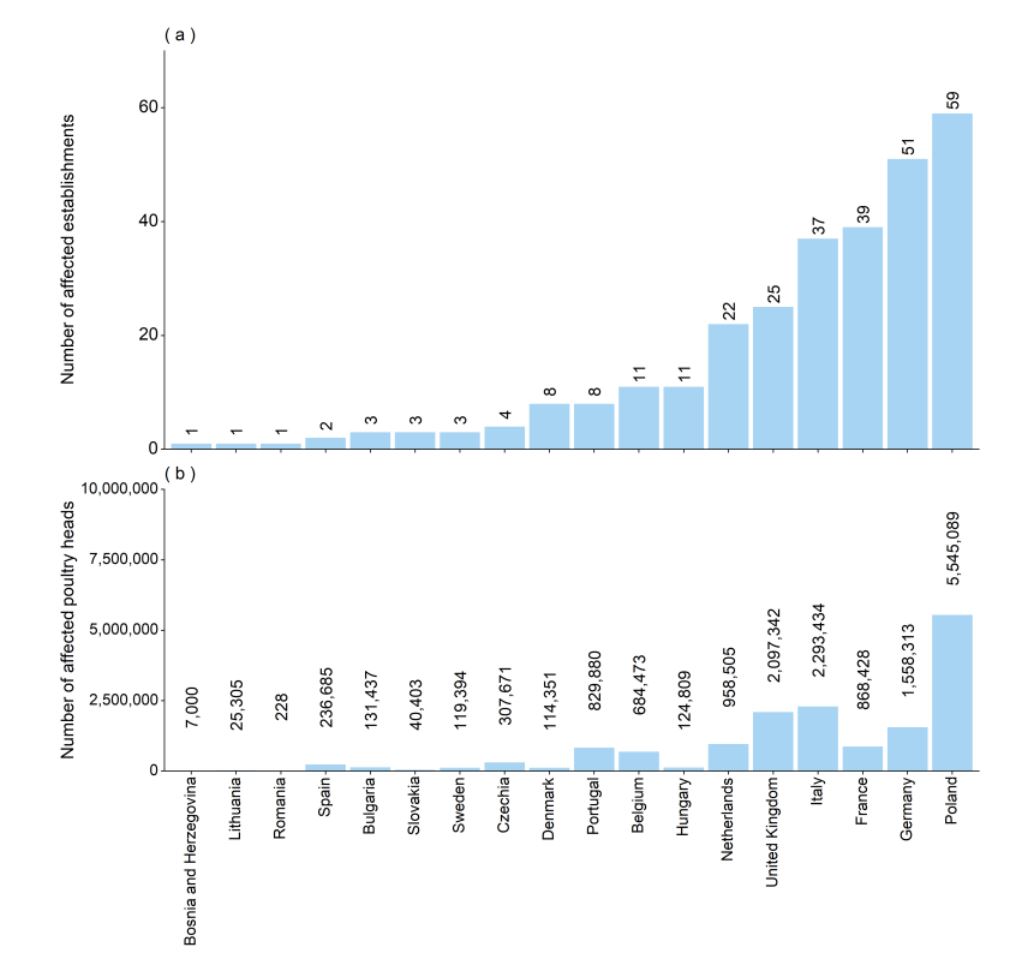
Figure 3. Number of affected holdings (a) and birds in those holdings (b) by country, Nov 2025 – Feb 2026. Source: EFSA, ADIS and WOAH-WAHIS. | Filename: Figura-3-brotes-aves-sacrificadas-pais-nov2025-feb2026.png
Poultry outbreaks by country (top 10)
| Country | Outbreaks | Birds affected | Main species |
| Poland | 59 | 5,545,089 | Fattening ducks, turkeys, layers |
| Germany | 51 | 1,558,313 | Fattening/rearing turkeys, chickens |
| France | 39 | 868,428 | Vaccinated ducks, turkeys, layers |
| Italy | 37 | 2,293,434 | Fattening turkeys, layers |
| United Kingdom | 25 | n.a. | Various species |
| Netherlands | 22 | 958,505 | Layers, broilers, ducks |
| Belgium | 11 | 684,473 | Broilers, breeders |
| Hungary | 11 | 124,809 | Foie gras geese, turkeys |
| Portugal | 8 | 829,880 | Ducks, turkeys, layers |
| Denmark | 8 | 114,351 | Layers, mixed holdings |
Spain: two outbreaks this quarter
Spain reported two H5N1 outbreaks during this period: one primary outbreak at a commercial layer holding (227,074 birds) notified on 22 December, with 0.35% mortality and clinical signs, and one secondary outbreak at a breeder farm (9,611 birds) close to the previous focus, notified on 8 January, with 1.92% mortality. A general confinement order was in force throughout the period. In the cumulative total for the 2025–26 epidemiological year, Spain records 7 outbreaks in poultry and 111 detections in wild birds. Further information (covering all of 2025) is available in the summary prepared by NeXusAvicultura on 29 December 2025:
France: 14 outbreaks in vaccinated ducks
Of the 39 poultry outbreaks in France, 14 occurred in vaccinated duck flocks (36% of the French total), including 8 in foie gras ducks and 4 in fattening ducks. None of these flocks had outdoor access. Mortality was generally low (median 0.13%), and three outbreaks showed neither mortality nor clinical signs, being detected through active or enhanced surveillance. As noted in previous reports, AI vaccination need not be an all-or-nothing strategy, and EFSA stresses that it is still premature to draw definitive conclusions on vaccine efficacy from these data.
Wild birds: unprecedented figures, with waterfowl as the primary victims
2,108 HPAI detections in wild birds were recorded this quarter, the highest figure for this time of year since records began (2016). Waterfowl (Anseriformes) were the most affected category, confirming the pattern already described in our summary of the previous report: after a summer dominated by colonial seabirds, autumn and winter return the spotlight to ducks, geese, swans and cranes.
Germany recorded by far the highest number of detections in wild birds (852 during the period, 2,914 cumulative since October), followed by the United Kingdom (344), Belgium (159), Poland (135), the Netherlands (112), Denmark (83) and France (53). The geographical distribution was concentrated along the central-western European axis, from Poland to the United Kingdom, extending into northern Italy.
nnnn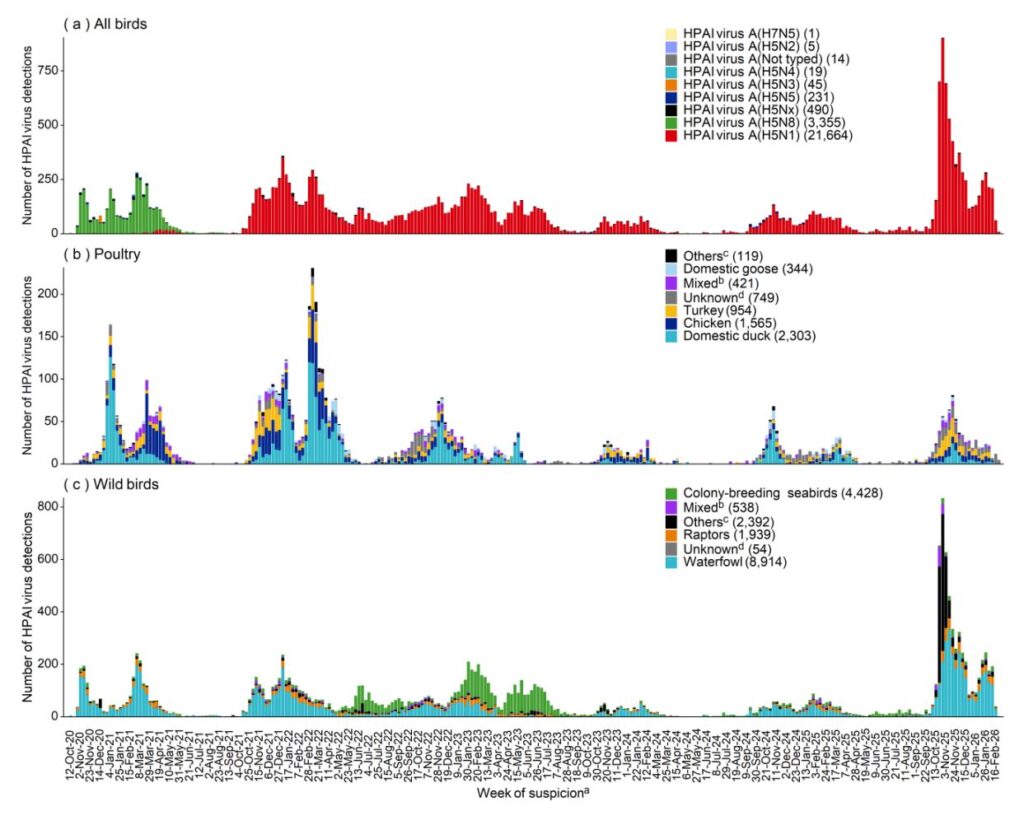
Figure 4. Temporal distribution of HPAI detections by week of suspicion and subtype (a), poultry category (b) and wild bird category (c), Oct 2020 – Feb 2026. Source: EFSA. | File name: Figura-4-evolucion-temporal-detecciones-IAAP-2020-2026.png
nnnnnnnnnThe environmental viral pressure from wildlife is the highest in the last five years. The H5N1 virus is firmly established in Europe’s migratory waterfowl populations, and this reality is here to stay.
n
Mammals: slight increase and first finding in European dairy cattle
nnnnThe high level of viral circulation in wild birds resulted in a slight increase in HPAI detections in mammals in Europe, mainly in wild carnivores (foxes) and domestic cats, in line with observations from previous quarters.
nnnnHowever, the most significant news is that, for the first time in the European Union, serological evidence of past exposure to HPAI was detected in a herd of apparently healthy dairy cattle in the Netherlands, suggesting a possible spillover event from wild birds. Follow-up investigations are ongoing. You can find more information in our article: “First detection of avian influenza antibodies in dairy cattle in Europe”.
nnnnnnnnnFor the first time in the EU, serological evidence of exposure to HPAI is found in dairy cattle (Netherlands). The virus made the jump. Investigations are still ongoing, but the signal is unequivocal: H5N1 is expanding its host range.
n
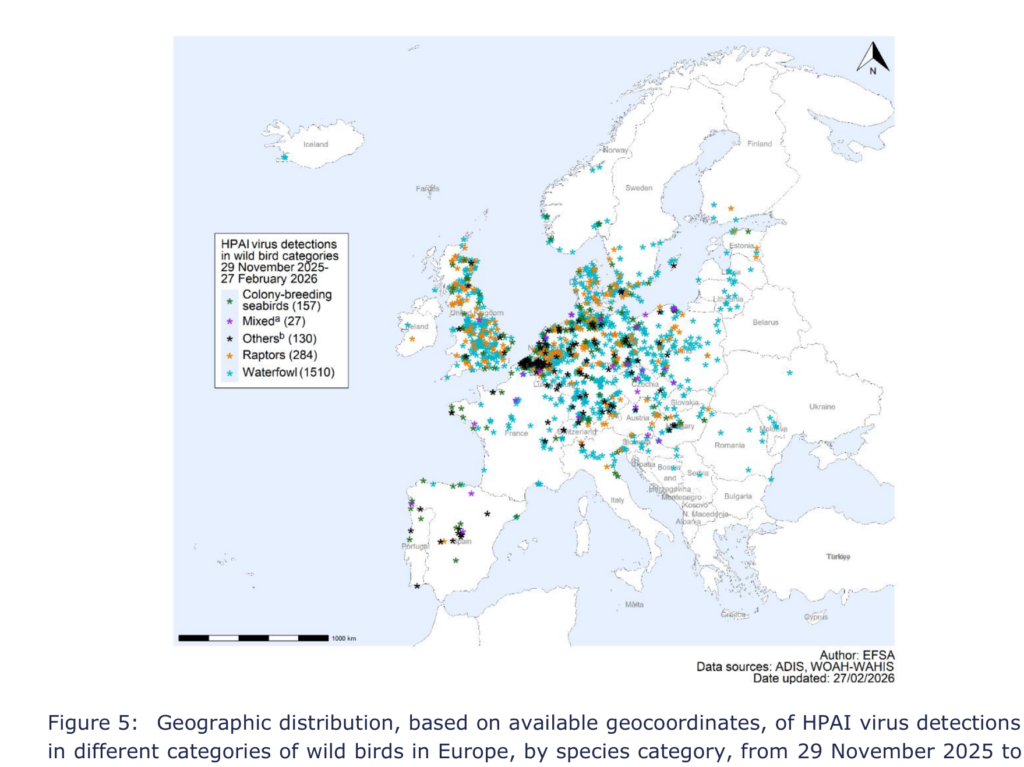
Figure 5. HPAI detections in non-human mammals in Europe, by species, up to 13 February 2026. Source: EFSA. | File name: Figura-5-detecciones-IAAP-mamiferos-Europa-2026.png
nnnnHumans: 10 reported cases, none fatal, no person-to-person transmission
nnnnBetween 29 November 2025 and 27 February 2026, 10 cases of human infection with avian influenza viruses were reported in two countries: Cambodia (1 case of H5N1) and China (8 cases of H9N2 and 1 case of H10N3). None were fatal. The majority of patients had had direct exposure to poultry or poultry environments. No cases of person-to-person transmission were documented.
nnnnThe ECDC maintains its risk assessment: low for the general population in the EEA, and low-to-moderate for persons with occupational exposure to infected animals or contaminated environments. The high level of viral circulation increases the likelihood of human exposure, although infections remain infrequent.
nnnnnnnnnFrance documents 14 outbreaks in vaccinated ducks: the vaccine reduces mortality but does not prevent infection. EFSA urges caution before drawing conclusions.
n
Viral genotypes: EA‑2024‑DI.2.1 continues to dominate
nnnnThe subtype A(H5N1) remained absolutely dominant (99.7% of poultry outbreaks). The sub-lineage EA‑2024‑DI.2.1, which as we already analysed in our previous report entered Europe via Israel and Georgia and rapidly spread to at least 17 countries, continued as the predominant variant in both wild and domestic birds during this period.
nnnnTo date, no mammalian adaptation mutations in PB2 or other markers associated with increased zoonotic risk have been identified in EA‑2024‑DI.2.1 viruses isolated from birds, which is reassuring, although genomic surveillance must remain a priority.
nnnn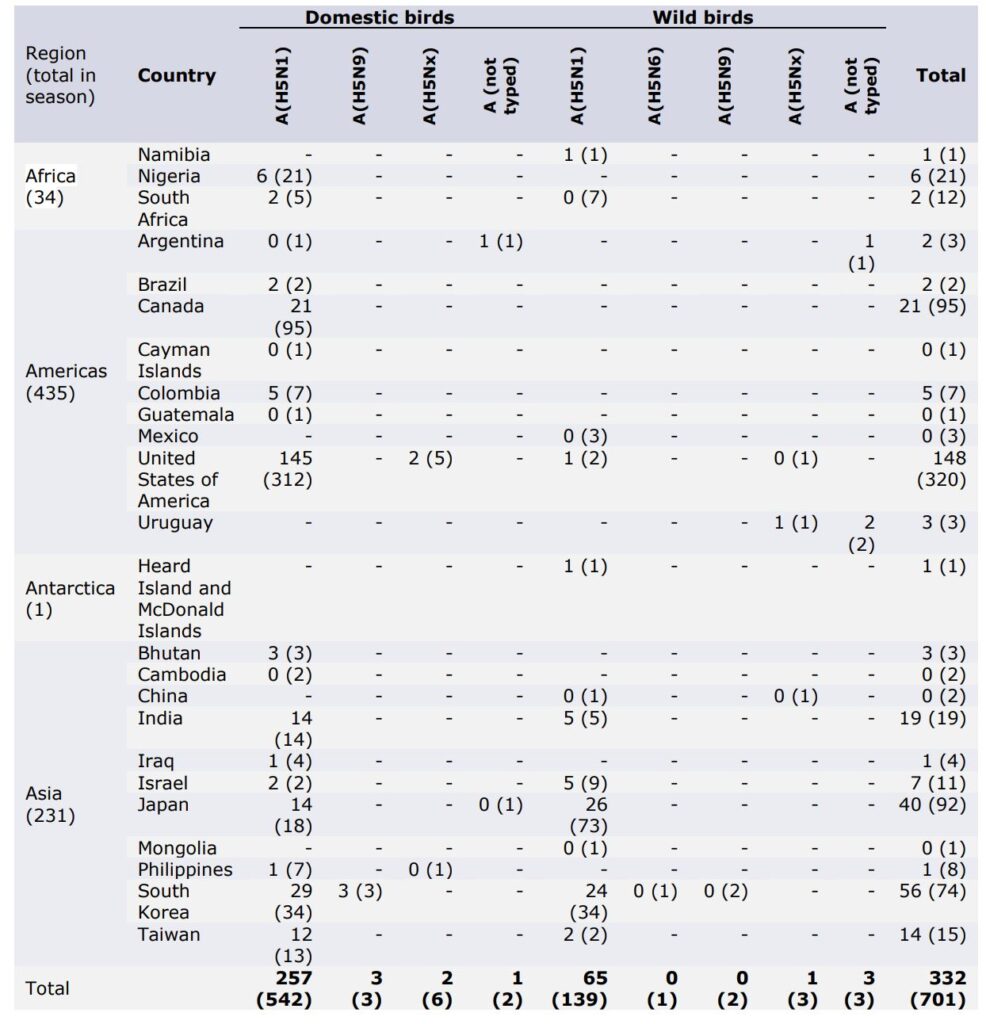
Figure 6. Number of HPAI (Highly Pathogenic Avian Influenza) virus detections in non-European countries reported to WOAH (World Organisation for Animal Health), by virus subtype and country, from 29 November 2025 to 27 February 2026. Cumulative figures since the start of the 2025–2026 epidemiological year are reported in parentheses (from 1 October to 27 February 2026).
nnnnnnnnnBiosecurity is not an expense, it is an investment. This report shows that, even under the highest viral pressure of the last five years, farms applying rigorous measures are succeeding in preventing secondary spread.
n
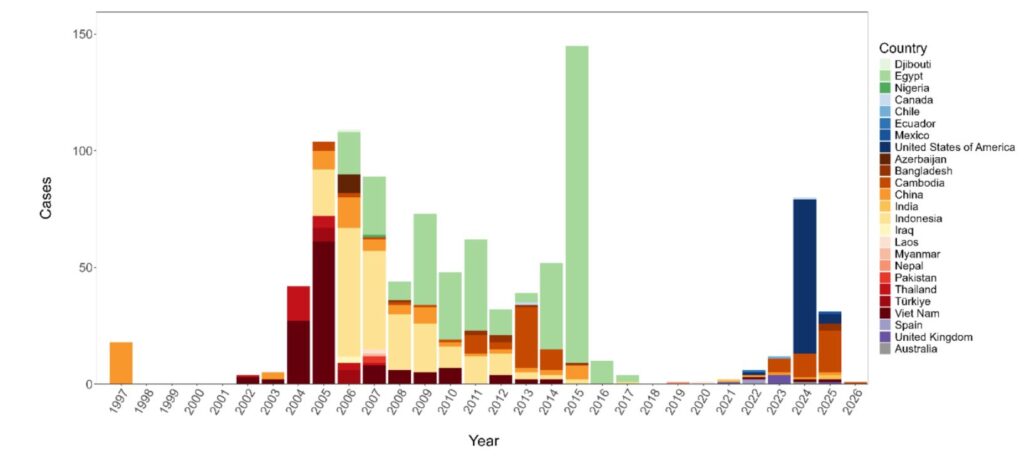
Figure 7. Distribution of reported human cases of infection with A(H5N1) virus by year of onset or detection and the country that reported them, from 1997 to 27 February 2026.
Note: The figure includes A(H5N1) detections attributed to presumed environmental contamination reported in 2022 by Spain (2) and the United States (1), and in 2023 by the United Kingdom (three detections, one of them inconclusive). Human A(H5) cases epidemiologically linked to A(H5N1) outbreaks on poultry farms and dairy cattle farms in the United States are included in the number of A(H5N1) cases. Source: Case list maintained by the ECDC.
The six Key Conclusions for the sector:
nnnn1. Environmental viral pressure remains extremely high. Although detections have been declining since the December peak, the cumulative level is by far the highest of the last five years. H5N1 is firmly established in Europe’s migratory waterfowl populations.
nnnn2. Biosecurity works, but is not infallible. The positive finding: farm-to-farm transmission was infrequent (9%) despite the enormous external pressure. Confinement orders and enhanced biosecurity measures are proving their worth.
nnnn3. Turkeys and laying hens in the spotlight. Along with ducks, they remain the most vulnerable species. High-density production areas (Wielkopolskie in Poland, Lower Saxony in Germany, northern Italy) concentrate the risk.
nnnn4. Vaccination in France raises more questions than answers. The 14 outbreaks in vaccinated ducks confirm that the vaccine reduces mortality but does not prevent infection. EFSA urges caution before drawing conclusions.
nnnn5. The spillover to dairy cattle in Europe is a warning signal. Although for now it involves serological evidence (past exposure in healthy animals), the finding in the Netherlands broadens the host spectrum and underlines the need for surveillance in the dairy sector.
nnnn6. The risk to public health remains low, but not zero. The ECDC maintains its assessment at the low level for the general population. Active protection and monitoring of exposed workers are essential.
nnnnnnnn
-. Avian Influenza on NeXusAvicultura.com
nnnnnnnn
To learn more, the NeXus selection:
-. 1st AI report of 2026. Quarterly update on Avian Influenza from Dec. 2025 to February 2026. News item on NeXusAvicultura.com
-. Avian influenza overview Dec. 2025 – Feb. 2026 (EFSA Report, 63 pages, 11 Feb.)
-. 4th AI report of 2025. Quarterly update on Avian Influenza from Sep. to Nov. 2025. News item on NeXusAvicultura.com
-. Avian influenza overview September-November 2025 (EFSA Report, 72 pages, 10 Dec.)
-. 3rd AI report of 2025. Quarterly update on Avian Influenza from June to Sep. 2025. News item on NeXusAvicultura.com
-. Avian influenza overview June–September 2025 (EFSA Report, 63 pages, 25 Sep.)
-. 2nd AI report of 2025. Quarterly update on Avian Influenza from March to June 2025.
-. 1st AI report 2025. Quarterly update on Avian Influenza from December 2024 to March 2025.
-. 4th AI report 2024. Quarterly update on Avian Influenza from Sep. to Dec. 2024.
-. 3rd AI report 2024. Quarterly update on Avian Influenza from June to Sep. 2024.
nnnn
Do you want to stay one step ahead in poultry farming?
Subscribe for free to our eNewsletter and receive a weekly selection
of the best information to anticipate trends, stay up to date and grow as a poultry industry professional.
NeXusAvicultura: Vision, Criteria, Quality and Context.