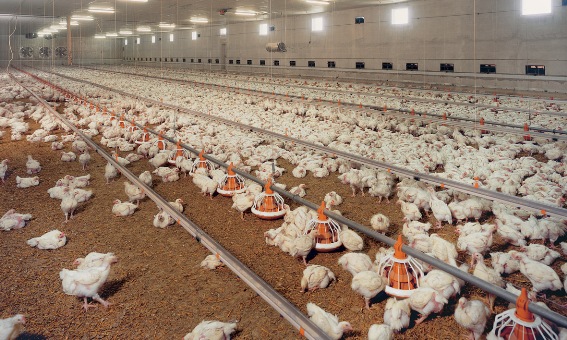


Alimentaria is not a poultry trade fair, but it is a fair well worth attending for all of us working in the poultry industry. Here we explain which companies to visit and some of the most relevant products, innovations and trends in our sector. Don’t miss it.
As food producers, anyone who thinks they have nothing to gain from attending is making a strategic mistake. Intercarn brings together the leading companies that produce, process and market chicken and turkey meat in Spain. The innovations on display at Innoval demonstrate that the egg is being reinvented as a high-value-added product platform. And the foodservice channel — which is growing by 40% in exhibition space in this edition — is precisely the segment that drives the greatest demand for processed poultry meat.
For this reason, and fully aware that time is everyone’s greatest limiting factor, the events team at NeXusAvicultura has prepared this guide for the poultry professional attending Alimentaria 2026, enabling them to make the most of their time, go straight to the relevant stands and return home with first-hand information on who is making moves, who is innovating and where the market is heading. In a sector where information is a competitive advantage, that is invaluable.
Spoiler: not every relevant company is listed here, but every company mentioned in this article is indeed an exhibitor. For exhaustive searches, please refer to the official fair catalogue at https://www.alimentaria.com/
Federico Castelló
Alimentaria 2026: the guide to finding the most interesting poultry products and innovations without getting lost across 100,000 square metres
From 23 to 26 March, Barcelona becomes the global epicentre of the food industry. For the poultry professional — whether attending in person or simply wanting to keep up with this year’s trends — we offer a direct map to the companies and products that truly matter to the chicken, turkey and egg sectors.
Alimentaria celebrates its 50th anniversary with the most ambitious edition in its history. More than 3,300 companies from 70 countries, 100,000 square metres of exhibition space spread across seven halls at the Gran Via venue of Fira de Barcelona, and an expected turnout of over 110,000 trade visitors from 150 countries. The figures are impressive, but for the poultry professional the real challenge is different: finding, amid that ocean of exhibitors, stands and new products, what truly impacts their business.
At NeXus Avicultura we have thoroughly reviewed the official catalogue of the 3,100 exhibitors, the Innoval innovation space, and the new products from poultry sector exhibitors.
Intercarn: Alimentaria’s meat industry engine and the gateway to the poultry sector
Intercarn is, once again, the largest area within the entire Alimentaria fair. With more than 350 companies and an exhibition area exceeding 15,000 square metres — up 10% on 2024 — the meat hall accounts for 25% of all exhibition space and represents approximately 70% of Spain’s meat sector turnover. It is therefore the unmissable venue for any professional involved in the production, processing and marketing of poultry meat.
Anna Bosch, Chair of the Intercarn Organising Committee and CEO of Noel Alimentaria, has described the hall as the meeting point for the international projection of the Spanish meat sector, with a commitment to quality, sustainability, animal welfare and innovation as its pillars.
Key figures for the poultry professional to note: the Spanish meat industry closed 2023 with a turnover of €33.218 billion (27.3% of the food sector and 2.72% of GDP). Exports reached €10.583 billion, up 6% on the previous year. And household meat consumption in Spain grew 6.4% across all categories. The foodservice and out-of-home channels are emerging as the fastest-growing business lines, which explains the strong presence of processed products and convenience solutions at this edition. Spanish poultry meat has begun to reach new markets (with a temporary pause due to avian influenza) such as China, the Philippines, the Middle East, and others. This will be a long-term endeavour, but it is very positive that it has begun — much like the pork sector, which has had a head start of many years.
Confirmed poultry-focused companies: the map for going straight to what matters
The Alimentaria 2026 exhibitor catalogue is vast. For the poultry professional who does not want to waste time, we have identified the key companies with direct activity in poultry meat, eggs, or both. Here is the essential list:
1. Integrators and Major Poultry Corporations
The poultry sector is showcasing at Alimentaria its definitive transition from the sale of whole carcasses to the creation of high-value-added products. The large vertically integrated corporations are demonstrating their complete control over the supply chain, from incubation and feed through to the final processed product.
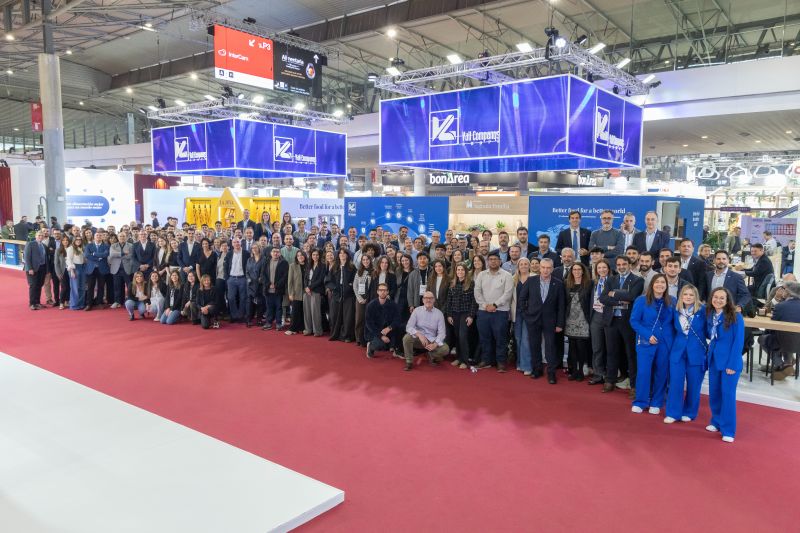
Grupo Vall Companys – Spain’s leading national chicken producer. Present at Intercarn. The group has recently consolidated its position at Inasur, strengthening its vertical integration capacity.
Grupo Coren – Spain’s largest agri-food cooperative, with integrated production in poultry (chicken, turkey and eggs), pork, beef and rabbit farming. Turnover exceeds €1 billion, supported by a network of 22 proprietary facilities spanning the entire chain from incubation to commercialisation. Presence confirmed at Intercarn.
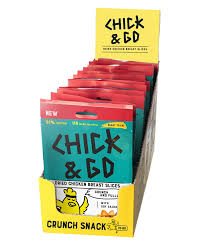
Grupo Uvesa – One of Spain’s leading chicken producers and a major player in the pork sector. With over 60 years of experience, the company operates through full vertical integration from the egg to the finished product. It offers retail, foodservice and industrial customers, both nationally and internationally, an extensive catalogue of fresh, frozen and processed white and certified yellow chicken products tailored to the demands of each market at any given time. Its acquisition by meat giant MHP provides it with a €100 million budget for acquisitions (the first of which was PAYAN), as well as the resources for innovation and international market development over the next four years, with the target of reaching 3 million chickens per week. Among its new products, the company highlights Chick&Go, 100% natural baked chicken breast snacks, and a ready-to-heat-and-enjoy chicken kebab for home consumption. These innovative products complement the company’s already extensive catalogue of meat solutions designed for real market needs.
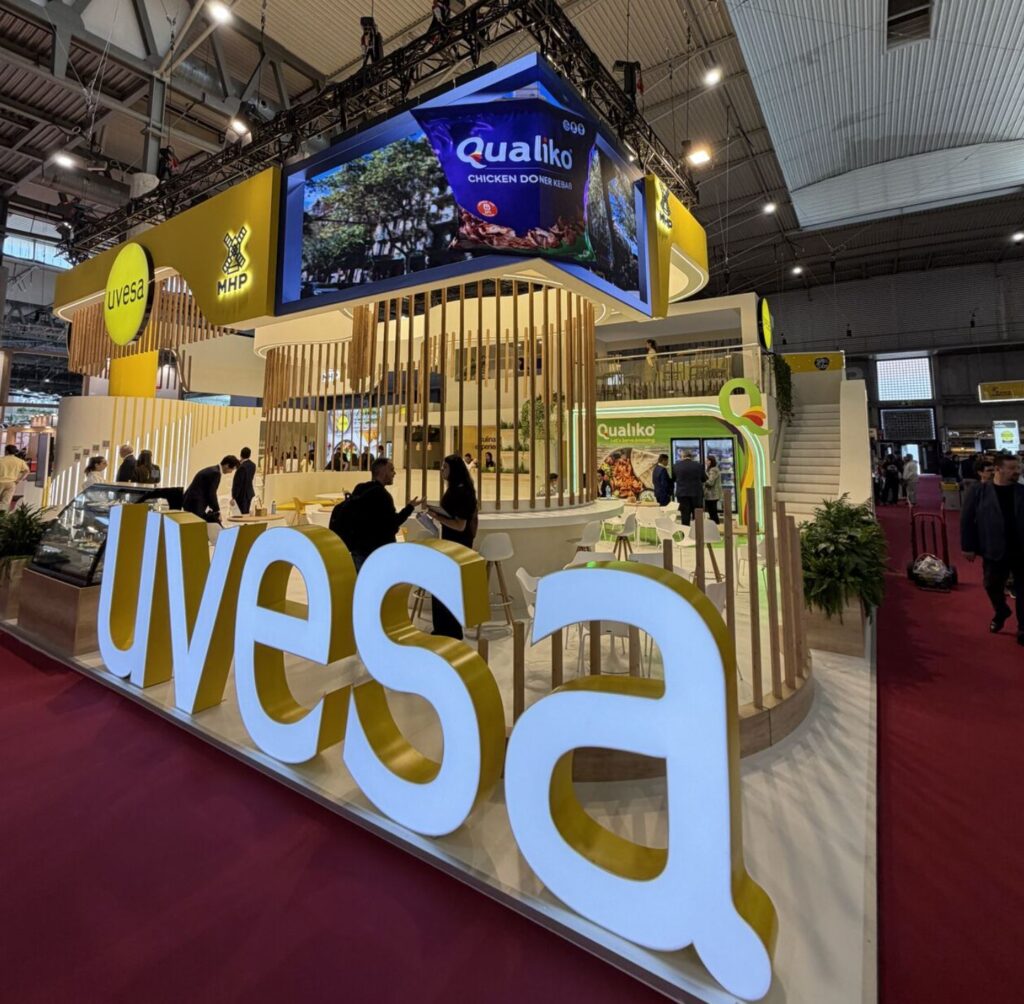
UVESA (MHP) stand at ALIMENTARIA 2026 on Monday 23 March 2026, with its QUALIKO chicken ready for kebabs in a prominent position
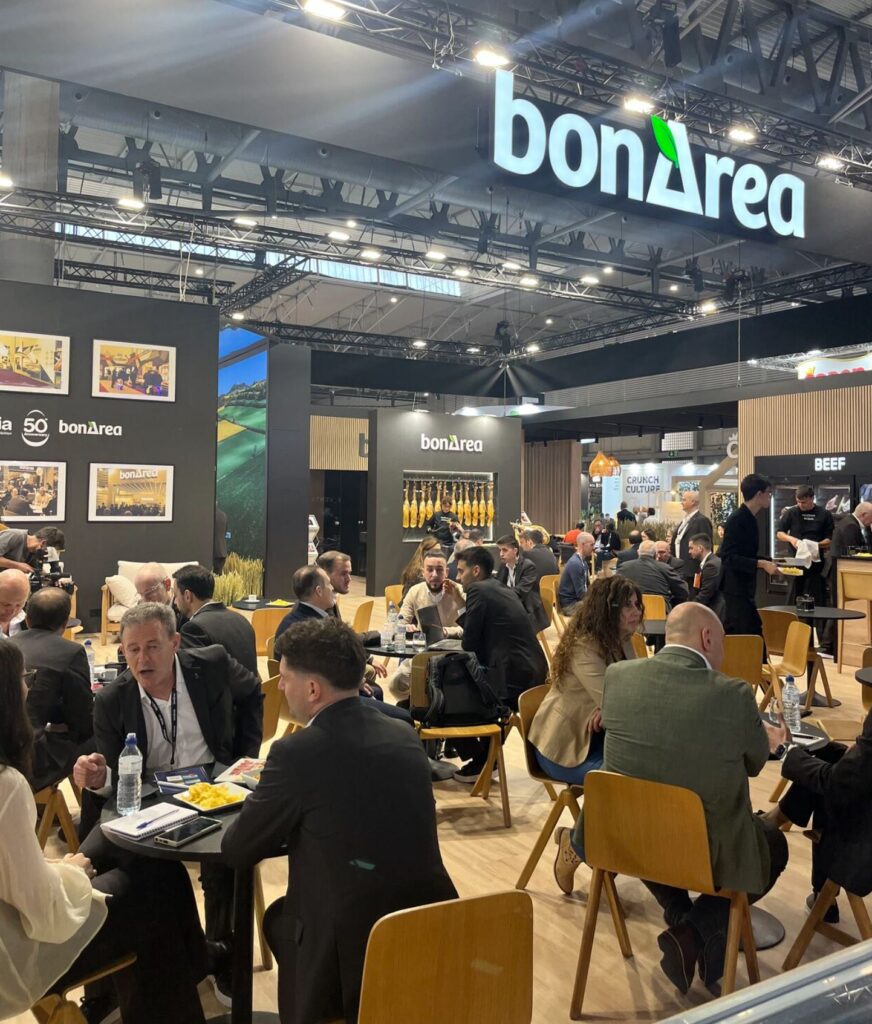
bonÀrea Corporación – The cooperative giant from Guissona (Lleida), with a turnover of €2.720 billion. Its poultry output includes 32 million chickens, 1 million turkeys, 38 million dozen table eggs and 1.9 million dozen quail eggs per year. It is one of the companies that has accompanied Alimentaria throughout its 50-year history. A model of complete vertical integration from farm to retail.
El Pozo Alimentación (Grupo Fuertes) – With more than 1.662 billion euros in turnover and 5,000 employees, the Murcian group has a prominent presence in processed meat products, including poultry products.
nnnnCosta Food Group (Piensos Costa) – An Aragonese group with more than 424 million euros in turnover, a leader in feed and pork production, with a growing presence in poultry.
nnnnGrupo Jorge – An Aragonese meat group with diversified activities that include poultry production.
nnnnGrup Baucells – A historic Catalan poultry group with integrated production of chicken and turkey.
nnnnAlso worth noting is the presence of AVÍCOLA PUJANTE and AVISERRANO, among others.
nnnnnnnn2- Foie Gras and Duck Meat Producers
nnnnAs in previous editions, companies such as MALVASIA, FoieGood, MARTIKO, among others, could not miss the 50th edition
nnnn3-. Egg Producers / Egg Product Producers
nnnnGranja Campomayor – This Galician company has established itself as the leading exponent of R&D in the national egg products sector. With revenues approaching 37 million euros, Campomayor goes beyond the traditional sale of free-range eggs. Its catalogue features cutting-edge innovations such as hydrolysed egg white, developed in collaboration with Ainia Network, and its highly successful “Low-temperature cooked eggs“, a technically highly complex product designed to replicate the fine dining experience for home consumption and in the commercial Horeca channel.
nnn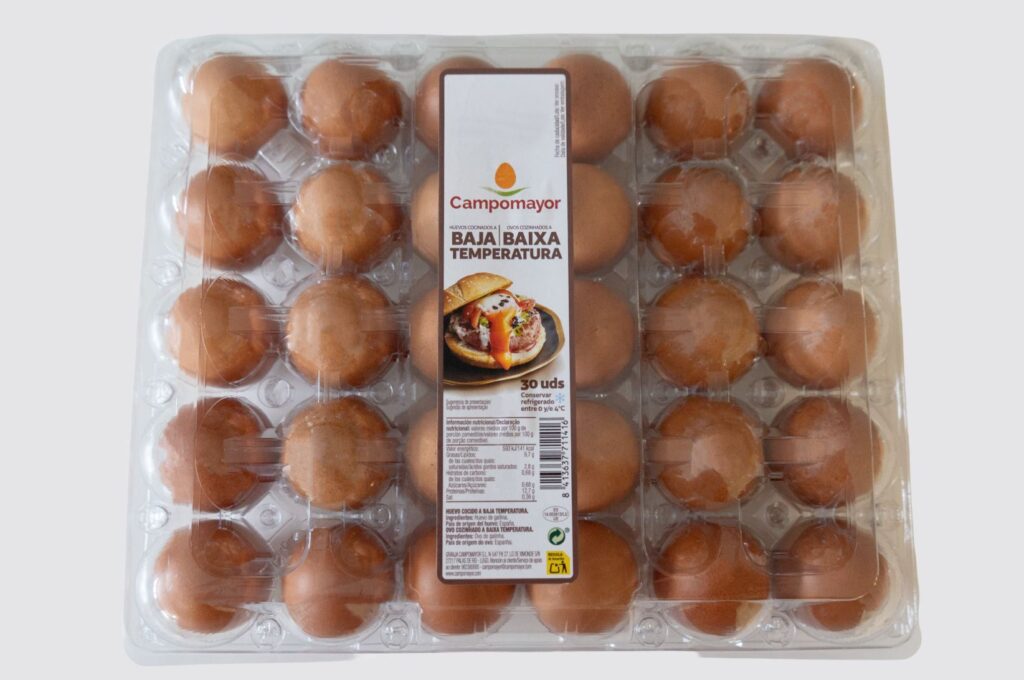
Hevo Group – Part of the international holding GLOBAL EGGS, which encompasses companies such as Ous Roig, DAGU, etc., will not be attending this edition of Alimentaria, but will be participating as an exhibiting company at the Salón Gourmets 2026 at the IFEMA trade fair in Madrid.
Agotzaina – Agotzaina is a global agri-food company primarily dedicated to the poultry sector with a vertical integration strategy. At its stand, it will showcase proposals in egg products, pre-cooked dishes, cheeses and meat products, as well as a dedicated R&D&I space focused on advisory services for the formulation and reformulation of egg-based protein products, tailored to the needs of the food industry, HORECA and distribution.
nnnn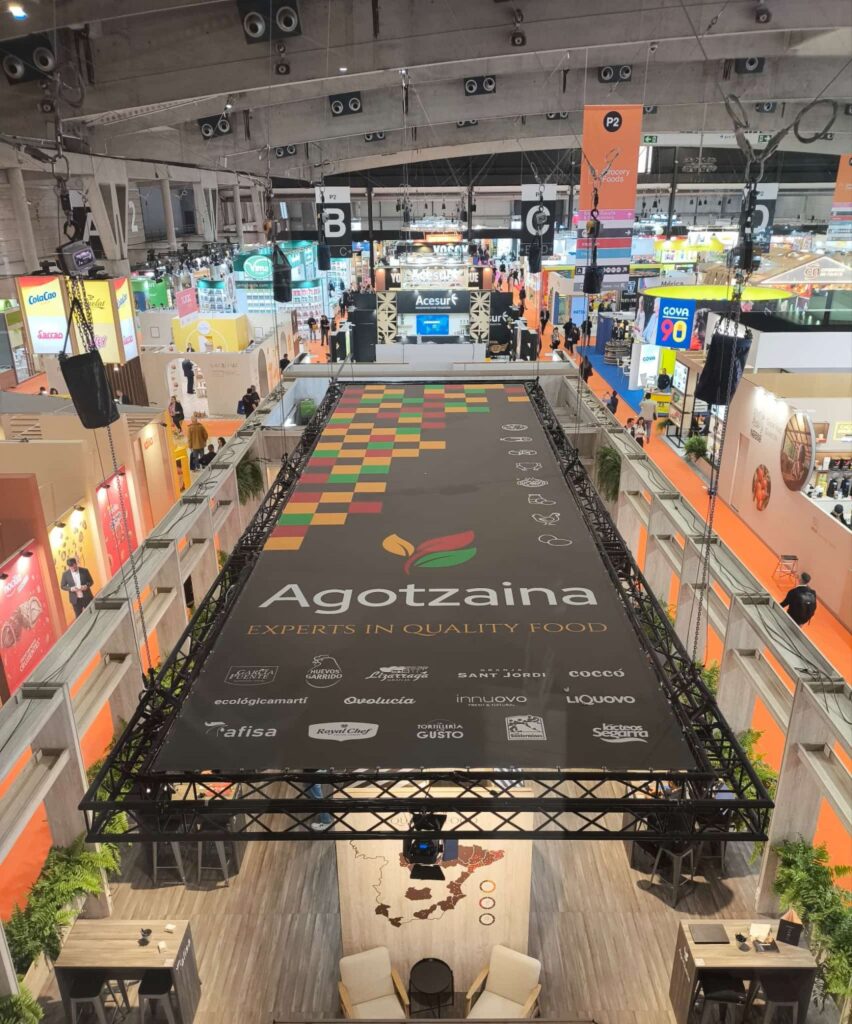
Álvarez Camacho – An Andalusian company that has disrupted traditional consumption formats. Its catalogue ranges from the “Ovoplus” product — a naturally modified egg containing 70% less cholesterol and 45% fewer calories — to ultra-convenience microwave solutions such as the “Egg ¡Boom!”. The company positions itself as the perfect ally for urban demographics concerned about cardiovascular health but with severe time constraints.
nnnnGranja Avícola Salvi – Granja Avícola Salvi is a family business located in Coín (Málaga) dedicated to the production, grading and distribution of high-quality fresh eggs. With more than two decades of experience in the poultry sector, it combines tradition and innovation to guarantee a natural, safe product of the highest freshness. Its facilities feature modern production and control systems that ensure full product traceability throughout the process, and it holds ISO certification, which endorses its quality and management standards. Thanks to its own logistics and distribution system, the company supplies directly to retailers, distributors and catering establishments, guaranteeing a fast service and a fresh product from the farm to the customer.
nnnn
Cooperativa La Dotzena – La Dotzena is a cooperative for the production and distribution of organic eggs committed to a fairer, more sustainable food model rooted in the local territory. The project brings together small-scale producers who work according to certified organic farming criteria, guaranteeing hen welfare, organic feed and a production system that respects the environment. The hens have access to spacious areas and the outdoors, enabling the production of fresh, high-quality eggs. The cooperative operates under social economy principles, with collective and transparent management that seeks to ensure decent working conditions and distribute the generated value equitably. La Dotzena is not merely an egg producer, but a project that promotes responsible eating, strengthens the local agricultural fabric and contributes to building a more sustainable and conscious agri-food system.
LIDEROU SL – Liderou is a family business dedicated to the production, grading and distribution of high-quality fresh eggs. With a long tradition in the poultry sector dating back to 1920, it combines experience and modern production systems to guarantee a natural, safe product with full traceability. The company holds IFS certification and operates its own logistics and distribution system, enabling it to supply fresh eggs directly to retailers, distributors and catering establishments.
nnnn4. International Operators and Technology Trading Platforms
nnnnThe global dimension of Alimentaria is evident in the participation of major European meat trading players and digital platforms that are transforming the sector’s logistics.
nnnnPolish poultry Council – POLISH POULTRY. The National Poultry Council – Chamber of Commerce (KRD-IG) is the largest poultry organisation in Poland. It associates more than 100 members from across the entire poultry sector, including breeding, reproduction, incubation, commercial production of poultry and eggs, processing and trade of poultry meat and derived products, poultry feed production and scientific and educational activities related to the Polish poultry sector.
nnnnMeat Borsa – This company represents the digitalisation of B2B commercial transactions in the agri-food sector. Meat Borsa is a technology platform designed to connect suppliers, processors and wholesale meat buyers from across Europe. Its objective at Alimentaria 2026 is to demonstrate how the trading of meat commodities can become faster, smarter and more transparent, eliminating logistical friction and providing real-time market trend analysis. Its stand is specifically designed to host high-level commercial negotiation meetings.
nnnnnnnn
5-. Other meat companies of interest to the poultry sector
nnnnThe complete list of companies confirmed at Intercarn with direct or indirect relevance for the poultry professional also includes: Noel Alimentaria, Argal Alimentación, Covap, Costa Brava Mediterranean Foods, Grupo Norteños, Companyia General Càrnia, Carpisa Foods, Litera Meat, Jamones Aljomar, Jamones Cerezo, Japasur and Fisan, among many others. These are joined by regional quality labels and pavilions from autonomous communities such as Castilla y León, Cataluña, Huelva and Galicia, where poultry production carries significant specific weight.
nnnnnnnnnnnnnnnnnnnnnnnnnnnnInnoval 2026: Technological and Product Disruption
nnnnThe conceptual heart of Alimentaria 2026 beats within Innoval, the great technology and product showcase strategically located in the passage area leading to The Alimentaria Hub. This space, which this year brings together nearly 300 previously unseen launches, is the tangible crystallisation of the R&D&I investment made by the agri-food industry between April 2024 and March 2026.
nnnnThe innovations presented are structured around nine main categories and respond to four non-negotiable consumer macro-trends: the pursuit of organoleptic pleasure, the demand for extreme convenience, improved health profiles (functional nutrition) and imperative environmental sustainability. For professionals in the poultry, meat and egg sectors, Innoval is a crystal ball that anticipates which products will dominate the shelves over the next decade. The most revolutionary proposals relating to these industries are detailed below.
nnnn
The Metamorphosis of the Egg: Functional Protein in Previously Unseen Formats
nnnnThe egg products sector takes centre stage with the most radical transformations at the fair, completely detaching the egg from its traditional shell-on consumption to turn it into a hyper-versatile raw material oriented towards sport, clinical nutrition and fast-paced urban living.
nnnnThe Innoval space, located in The Alimentaria Hub, brings together more than 300 innovative products. After reviewing the complete catalogue, these are the novelties with a direct impact on the poultry and egg sector:
nnnnEgg ¡Boom! – The world’s first instant scrambled egg
nnnnThe Seville-based company Álvarez Camacho presents what may be one of the most disruptive launches of the entire fair for our sector: EggBoom, a dehydrated scrambled egg that is reconstituted and cooked in the microwave in under 90 seconds. No cold chain, no frying pan, no added preservatives. And with a nutritional profile that surpasses conventional egg: 70% less cholesterol, 45% fewer calories and 11.1 grams of real protein per pack.
nnnn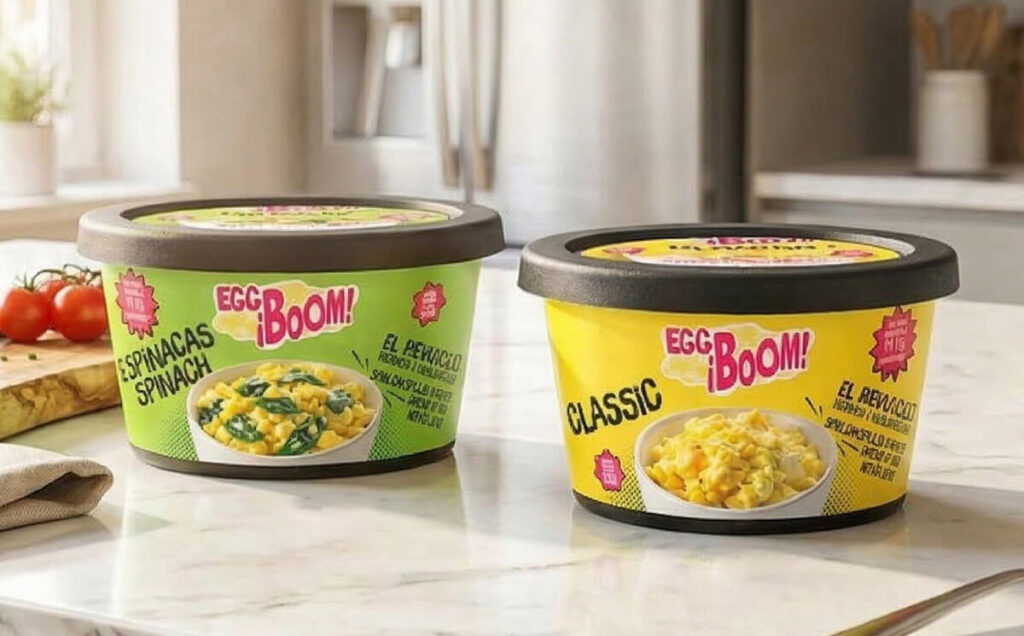
It is available in six varieties (classic, spinach, chorizo, ham, garam masala and tandoori), all suitable for vegetarians. According to the company, several distribution chains have already expressed commercial interest. The product can be tasted at the stand of Álvarez Camacho during the fair.
nnnnPoultry reading: EggBoom opens a completely new egg-based product category within the convenience food segment. For the egg products industry, this type of innovation points to a high added-value path that deserves close attention.
nnnnnnnnOuegg – The world’s first egg chips
nnnnOuegg is billed as the world’s first egg chips, made exclusively from egg white using dehydration technology that preserves the nutrients. A product that positions the egg in the territory of healthy snacking and on-the-go protein.
nnn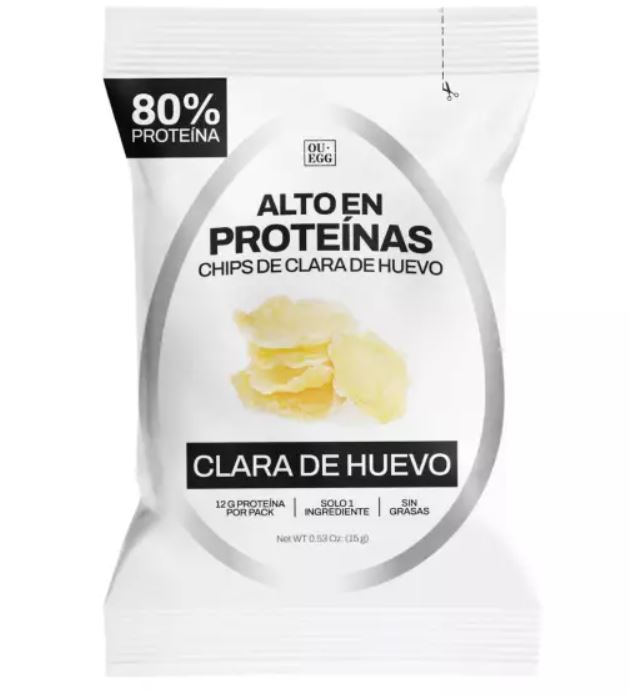
This company is capturing the attention of the innovation ecosystem for having succeeded in transforming the liquid egg matrix into a dry snacking product. Its patented dehydration technology has enabled the launch of the first egg chips on the market, an innovation detailed in depth in the technology news section of this report.
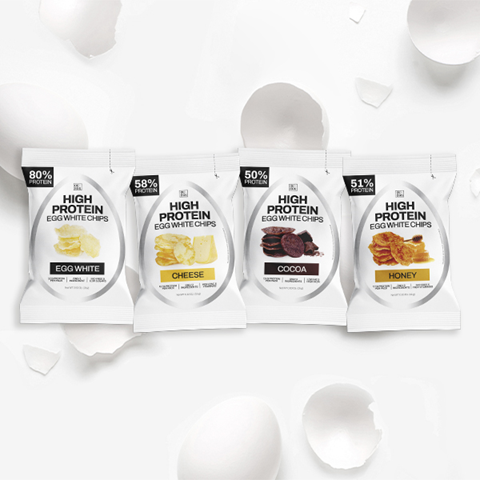
Poultry reading: Egg white as a snack base represents a diversification avenue for the egg industry that connects directly with the high-protein and clean label trends dominating the market.
nnn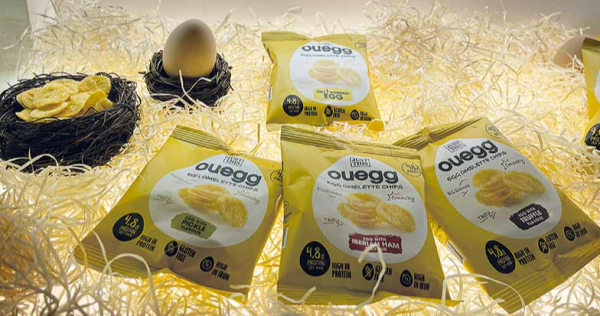
Fifth-range poultry: the fusion between Retail and Food Service
nnnnInflationary pressure on the commercial margins of the whole chicken carcass is forcing the major poultry integrators to sophisticate their portfolios. The winning strategy in 2026 consists of “channel hybridisation”, that is, developing products for the supermarket that offer a finish, flavour and presentation comparable to the restaurant experience (fifth-range solutions).
nnnnThe performance of Grupo Uvesa at Innoval is a paradigm of this transition. Backed by its integration into the multinational MHP and its ambitious 100-million-euro modernisation plan, Uvesa has succeeded in positioning two key developments in this prestigious showcase :
nnnn- n
- Uvesa Chicken Kebab: Selected by the Innoval committee for its genuine added value for the market, this product brings the international street food experience directly into the home environment. It consists of marinated and roasted poultry meat, presented in a ready-to-heat-and-eat format. This innovation not only responds to the growing demand for ethnic flavours among younger demographics, but also offers families a quick dinner solution that meets high standards of quality, traceability and food safety, far superior to those of informal establishments. n
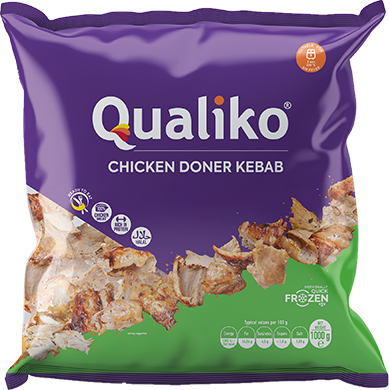
The Qualiko Roasted Chicken for Doner Kebab consists of thin strips of chicken thigh, grilled and with a maximum thickness of 5 mm. It is a product ready for easily preparing a kebab at home. The Qualiko brand is the frozen chicken range from MHP.
nnnn- n
- Chick&Go: Further reinforcing its foray into the healthy convenience market, Uvesa presents snacks made from 100% natural chicken breast. The technical differentiation of Chick&Go lies in its cooking method: the breast is subjected to a meticulous baking process rather than traditional industrial frying. This results in a lean, satiating and low-calorie snack, designed for on-the-go consumption and aimed directly at health-conscious consumers who avoid ultra-processed meat snacks. n
Industry 4.0: the digital and sustainable transformation of the value chain
nnnnA detailed tour of the Intercarn pavilions and the conference rooms of The Alimentaria Hub reveals an inescapable truth: competitiveness in the meat, poultry and egg industries in 2026 no longer depends on intensive labour, but on the accelerated integration of Industry 4.0 technologies. Digitalisation, automation and the intensive use of data are the true behind-the-scenes protagonists.
nnnnThe revolution of Artificial Intelligence (AI) in Food Safety
nnnnThe most significant paradigm shift in the management of processing plants is the transition from reactive safety models (responding to a contamination outbreak) to purely preventive and predictive models. Artificial Intelligence has become the central nervous system of modern facilities.
nnnnIn 2026, AI algorithms monitor Hazard Analysis and Critical Control Points (HACCP) systems in real time. These programmes ingest massive data from thousands of temperature, humidity, pressure and bacterial load sensors distributed throughout slaughterhouses and cutting rooms. AI is capable of identifying microscopic anomalous patterns —such as subtle thermal fluctuation on a conveyor belt or irregular vibration from a cutting saw— to anticipate cross-contamination risks, carry out internal audits automatically and schedule predictive maintenance of machinery before a critical failure occurs, guaranteeing the absolute traceability demanded by export markets.
nnnnComputer vision and infrared: surgical precision in cutting and deboning
nnnnTraditional meat processing, heavily dependent on the operator’s visual judgement, has given way to automated optical inspection. Machine vision (ultra-high-resolution camera systems interconnected with neural computing applications) is now the standard on processing lines, enabling products to be classified in milliseconds, cuts with suboptimal fat infiltration to be rejected, and defects or foreign bodies to be detected with a precision that surpasses human capability.
nnn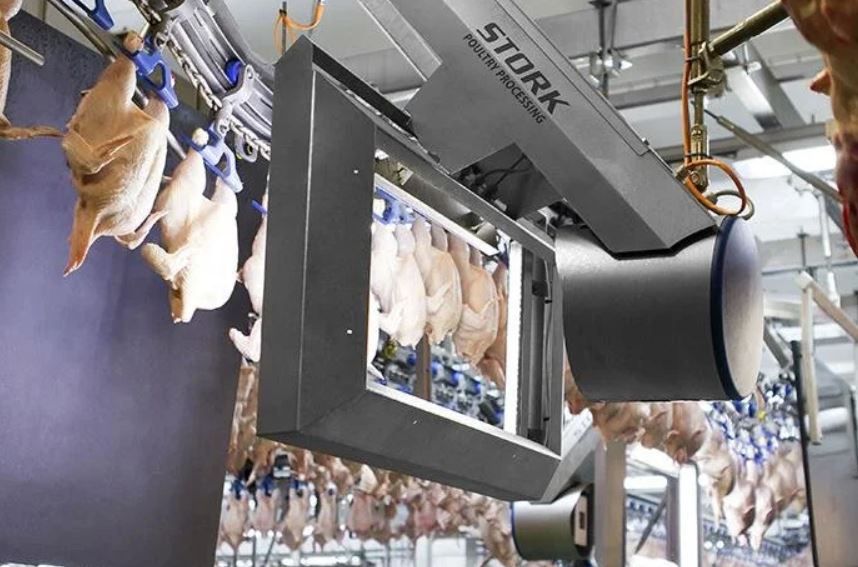
Likewise, infrared technology has revolutionised specific areas of meat cutting. Infrared scanners penetrate tissue to assess its firmness and exact intramuscular fat composition, enabling cuts to be scientifically categorised and directed to the most appropriate processing line.
nnnnProject ZeroW and NIRS Sensors: optimising poultry profitability
nnnnIn poultry production, where profit margins per unit are historically narrow, absolute control of shrinkage (waste or yield loss during processing) is critical to the financial viability of the business. Alimentaria 2026 is shining a spotlight on cutting-edge technological initiatives at a European level, such as the ZeroW Project.
nnnnThis project introduces the large-scale use of Near Infrared Spectroscopy (NIR) sensors installed directly “in-line” on the conveyor belts of poultry processing plants. As chicken carcasses move along at high speed, the NIR sensors scan the meat non-destructively, instantly assessing critical chemical composition parameters such as exact fat levels, retained moisture and protein percentage. By combining this data with predictive mathematical models in the cloud, plant managers can make microscopic adjustments to chiller or skinning machines in real time, minimising carcass weight loss, ensuring homogeneous quality control and intelligently segregating meat according to its suitability for fresh sale or for complex processed products.
nnnnSimilarly, NIRS technology is being applied at the first stage of the supply chain (on-farm), particularly in the production of premium Iberian pigs. Researchers use these portable spectrometers to assess the impact of “environmental enrichment” on farms (providing animals with manipulable materials such as straw, play areas or improved bedding) on animal welfare. NIRS data makes it possible to scientifically validate that an animal subjected to lower metabolic stress and fewer competitive aggressions presents muscle tissue of higher organoleptic quality, closing the loop between ethical welfare and commercial profitability.
nnnnnnnnThe packaging challenge: Sustainability versus Shelf Life
nnnnThe final link in the chain, and perhaps the one under the greatest legislative pressure, is the packaging of meat and poultry products. European Union directives on the circular economy have declared war on single-use multilayer plastics, demanding that meat corporations balance the imperative reduction of waste with the absolute need to protect food and extend its shelf life.
nnnnThe fair addresses this tension through specialised forums, such as sessions equivalent to the “Unwrapping Sustainability” session (present at global forums such as IPPE). Packaging machinery manufacturers (thermoforming, heat-sealing and modified atmosphere companies) and resin suppliers are presenting their solutions in Barcelona for implementing Extended Producer Responsibility (EPR) programmes.
nnnnThe dominant macro-trend in this area is the development of bio-based “smart and edible packaging”. These naturally derived polymeric matrices incorporate compounds with active antimicrobial properties that interact with the internal atmosphere of the package. This significantly extends the shelf life of fresh meats and processed poultry products in chilled display cases without the need to inject synthetic additives or chemical preservatives directly into the food matrix, simultaneously meeting the demands of the clean label consumer and Brussels sustainability policies. Integrators such as bonÀrea complement this packaging technology with reverse logistics innovations, championing the expansion of their “RetornA” system, demonstrating that the active recovery of empty packaging through their retail network is a viable and profitable large-scale strategy.
nnnn
Strategic markets and geo-economic expansion: the Halal factor
nnnnFor the Spanish meat and poultry industry, participation in Alimentaria 2026 goes beyond simple commercial exhibition; it is a diplomatic and geo-economic exercise. In a European environment with stagnant birth rates and a slight decline in per capita meat consumption due to inflationary and dietary pressures, growth in business volumes depends inexorably on exports to emerging markets with young demographics and rising purchasing power.
nnnnOn this geopolitical stage, one of the most significant driving factors of the fair is the parallel staging of the 4th International Halal Congress (under the Halal Food Alimentaria umbrella). Organised in close collaboration with key institutions such as Prodeca and the employers’ association Anafric, and backed by specialist corporations such as Viñals Soler and Frinuts, this congress underlines the importance of the Muslim consumer to the bottom line of Spanish slaughterhouses and processors.
nnnnThe Halal market represents a massive and rapidly expanding demographic, not only in its traditional historical territories (Middle East, North Africa, Southeast Asia), but as a high-purchasing-power consumer segment within the European Union itself. However, accessing this market demands extreme technical rigour. Halal operators require unbreakable certification guarantees at every link in the bovine, ovine and, on a massive scale, poultry meat processing chain; from ethical slaughter protocols (absence of incompatible stunning) to absolute segregation on cold chain lines to prevent cross-contamination with porcine derivatives or alcohol.
nnn
The 4th International Halal Congress is not limited to legal or religious theory. The event offers buyers from Gulf Cooperation Council countries (United Arab Emirates, Saudi Arabia) —attracted by Alimentaria’s extensive “Hosted Buyers” programme— a range of round tables, commercial presentations and, crucially, specialised showcookings. Prominent chefs from the gastronomic sphere, such as Fátima Labyedh (La Trebada de Crespià), Saluoa Logmane (La Capella de Can Gambús) and Tomás Brull (La Cala Navega), give practical demonstrations proving the culinary viability of adapting high European and international gastronomy to the strict requirements of Halal certification.
nnnnThis promotional and commercial effort sends a clear message to Asian and Middle Eastern delegations: the Spanish meat and poultry industry, thanks to its extreme level of technification, is not only capable of successfully passing the most rigorous health inspections of European authorities (EFSA), but also possesses the flexibility and industrial specialisation needed to adapt its slaughter and processing lines to the religious requirements demanded in the Gulf. This bidirectional adaptability consolidates the exhibiting companies of the Intercarn pavilion as irreplaceable trusted suppliers in the global protein trade.
nnnnnnnnActivities, conferences and sector associations
nnnnIntercarn will feature technical sessions, presentations and institutional events driven by the sector’s leading organisations. The Alimentaria Hub will bring together more than 200 experts in forums and seminars on sustainability, digitalisation, food safety and new consumption habits. The Food & Hospitality Startups space, co-organised with IRTA, will feature more than 60 emerging companies, including solutions ranging from plant proteins to artificial intelligence applications for personalised nutrition. And the Innoval 2026 Awards will recognise on Monday 23 March the best innovations launched between April 2024 and March 2026.
nnnnPractical information
nnnnDates: 23 to 26 March 2026
Opening hours: 23–25 March, 9:30 to 18:30 | 26 March, 9:30 to 17:00
Location: Gran Via venue, Fira de Barcelona. Halls 1–6. Av. Joan Carles I, 64, L’Hospitalet de Llobregat.
nnnnFloor space: 100,000 m² net, 7 halls
Exhibitors: 3,300 companies from 70 countries (30% international)
Expected visitors: 110,000 professionals from 150 countries
Intercarn (meat sector): 350 companies, 15,000 m², 25% of total floor space
Guest Country of Honour: Poland (largest poultry producer in the EU)
Official website: www.alimentaria.com
Exhibitor catalogue: ecatalogue.firabarcelona.com/AlimentariaHostelco2026
nnnn
Do you want to stay one step ahead in poultry farming?
Subscribe free to our eNewsletter and receive a weekly selection
of the best information to anticipate trends, stay up to date and improve as a poultry industry professional.
NeXusAvicultura : Vision, Criterion, Quality and Context.