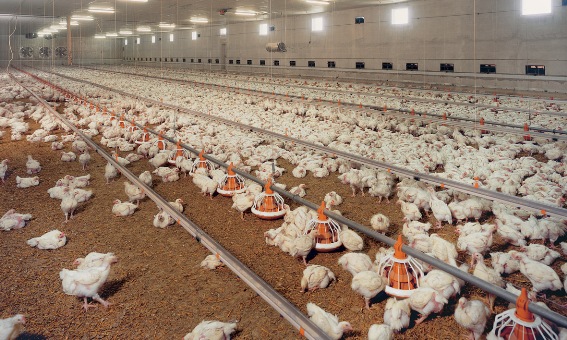

In modern poultry farming, we have become experts at monitoring the environment. Birds are continuously monitored by sensors measuring ambient temperature, relative humidity, CO2, ammonia, air speed, light intensity, and more. Yet there is a fundamental disconnect: we measure “environmental comfort” assuming it is equivalent to “animal comfort”.
nnnn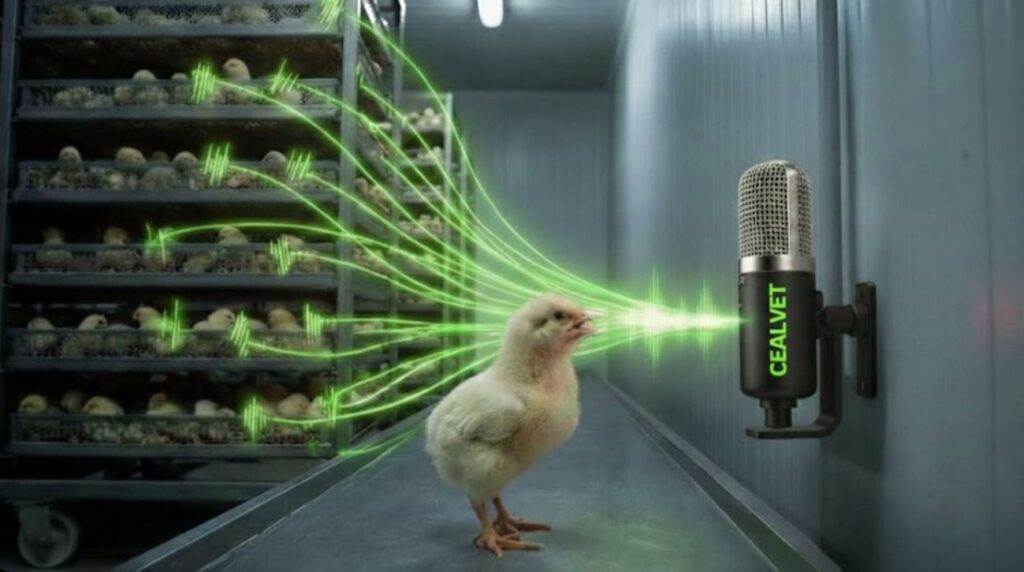
In many cases, an anthropomorphic view of animal welfare is applied, which consists of interpreting animal welfare from a human perspective, attributing emotions and experiences similar to our own. In other words, one imagines how a human being would feel in the same situation as the animal, prioritising aspects such as happiness, stress or boredom over physical indicators. This perspective can lead to misinterpretation or inappropriate decision-making.
By contrast, the zoocentric view evaluates animal welfare from the perspective of the animal itself, based on the five domains (good nutrition, good environment, good health, good behavioural expression, and positive mental state).
nnn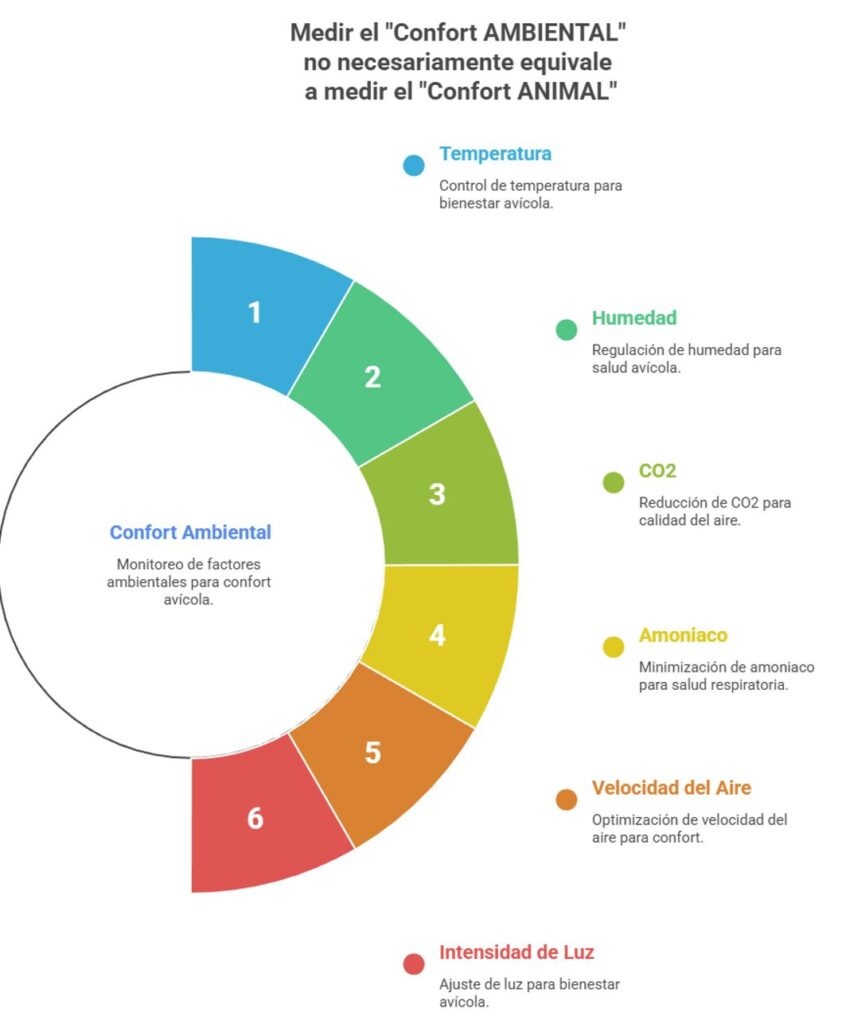
Avian bioacoustics presents itself as the discipline capable of assessing animal welfare from the perspective of the bird itself. Thanks to this technology, and especially to the latest advances in the artificial intelligence-based interpretation of sounds emitted by chicks (or broilers) as recorded, we can go far beyond measuring welfare through indirect indicators such as thermometers, and begin to listen to it directly through the interpretation of the chick’s acoustic communication. This is not science fiction; it is advanced technology that we are already applying at some of the largest poultry producers in Spain.
nnn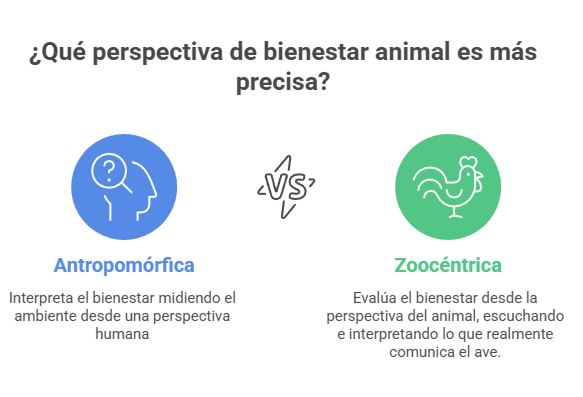
The paradigm shift: from measuring “The Environment” to measuring “Animal-centred signals”
nnnnUnlike environmental sensors, vocalisations are what we call an animal-based indicator. A thermometer may read 32°C in a day-old chick box — theoretically a correct measurement — but if there is a draught at floor level (wind chill effect), the sensor will not detect it. The chick, however, will vocalise it immediately. Another example is bird handling: a sensor cannot record the stress that handling may cause, whereas the bird will express it through changes in its vocal pattern. These acoustic signals are direct information about the animal’s internal state — something no traditional environmental sensor can provide.
nnn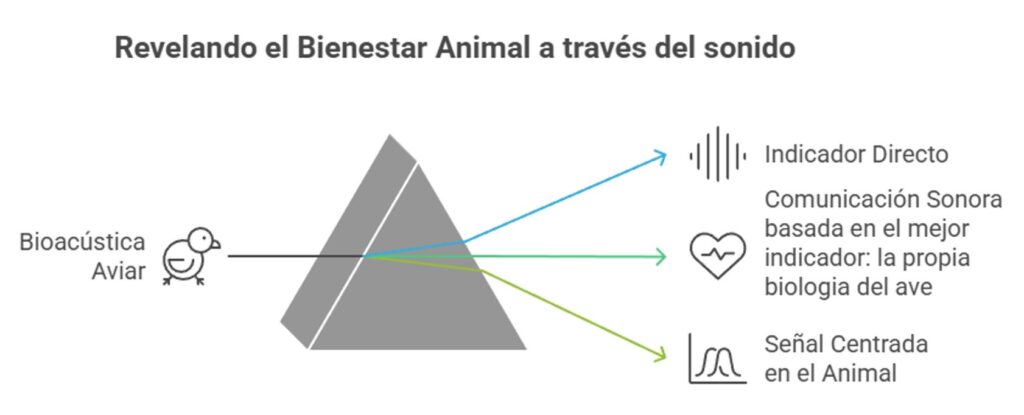
Birds are the most vocal animals in the animal kingdom, employing a wide range of sounds to communicate, defend their territory, and express their internal state. From an ethological perspective, the chick is a nidifugous and social species whose survival depends on constant acoustic communication: with the mother in natural settings or with the group in commercial production. Their vocalisations are not random noise, but coded signals that convey precise information about their physiological condition and welfare.
nnnnMore recently, the advent of IoT devices, big data, and artificial intelligence has enabled researchers to record and analyse in depth the different types of bird vocalisations and their meaning. When analysing vocalisations in intensive production systems, they are not studied individually but at flock level. The analysis therefore focuses on how the vocalisations of a flock vary in response to changes in the environment or management, identifying patterns that reflect the overall condition of the group.
nnn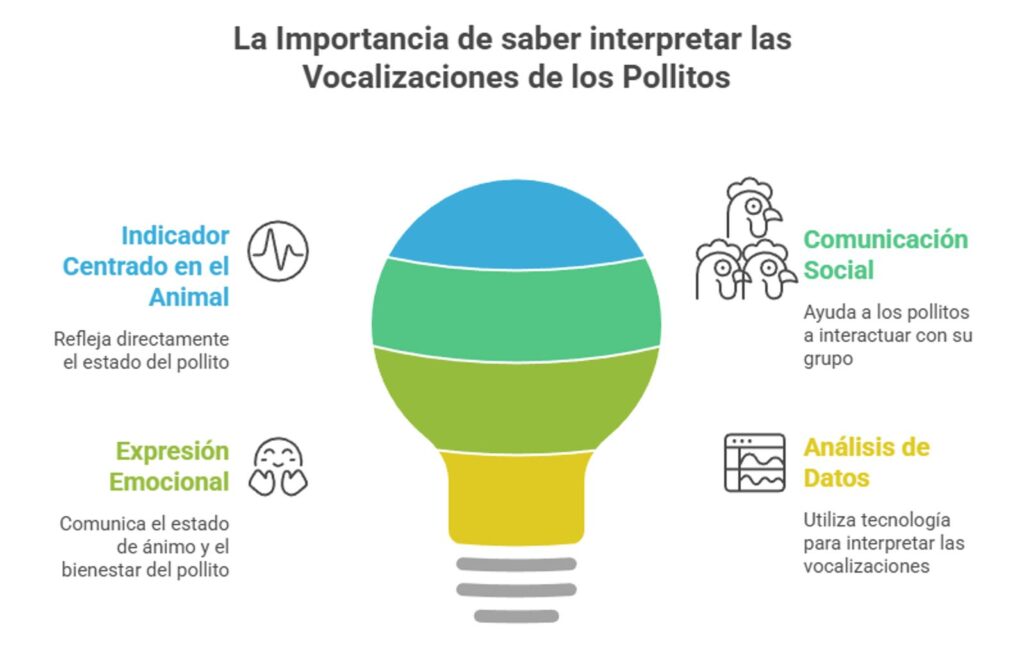
The importance of correctly interpreting the “cheep cheep cheep” of chicks
nnnnFor the poultry professional, being able to distinguish between the two basic acoustic categories enables rapid identification of the birds’ condition:
nnnn1-. Pleasure or contact calls (pleasure/contact calls):
nnnnThese are low-energy vocalisations, with a duration of 0.2 to 0.4 seconds and a low repetition rate. This acoustic pattern occurs when the bird is in thermal comfort, feeding, or exploring. Acoustically, they have a narrow bandwidth and appear on spectrograms as small “drops”.
nnn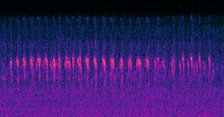
2-. Anxiety or distress calls (distress calls):
nnnnThese are the birds’ alarm signal. They are characterised by high energy, short duration (<0.2 seconds), repetitiveness, and a high repetition rate. Depending on the bird’s age, their range falls between 2.5 kHz and 4.5 kHz — a higher frequency than pleasure calls. These calls are a generalised response to negative stressors: cold, hunger, pain, or social isolation.
nnn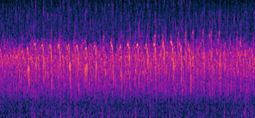
The following images are spectrograms we have recorded, showing time on the horizontal axis and frequency on the vertical axis. Black indicates lower energy and white indicates higher energy. Both spectrograms record vocalisations from one-day-old chicks in dispatch rooms. The upper image (pleasure calls) shows pleasure calls, and the lower image (distress calls) shows anxiety and distress calls.
nnnnnnnn
Bioacoustics for capturing “what the birds are telling us” has existed for decades; what has changed is our capacity to interpret — to “read” — poultry vocalisations in real time.
nnnnThe scientific literature contains numerous studies on bird vocalisations, ranging from descriptions of different vocalisation patterns to disease detection, monitoring, and welfare assessment.
nnnnWith regard to bird welfare, scientific evidence is documented in various publications, including the 2014 study by Curtin, et al., which describes how measuring call repetitions per unit of time serves as a stress indicator, suggesting that a higher call repetition rate corresponds to a higher level of stress. A more recent 2024 publication by Collins, et al. shows how isolated chicks vocalise with greater intensity, duration and spectral entropy than those that can see other chicks, even if only a reflection in a mirror (also known as Mirror Studies).
nnnnThis has direct implications for management: a straggler or a chick trapped away from the group not only suffers thermal stress but also acute social panic, which triggers its metabolic rate and yolk sac consumption, with the bird vocalising the distress this causes.
nnn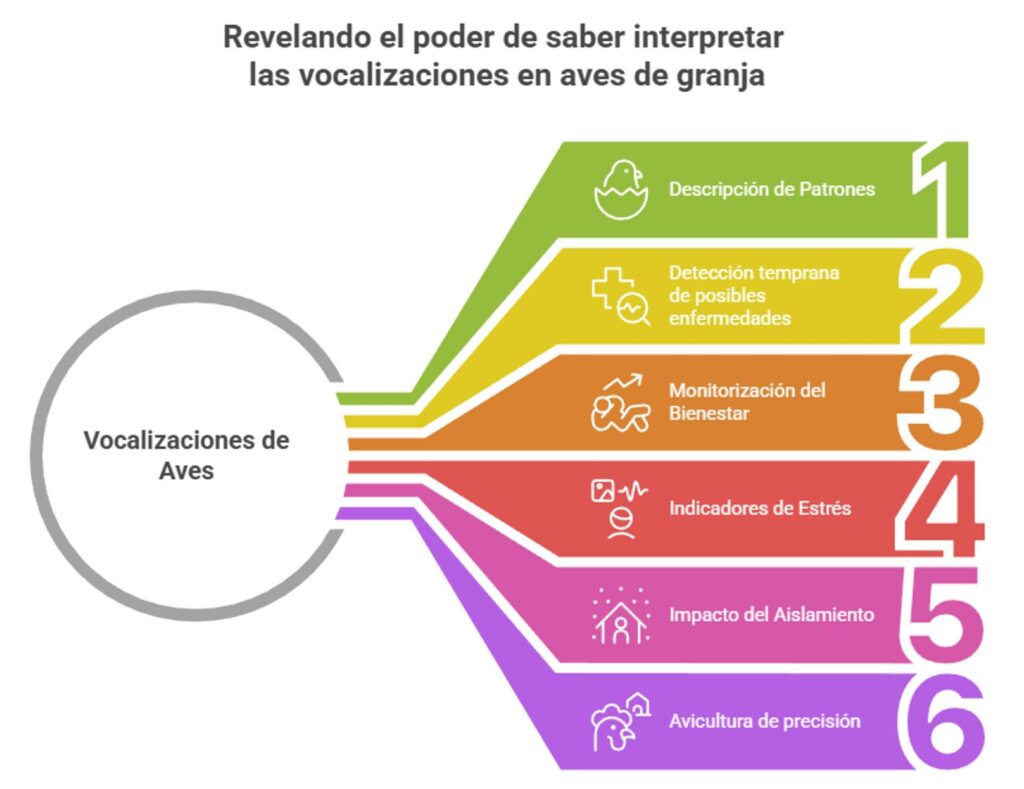
Precision Livestock Farming (PLF) refers to the use of advanced technologies to monitor animals in real time, with the aim of improving their welfare, productivity, and sustainability. Within this approach, bioacoustics emerges as an innovative branch that enables the condition of birds to be diagnosed and monitored through the analysis of their vocalisations. This method is entirely non-invasive, as it requires no physical contact or direct handling, which reduces stress and avoids disrupting the bird’s natural behaviour, ensuring more reliable data. Furthermore, it enables continuous monitoring without interrupting productive routines. By relying on the sounds emitted by the birds, it converts vocalisations into objective welfare indicators, improving both the precision and efficiency of the system.
nnn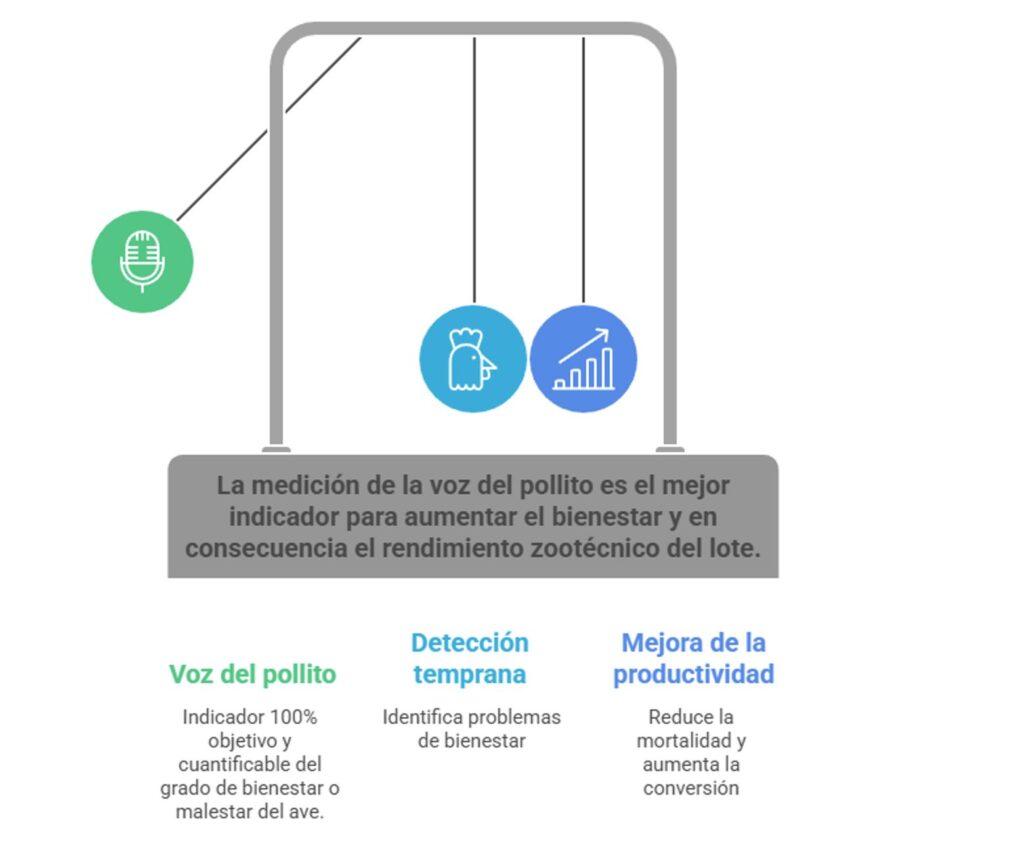
Current science proposes the use of the distress call rate (distress calls), the number of vocalisations, or the vocalisation frequency as indicators reflecting the birds’ condition. Early detection of high values in these indicators within a flock reveals underlying welfare problems that, if not corrected in time, could lead to productivity issues such as a deteriorating feed conversion ratio or increased mortality.
nnnnThe technology that enables real-time data processing and analysis is now available to the industry at an affordable cost, making it possible to improve production processes and generate alerts that allow potential production problems to be corrected. The chick’s voice acts as the most sophisticated early warning system at the hatchery (hatchers and dispatch rooms), during chick transport, and on the farm, as it is the animal itself that vocally expresses its wellbeing or distress.
Gerard Ginovart, Tesa Panisello and Silvia Riva
www.CEALVET.com
Benefits of bioacoustics in poultry farming:
-. Article 1: Why the chick’s voice matters: scientific foundations of avian bioacoustics
-. Article 2: From egg to first “cheep”: what the sounds of chicks tell us at the hatchery.
-. Article 3: Thermoregulation, hunger and stress: what chick distress calls reveal