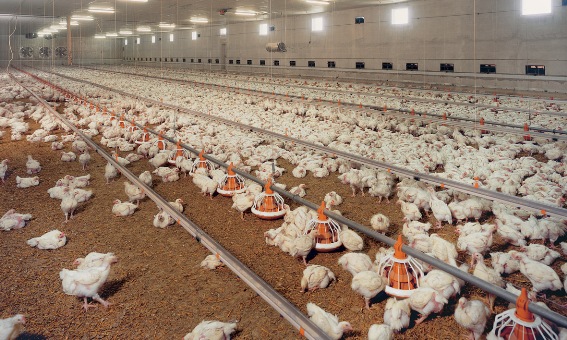

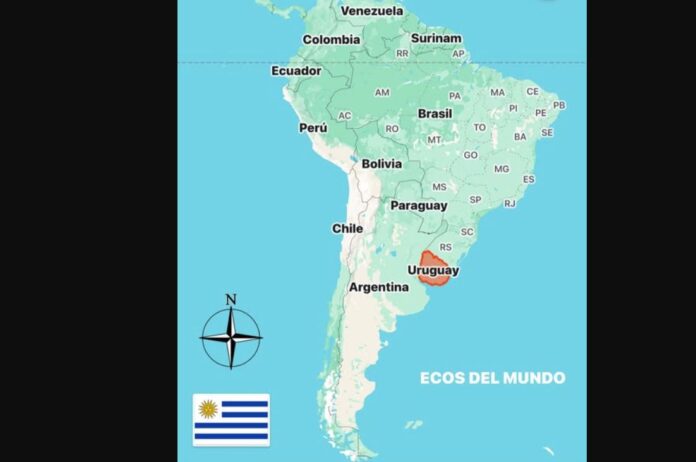
The Global Eggs holding company, led by Brazilian businessman Ricardo Faria — known worldwide as “the egg king” — entered the Uruguayan market at the end of 2025 with the acquisition of Prodhin, Avícola Dorotea and Super Huevo, in an investment estimated at $70 million and with the goal of reaching one million laying hens in the country. The arrival of the multinational giant disrupts a historically family-run sector, at a moment of record consumption: approximately 330 eggs per person and production approaching 1 billion units per year.
A global giant enters a family-run market
Uruguay, with a domestic market of around 1 billion eggs and a per capita consumption that reached 330 eggs in 2025, has become the latest expansion target for Global Eggs, one of the world’s largest egg producers. Until now, the egg business in the country had been developed by family-owned companies with strong local roots and a supply logic focused almost exclusively on the domestic market.
The operations: Prodhin, Dorotea and Super Huevo
The centrepiece of the entry is the acquisition of Prodhin, Uruguay’s largest egg production company, complemented by the purchases of Avícola Dorotea and Super Huevo. Through these acquisitions, Global Eggs takes control of a significant share of the national supply without building farms from scratch — a move that industry players have viewed positively as a way of avoiding a price war and preserving a degree of market balance.
Ricardo Faria’s strategy and Uruguay’s role
The move into Uruguay is part of an aggressive global acquisition strategy that over the past two years led Global Eggs to purchase Hevo Group in Spain, Tamago in Brazil and Hillandale Farms in the United States, reaching a production of approximately 13 billion eggs per year and a projected turnover of $2–2.5 billion. Faria, who started out in 2006 with Granja Faria in Brazil, has transformed a regional business into an egg multinational present in more than 18 countries, with close to 47 million laying hens.
Animal health and stability: the keys to Uruguay’s appeal
Industry sources highlight that the choice of Uruguay is driven by two central factors: the country’s avian health status and its macroeconomic and regulatory stability — attributes highly valued by globally minded investors. The total investment is estimated at around $70 million and includes a plan to reach one million laying hens in Uruguay, which will be integrated into the holding’s supply network.
Impact on prices, competition and the sector’s future
For now, Global Eggs has no immediate plans to redirect Uruguayan production towards exports. In Uruguay, as in most of the world, eggs are primarily destined for domestic consumption. Former owners of Prodhin who are now part of the commercial team argue that Faria’s entry “did not come to break the market or crush it,” but rather to gain scale profitably, building on already established companies. At the same time, the group’s presence raises questions about the future degree of sector concentration, competition rules and the impact on medium and small producers, while potentially accelerating investment in efficiency, animal welfare and quality standards aligned with the most demanding markets.
nnnn
Uruguay’s poultry ecosystem
nnnnUruguay presents unique characteristics in its egg market. With a per capita consumption that reached 330 eggs in 2025, the country ranks among the world’s most intensive consumers. However, this high demand coexists with a cost structure that places the price of a dozen eggs at extremely high levels by international comparison, ranking fifth globally among countries with the most expensive eggs.
nnnnCost structure and market prices
nnnnThe high price of eggs in Uruguay (estimated at $6.20 per dozen for large sizes) is due to a combination of structural factors. Fixed costs, particularly electricity and fuel, as well as the price of nutritional inputs for poultry (maize and soya), directly affect producers’ margins. Uruguayan labour also represents a higher cost component than that of regional competitors such as Brazil or Paraguay.
nnnn| Jurisdiction | Price per Dozen (USD approx.) | Per Capita Consumption (Eggs/Year) |
| Switzerland | > 7.00 | – |
| Uruguay | 6.20 | 330 |
| Chile | 3.88 | – |
| Brazil | 2.25 | – |
| Paraguay | 1.94 | – |
Despite these costs, the entry of a player with Global Eggs’ scale could induce a stabilisation of domestic prices through improvements in production efficiency and the dilution of fixed costs via a significantly higher volume. The company has already begun implementing automation technologies in feeding and grading, which reduces waste and ensures the standardised quality that the domestic market increasingly demands.
nnnnConcentration and the Mesa Avícola
nnnnThe entry of Global Eggs has prompted a watchful response from the authorities and local industry associations. Uruguay’s poultry sector has undergone a sustained consolidation process over the past five decades, going from nearly 1,000 producers to around 110 today. It is currently estimated that just ten companies account for approximately 70% of the country’s total production. Faria’s entry dramatically accelerates this trend, which has led to the reactivation of the Mesa Avícola within the framework of the Ministry of Livestock, Agriculture and Fisheries (MGAP).
nnnnAt Mesa Avícola meetings, led by Deputy Minister Matías Carámbula, domestic producers have expressed concern over a potential competitive imbalance. Joaquín Fernández, president of the Asociación de Productores Avícolas Sur (APAS), has noted that, while dealings with the new Brazilian owner have been professional and cordial, Global Eggs’ scale raises concerns about the sustainability of the small and medium-sized family businesses that play a critical social role by keeping families settled in rural areas.
nnnnTechnological transformation and industrialisation
nnnnGlobal Eggs is introducing into Uruguay a management model based on extreme efficiency and technical innovation. The holding positions itself as a specialist in “Ultra Fast Moving Consumer Goods,” focusing on freshness and supply chain transparency. This philosophy translates into the implementation of automated grading systems and the use of Big Data to optimise national distribution logistics, enabling delivery within minimal timeframes from the point of lay.
nnnnnnnn
Find out more:
-. Holding Global Eggs
-. Hevo Group
-. Company news on NeXusAvicultura
-. Mergers and acquisitions and investment in poultry
nnnn
Want to stay one step ahead in poultry?
Subscribe free to our eNewsletter and receive a weekly selection
of the best information to anticipate trends, stay up to date and grow as a poultry industry professional.
NeXusAvicultura: Vision, Insight, Quality and Context.