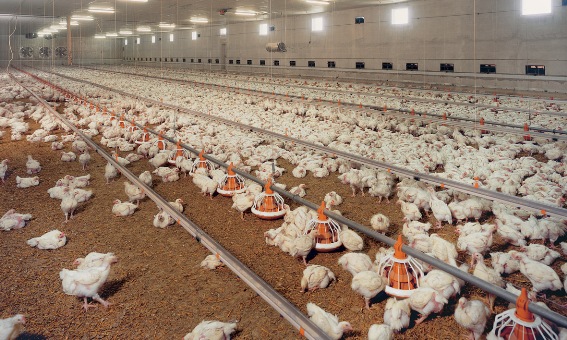

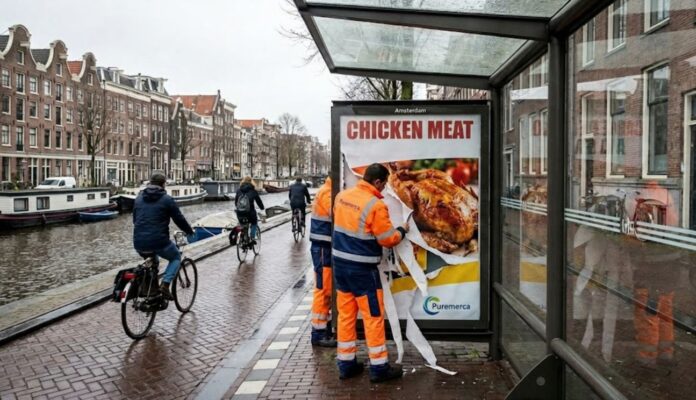
It has finally happened. What once seemed a radical proposal from activist groups has become law. From 1 May onwards, Amsterdam will be the first capital city in the world where promoting a chicken breast or a burger in a public space will be illegal.
For the poultry sector, this news is not merely a curiosity coming from the Netherlands; it is a very serious warning. The city council has decided to place animal protein in the same category as fossil fuels and tobacco. The message sent to consumers is devastating: eating meat is as harmful to the planet (or to health) as smoking or burning coal.
The Dutch city will become the first national capital in the world to ban advertisements for meat products on billboards, bus shelters and metro stations from 1 May 2026. The measure, driven by green and animal rights parties, equates meat with fossil fuels and raises legal and industry concerns.
NeXusAvicultura Editorial Team · 12 February 2026
The Amsterdam city council approved on 23 January 2026, with just over half of the votes — 27 votes in favour out of a total of 45 — a municipal ordinance that bans the advertising of meat products in all public spaces managed by the municipality. The ban, which will come into force on 1 May 2026, will apply to billboards, bus shelters, metro stations and any urban street furniture. With this decision, the capital of the Netherlands becomes the first capital city in the world to adopt a comprehensive restriction on meat advertising in publicly owned spaces.
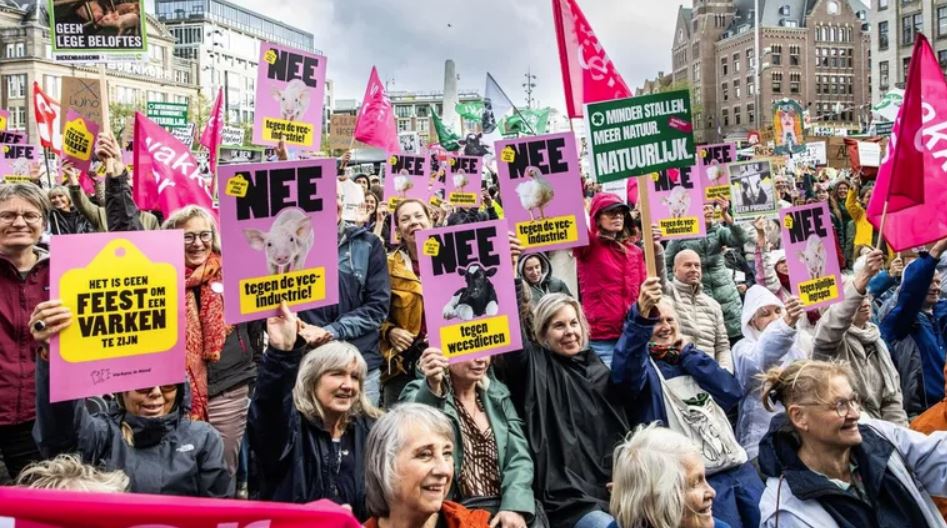
The initiative was jointly driven by the green party GroenLinks and the Party for the Animals (Partij voor de Dieren). In addition to meat, the measure also bans advertising for fossil fuels, commercial flights, cruises and petrol-powered vehicles, placing meat products in the same category as the most polluting industries.
For the livestock and poultry sector, this equation is particularly concerning: placing chicken meat or any other animal-derived product on the same level as petroleum represents an oversimplification that ignores the vast differences in carbon footprint between different types of livestock production.
For the livestock and poultry sector, this equation is particularly concerning: placing chicken meat or other animal products on the same level as petroleum represents an absurd oversimplification.
A precedent spreading across the Netherlands
Amsterdam is not, in fact, the first Dutch city to adopt this type of restriction. Haarlem became in 2022 the first city in the world to ban meat advertising, and since then municipalities such as Nijmegen, Utrecht, The Hague, Delft, Bloemendaal and Zwolle have adopted similar rules. The Dutch capital is already the ninth municipality in the country to incorporate this ban into its legal framework. A court ruling issued in April 2025 by Dutch courts recognised the authority of municipalities to ban advertisements deemed harmful to public health and the climate, which has accelerated the adoption of these measures in more localities.
The trend, far from being confined to the Netherlands, is part of an international movement that already unites more than 50 cities committed to restricting advertising for products considered harmful to the climate, from Stockholm to Sydney. Nevertheless, Dutch Climate Minister Sophie Hermans has opposed applying the measure at national level, preferring local action.
The argument is that advertising “tempts” consumers into making decisions the municipal government considers wrong. This moves away from freedom of choice towards moral paternalism.
Limited practical impact, but high symbolic weight
It is important to put the practical scope of the measure into context. According to data provided by Amsterdam’s own councillor for public spaces, Melanie van der Horst (D66), advertisements for meat products account for just 0.1% of the city’s total outdoor advertising. The ban also does not affect businesses on their own premises: butchers, restaurants, supermarkets and specialist shops will still be able to promote their products in windows and on-site. Neither the sale nor the consumption of meat is prohibited.
However, the true impact of the decision lies in its symbolic dimension and the precedent it sets. By removing meat from the public advertising space, a clear institutional message is sent: that meat production is comparable to fossil fuel industries in terms of environmental damage. For poultry producers, whose sector has one of the lowest carbon footprints within livestock farming, this generalisation is particularly unfair.
Industry reactions: concern and criticism over an unfounded decision
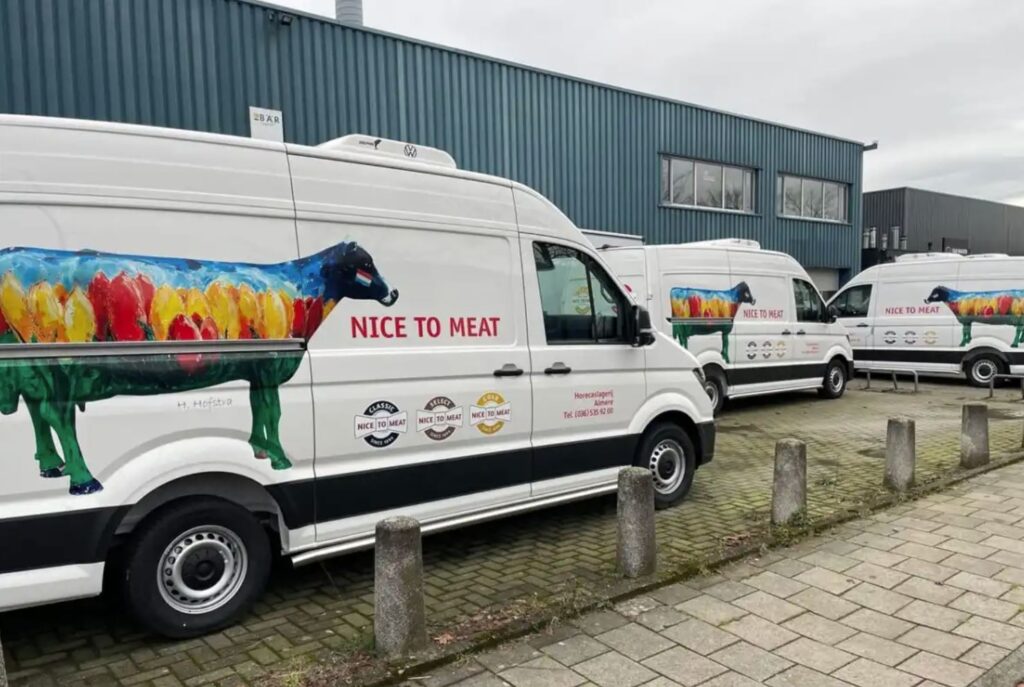
Reactions from the livestock sector have been swift. The Central Organisation of the Dutch Meat Sector (COV) has condemned the ban as a freedom of expression issue. In Spain, the meat trade business organisation Carnimad has expressed its concern, pointing out that the measure is based on a biased view of environmental impact, since livestock’s contribution to emissions varies drastically depending on the production system. Carnimad has stressed that, in the Spanish case, extensive farming systems are strategic allies against climate change by sequestering carbon, preventing wildfires and sustaining rural communities.
From a legal standpoint, doubts also exist. Deputy Mayor Van der Horst herself warned that implementing the ban in May could be premature, as it may conflict with existing advertising contracts, some with terms of ten years or more. Some legal experts, such as administrative law professor Herman Bröring of the University of Groningen, have warned that the measure could infringe commercial free speech and give rise to lawsuits from the industry.
What does this mean for poultry?
For poultry meat producers, the Amsterdam ban holds several lessons and warnings.
First, it highlights a growing trend to equate all animal production without distinction, ignoring the fact that poultry farming has a considerably lower environmental footprint than other livestock subsectors. Poultry production is, among animal proteins, one of the most efficient in terms of feed conversion, water use and greenhouse gas emissions. Yet when public policies lump all meat together, poultry pays a reputational price it does not deserve.
Second, the strategy of comparing meat advertising with that of tobacco or fossil fuels introduces a stigmatisation narrative that can progressively influence consumer decisions and, over the longer term, regulation in other European markets. If this logic spreads, poultry producers could find themselves restricted in their ability to communicate the nutritional and sustainability attributes of their products to consumers.
Third, the decision highlights the need for the poultry sector to step up its public communication and dialogue with legislators, so that climate and food policies incorporate differentiated criteria based on scientific evidence rather than ideological generalisations. Organisations such as ProVeg, which have welcomed the Amsterdam measure, are actively promoting the transition towards predominantly plant-based diets. In the face of this growing pressure, the sector needs an articulate, data-driven response aimed at showcasing its genuine contribution to balanced, accessible and sustainable nutrition.
Why does this affect the poultry sector?
Any reader of NeXusAvicultura knows that lumping all meats together is a technical and scientific error. Comparing the carbon footprint of one kilogram of poultry meat with the emissions of the fossil fuel industry is, to say the least, questionable. Yet the Amsterdam regulation makes no distinction between efficient production systems and less efficient ones. It simply bans “meat”.
What is concerning is the “contagion effect”. Amsterdam is not a small town; it is a global showcase. A European capital adopting this approach legitimises such policies in the eyes of the general public.
The battle of the narrative
For poultry meat producers, this represents a major challenge. Our industry has spent years working to become the most accessible and sustainable protein on the market. But measures like this remind us that technical efficiency counts for nothing if we lose the cultural battle.
If the idea that meat is the “new tobacco” takes hold, we will face a scenario where defending the nutritional benefits of our products becomes increasingly difficult. Amsterdam has knocked over the first domino; the question now is whether the European sector reacts in time to prevent the ban from becoming the new normal.
If one conclusion can be drawn, it is that animal rights lobbies will attempt to spread this populist and simplistic message to other cities and countries. The Amsterdam ban may have a limited immediate economic impact, but its symbolic weight and potential domino effect make it a wake-up call for the entire European livestock sector. The debate is no longer solely about advertising: it is about the public legitimacy of animal production and the place that animal protein will occupy in the food system of the future.
Poultry farming, with solid arguments in its favour, cannot afford to remain on the sidelines of this conversation.
NeXusAvicultura Editorial Team
Further reading:
-. The animal rights lobby on NeXusAvicultura
-. Poultry farming in the Netherlands
Want to stay one step ahead in poultry?
Subscribe free to our eNewsletter and receive a weekly selection
of the best information to anticipate trends, stay up to date and grow as a poultry professional.
NeXusAvicultura: Vision, Insight, Quality and Context.