
NEXUSAVICULTURA | EVENTS | APRIL 2026
The Turkish Branch of the World’s Poultry Science Association (WPSA) and Fırat University are hosting the International Congress on Digitalisation and Health in Poultry Production in Elâzığ, an event that focuses on the two vectors redefining modern poultry farming
The global poultry sector is experiencing a dual silent revolution. On one hand, digitalisation — sensors, computer vision, predictive models, bioacoustics, big data — is transforming the way bird welfare, nutrition, and productive performance are managed. On the other, avian health has moved to the top of the global agenda: highly pathogenic avian influenza has become a structural risk, antimicrobial resistance is tightening regulatory requirements, and consumers are demanding verifiable health traceability. Bringing both axes together in a single scientific forum is no coincidence: it reflects the interpretation made by the organisers of the International Poultry Conference 2026 (IPC 2026) in Turkey.
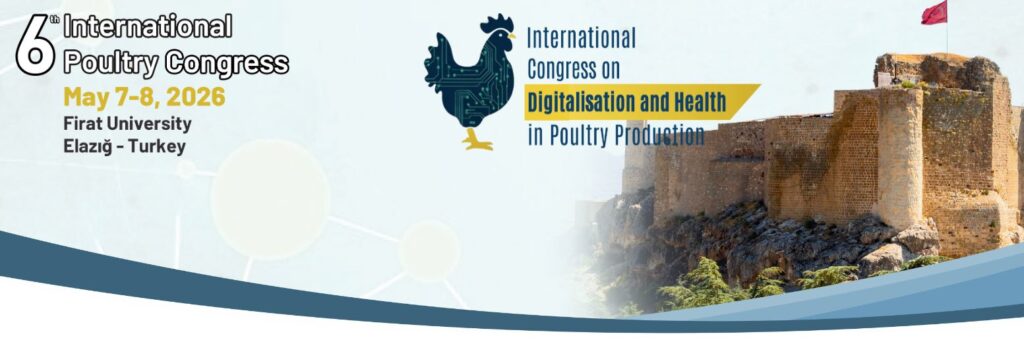
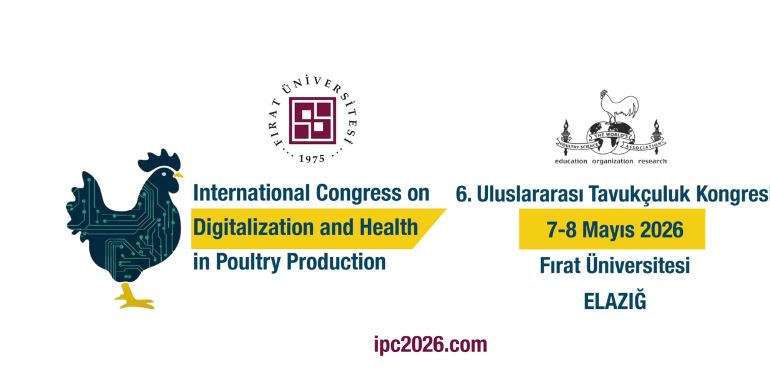
The event, officially titled International Congress on Digitalisation and Health in Poultry Production, will be held on 7 and 8 May 2026 in the city of Elâzığ (eastern Anatolia), organised by the Turkish Branch of the World’s Poultry Science Association (WPSA Turkey) in collaboration with Fırat University. Scientific coordination is led by Prof. Dr. Kazım Şahin, an internationally recognised figure in poultry nutrition and metabolism.
A WPSA branch with 48 years of history
WPSA Turkey has been serving the Turkish poultry sector since 1973 and is one of the most active national branches of the World’s Poultry Science Association. Over five decades, it has organised numerous national and international meetings with the aim of generating lasting benefits through commercial and scientific cooperation between academia and industry. IPC 2026 aligns with that same tradition, but with a thematic focus particularly relevant to the current moment in the sector.
The choice of Fırat University as the venue is no coincidence. Elâzığ has established itself as an academic poultry hub in eastern Anatolia, and Fırat has leading research teams in nutrition, avian health, and production technologies. The WPSA + host university combination replicates the classic model of the reference European symposia in the poultry calendar.
Digitalisation and health are not two parallel agendas: they are two sides of the same coin. Without real-time data, 21st-century health surveillance is blind.
Why the digitalisation + health combination, and why now
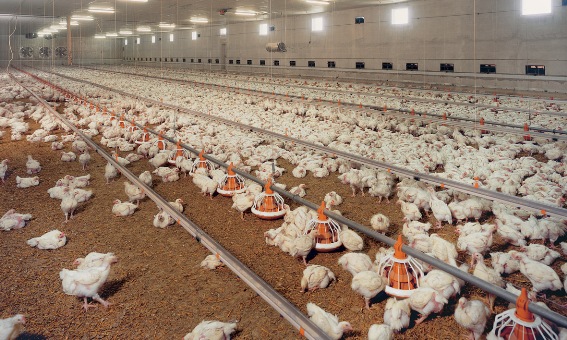
The organisers have chosen a title that avoids circumlocution. Digitalisation in poultry farming is a commercial reality spanning from computer vision cameras that monitor behaviour and locomotion in laying hen houses, to bioacoustic systems that detect patterns of coughing, sneezing, or abnormal vocalisations associated with respiratory conditions. Predictive models trained on water consumption, feed intake, and activity data can anticipate outbreaks or production deviations hours or even days ahead of traditional systems.
The link to health is direct. A digitalised farm is, by definition, a farm with better epidemiological traceability. In a context where HPAI has spread to mammals — including dairy cows in the USA — and where active surveillance has become a regulatory priority in the EU and North America, the ability to access precise, real-time data on zootechnical and environmental parameters is a competitive advantage and, increasingly, a regulatory requirement.
A digitalised farm is, by definition, a farm with better epidemiological traceability: data has become the first line of defence in avian health.
Further dimensions include animal welfare — with digital models that continuously assess behavioural indicators — sustainability — optimising energy consumption and emissions through predictive control — and the management of antibiotic use, whose effective reduction is only possible with early diagnosis and data-assisted clinical decision-making.
Scientific programme: a multidisciplinary approach
According to official information released by WPSA Turkey, the IPC 2026 programme will bring together scientists from various Turkish faculties alongside internationally recognised experts in poultry digitalisation and health.
MAIN CONGRESS TOPICS
Check for updates at: https://ipc2026.com/eng/?p=main-topics
Central theme: Digitalisation and Health in Poultry Production: Sustainability, Efficiency, and the One Health Approach
Scientific sub-topics:
1. Digital technologies and smart poultry systems
- Digital monitoring on poultry farms
- Artificial intelligence, big data, and decision support systems
- Internet of Things (IoT) applications
- Robotics and automation in production
2. Nutrition and biotechnological innovations
- Functional feeds and feed additives
- Microbiota management and prebiotic and probiotic strategies
- Nutrition-based immune modulation
- Digital feed management systems
3. Housing management and environmental control
- Precision climate control technologies
- Optimisation of lighting, ventilation, and noise levels
- Animal welfare and stress monitoring
- Biosecurity systems and best practices
4. Diseases, vaccination, and health surveillance
- Digital diagnosis and disease monitoring
- Next-generation vaccines and delivery systems
- Alternatives to antibiotics
- Early warning systems for infectious diseases
5. Genetics and genetic improvement
- Genomic selection and bioinformatics applications
- Genetic resistance to disease
- Genetic evaluation of productive traits
6. One Health and antimicrobial resistance
- Zoonotic risks in poultry production
- Antibiotic use policies and alternatives
- Food safety from farm to fork
- Interactions between human, animal, and environmental health
7. Sustainability, climate, and waste management
- Greenhouse gas emissions and environmental footprint
- Recycling strategies and litter management
- Carbon footprint reduction
- Water use and hygiene control
8. Education, policy, and digital adoption
- Farmer training and digital tools
- National and international regulatory frameworks
- Acceptance and implementation of digital transformation
Animal welfare
- Monitoring animal behaviour using digital technologies
- Tracking and optimising welfare indicators
- Development of welfare-based production systems
- Interrelationship between welfare, productivity, and sustainability
Turkey, the world’s seventh-largest poultry producer
The geographic context of the event adds further interest. Turkey is the world’s seventh-largest producer of poultry meat and one of the leading export players in the Middle East and Central Asia, with a robust poultry industry and a well-established academic network. The country has experienced significant HPAI outbreaks in recent years, and its laying sector ranks among the most dynamic in the eastern Mediterranean. Hosting a congress on digitalisation and avian health there carries a clear strategic rationale: the Eurasian region is one of the areas where wild bird migratory routes, intensive industrial production, and growing domestic demand for poultry protein all converge.
For European professionals — and particularly Spanish ones — IPC 2026 offers an opportunity to benchmark technological trends against developments that are, in many cases, being implemented earlier or differently in emerging markets. In Spain, advanced digitalisation in poultry farming is progressing at a notable pace among leading companies, although considerable ground remains to be covered.
Why this congress should be on every poultry professional’s agenda
Beyond its academic standing, IPC 2026 takes shape as an event with three strategic dimensions. First, it consolidates digitalisation as an autonomous scientific field within poultry production, no longer merely a technological application. Second, it formalises the convergence between data engineering and animal health — a territory where veterinarians, agricultural engineers, animal scientists, and IT professionals must find a common language. And third, it makes clear that the next leaps in productivity and health resilience in the poultry sector will, in all likelihood, come from the intersection of both domains.
For technical managers at integrated operations, field veterinarians, and production directors, advanced digital competencies will not be optional — they will be a professional standard for the coming five years.
For more information:
-. International Congress on Digitalisation and Health in Poultry Production (IPC 2026)
-. International events calendar: https://NeXusAvicultura.com/Calendario/