
There are decisions that may seem minor or administrative (whether or not to attend a trade show to catch up on all poultry innovation) but that, when made wisely, become strategic successes.
The poultry industry is innovating today at an unprecedented pace. At every level: in the hatchery, in sexing, in equipment and management for layers or broilers, in transport, in processing plants, in nutrition and precision genomics… Those who stand still for four years arrive too late. And VIV Europe knows this.
There are decisions that may seem minor or administrative (whether or not to seize a unique opportunity to catch up on all poultry innovation in just a few hours) but that, when made wisely, become strategic successes.
When VIV Europe announced in January that it was moving from a four-year to a biennial cycle, many read it as a calendar adjustment. Those who have spent decades in this sector understood it differently: it is the official acknowledgement that the poultry industry can no longer wait four years to look at itself in the mirror.
Because the underlying question is not when the trade show is held. The question is how fast technology in poultry production is moving today. And the answer, for those who do not closely follow the sector’s technical developments, may be uncomfortable. It is uncomfortable because poultry professionals do not have unlimited time to attend events, but if one does not want to miss all the sector’s latest developments, nothing beats seeing them first-hand in what is probably the most innovative country in poultry technology in the world.
It is moving very fast. Much faster than most people imagine.
The hatchery is no longer what it used to be
Few areas of poultry production better illustrate this acceleration than hatcheries. In less than a decade, control systems have evolved from simple temperature and humidity logging to data intelligence platforms that manage thousands of variables in real time, predict deviations before they occur, and adjust parameters autonomously. This is not conventional automation. It is decision-making delegated to algorithms trained on millions of hatch data points.
But the most disruptive leap has come with in-ovo sexing. What barely five years ago was a laboratory promise is today a commercially deployed technology in several European countries: determining the sex of the embryo between day 9 and day 13 of incubation—without opening the egg, inline, at industrial speed—has resolved at its root the ethical and economic debate surrounding the culling of male chicks in layer genetics. The Netherlands, Germany and France are leading the way. Alongside in-ovo sexing, automated sexing of day-old chicks is advancing in parallel, opening up an endless range of new possibilities in broiler production, such as single-sex rearing and the associated nutritional optimisation.
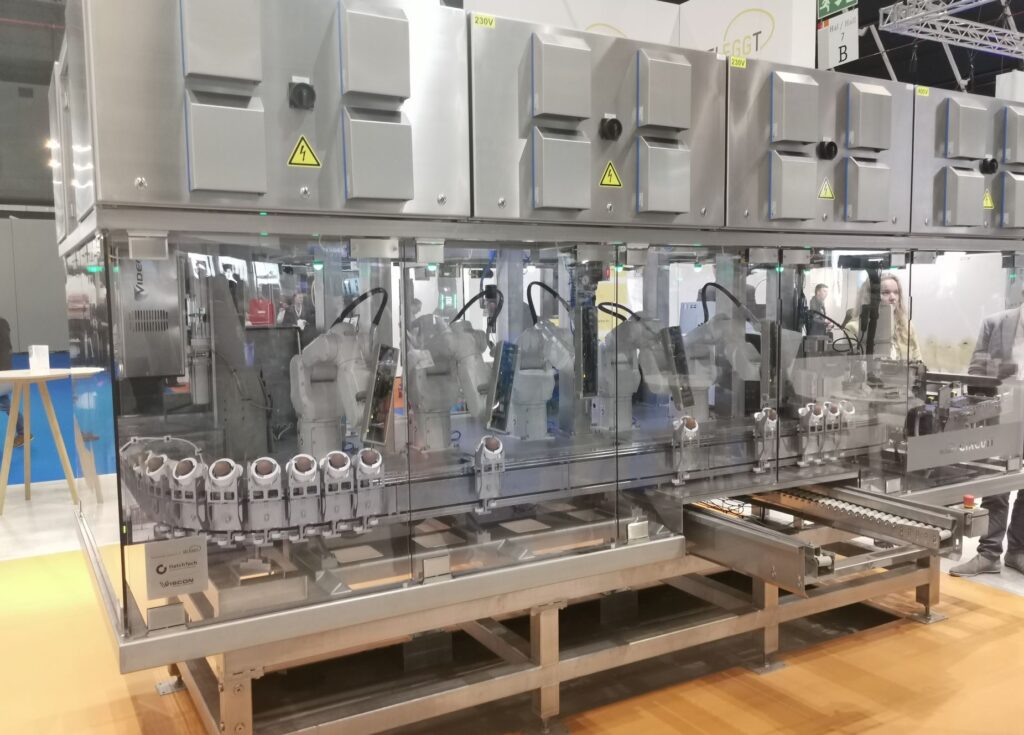
Added to this are substantial improvements in ancillary hatchery equipment: chick vaccination systems combining precision, speed and minimal animal stress, integrated into processing lines that until recently required intensive manual intervention. The 2026 chick leaves the hatcher better vaccinated, better sexed and with more associated data than ever before.
Farms with ever-improving hardware (equipment) and an increasingly powerful human+AI+data platform combination
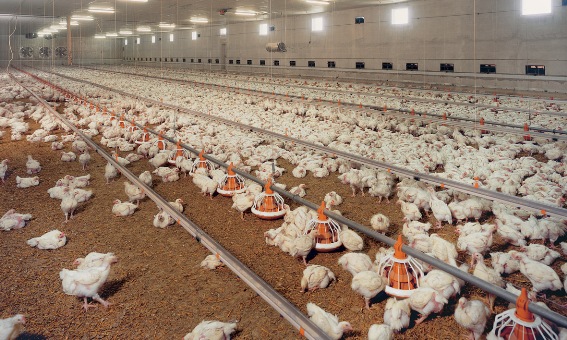
On-farm, the silent revolution has been under way for years, but has accelerated markedly over the last cycle. Environmental control—temperature, humidity, CO₂, air speed, light—is no longer managed with thermostats and reference tables. The most modern systems learn from flock behaviour, adapt to external conditions in real time, and anticipate stress situations before the animal expresses them clinically.
In layer production, aviaries have reached a level of optimisation that would have seemed like science fiction ten years ago: individual egg-tracking systems, complete internal traceability, automated floor-egg detection, and intelligent space management that maximises welfare without sacrificing productivity.
Biosensors, bioacoustics and real-time monitoring systems have completed the picture: the veterinarian or technical manager now has on their phone data that used to take days to compile. Abnormal mortality, deviating water consumption, flock movement behaviour: everything generates alerts before the problem escalates. Preventive medicine in poultry has ceased to be a concept and has become an interface.
Tailored nutrition, continuous management assessment, and unprecedented levels of automation and data intelligence.
Automation, robotics and data analytics in processing plants are delivering a substantial competitive advantage to early adopters. Every percentage point of efficiency improvement counts and is transforming entire operations. Lines that a decade ago relied on dozens of operators for deboning and grading now incorporate machine vision and robotic arms operating with a consistency that human muscle cannot match.
Upstream, in nutrition, the revolution is equally profound, if less visible. Precision nutrition—formulating feeds tailored to the productive phase, genotype, health status and specific objectives of each flock—is no longer an academic aspiration. It is a practice that the most advanced integrated operations are incorporating into their standard workflow, supported by growing knowledge of the intestinal microbiome as a first-order production variable.
And at the foundation of it all, genomics has accelerated genetic improvement cycles to the point of being almost unrecognisable compared to those of a generation ago. Traits that took decades to fix in a line are now incorporated within just a few cycles, with a precision that transforms the very concept of what selection means.

Why all of this matters now
At the last VIV Europe 2022, four years ago—when NeXusAvicultura did not yet even exist, though part of its current team attended, as in previous editions—many of the technologies described in this article existed in development or pilot-test phases. Today they are commercial products, some already in their second or third generation.
Anyone who has not seen in Utrecht what will be presented in June 2026 will have missed a complete update cycle. In a sector moving at this speed, that lag has a name: competitive disadvantage.
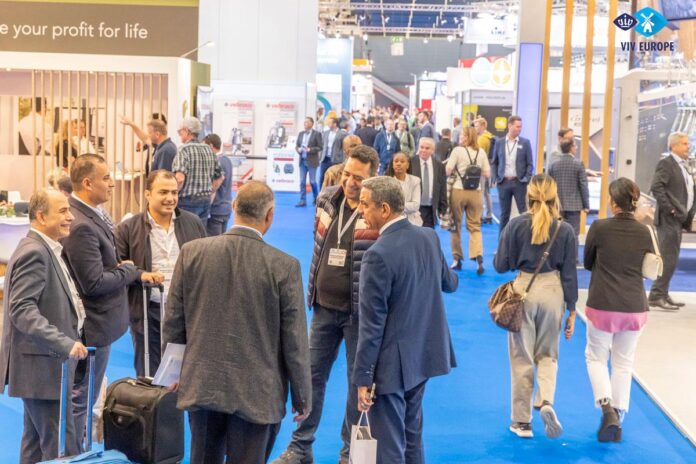
VIV Europe 2026 is not just another event on the global poultry calendar. It is the only opportunity in the next two years to see concentrated, over three days and under one roof, everything that is redefining poultry production worldwide.
Utrecht. 2 to 4 June 2026. The question is not whether you can go. It is whether you can afford not to.
🔗 More information and registration at europe.viv.net
To find out more:
-. VIV EUROPE 2026 trade show
-. International events calendar: https://NeXusAvicultura.com/Calendario/