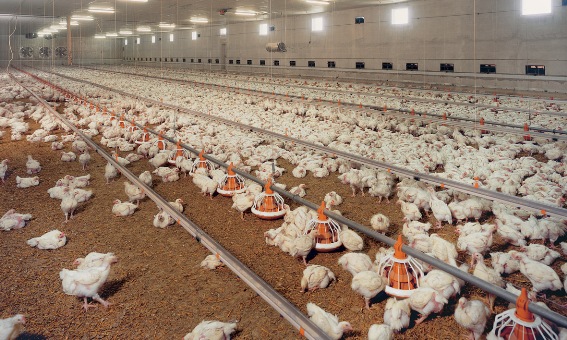


The EU shields (in theory) its poultry producers, livestock farmers, and agricultural sector.
BRUSSELS, 19 March 2026. – The Official Journal of the European Union (OJEU) has just officially published Regulation (EU) 2026/687, which establishes the legal framework for applying bilateral safeguard clauses to agricultural products under the Association Agreement and the Interim Trade Agreement between the EU and Mercosur. This regulation, which entered into force on 19 March 2026, has as its primary objective the protection of EU producers from potential “serious injury” arising from trade liberalisation.
Protection for “sensitive” products
The regulation identifies a comprehensive list of sensitive agricultural products that will be subject to special monitoring. These include various types of meat (beef, pork and poultry), skimmed milk powder, cheeses, eggs, honey, rice, maize, citrus fruits, garlic and biodiesel.
For these sectors, the European Commission commits to carrying out constant and proactive monitoring of import prices and volumes. Furthermore, it has been established that investigations concerning these products will be handled on a priority basis, with a maximum completion period of four months.
Trigger mechanisms and emergency measures
The regulation specifies that safeguard measures may be imposed when imports increase to such an extent that they cause or threaten to cause significant deterioration in the Union’s industry. For sensitive products, a reasonable indication of injury shall be considered to exist if the following occur:
- An increase in import volume of more than 5% compared to the average of the previous three years.
- A fall in the average import price of at least 5% compared to the domestic price.
In “critical circumstances”, where a delay could cause irreparable harm, the Commission is empowered to impose provisional measures swiftly, within as little as 21 days of the initiation of the investigation.
Duration and scope of measures
Intervention measures may take the form of the suspension of further tariff reductions or the increase of customs duties up to “most-favoured-nation” levels. These protections will have an initial duration of two years, extendable by a further two years if it can be demonstrated that the industry still requires time to adjust, with a maximum total limit of four years.
The regulation also includes special provisions for the outermost regions of the Union, allowing for measures limited to their territories if they suffer serious deterioration in their economic situation. It also establishes that, should measures be applied to Mercosur as a single entity, Paraguay could be exempted unless the investigation demonstrates that its imports also contribute to the injury.
With this publication, the European Union has stated that it seeks to balance trade liberalisation with legal and economic security for its agricultural producers in the face of competition from Mercosur countries.
The legal text:
-. REGULATION (EU) 2026/687 OF THE EUROPEAN PARLIAMENT AND OF THE COUNCIL of 11 March 2026 applying the bilateral safeguard clauses of the EU-Mercosur Association Agreement and the EU-Mercosur Interim Trade Agreement for agricultural products. Published 19 March 2026
Further reading:
-. EU-MERCOSUR Agreement
-. EU-MERCOSUR Agreement impact on Poultry. Report by AVEC-COGAG. 20250624
-. The “safeguard clause“: a false protection, pure window-dressing
-. Mercosur
Want to stay one step ahead in poultry production?
Subscribe free to our eNewsletter and receive a weekly selection
of the best information to anticipate trends, stay up to date and develop as a poultry industry professional.
NeXusAvicultura: Vision, Criteria, Quality and Context.