
The deal values Brazilian Ricardo Faria’s company at USD 8 billion and marks a turning point for the laying poultry industry worldwide
The egg sector has just received a signal that few anticipated at this magnitude. Warburg Pincus, one of the world’s most influential private equity firms, with over USD 100 billion in assets under management, has announced an agreement to invest up to USD 1 billion in Global Eggs, the world’s largest multinational producer and distributor of table eggs, enabling the company to expand even further. The transaction, channelled through the Warburg Pincus Capital Solutions Founders Fund, values the company at USD 8 billion (approximately EUR 7.4 billion at current exchange rates).
To put the figure into context: this is a valuation that exceeds that of numerous listed companies in the meat sector, and it places the egg — a food as everyday as it is frequently undervalued — at the forefront of major international capital interest.
“USD 8 billion: the figure that proves the egg is no longer a minor business”
From the Brazilian interior to dominance across three continents
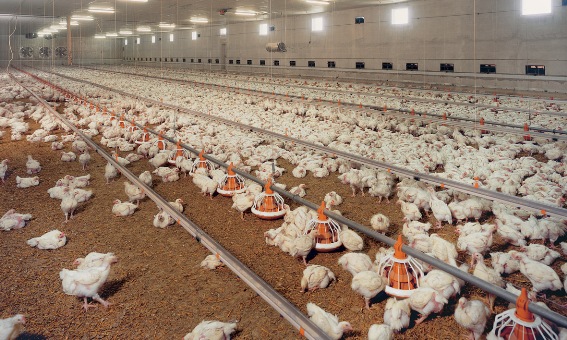
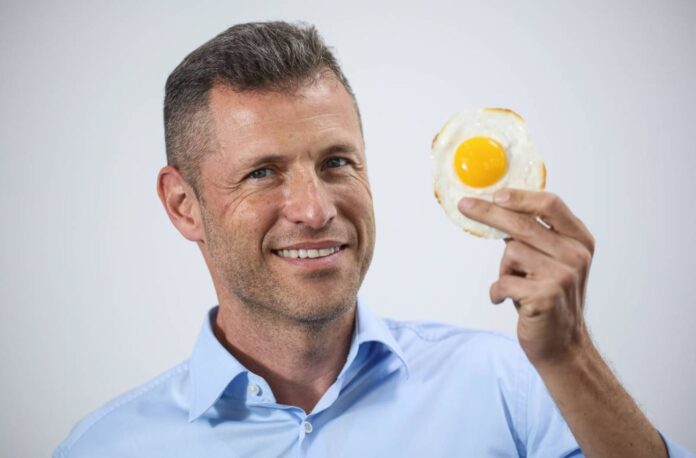
Global Eggs was founded in 2018 by Ricardo Castellar de Faria, a Brazilian entrepreneur who started his business career at the age of seven selling ice cream and who is today known in the financial press as the “Egg King”. The holding company GLOBAL EGGS, headquartered in Luxembourg, controls Granja Faria in Brazil, Hillandale Farms in the United States and Hevo Group in Europe, comprising more than 50 laying poultry complexes, over 45 million birds and a production capacity that will exceed 15 billion eggs in 2026.
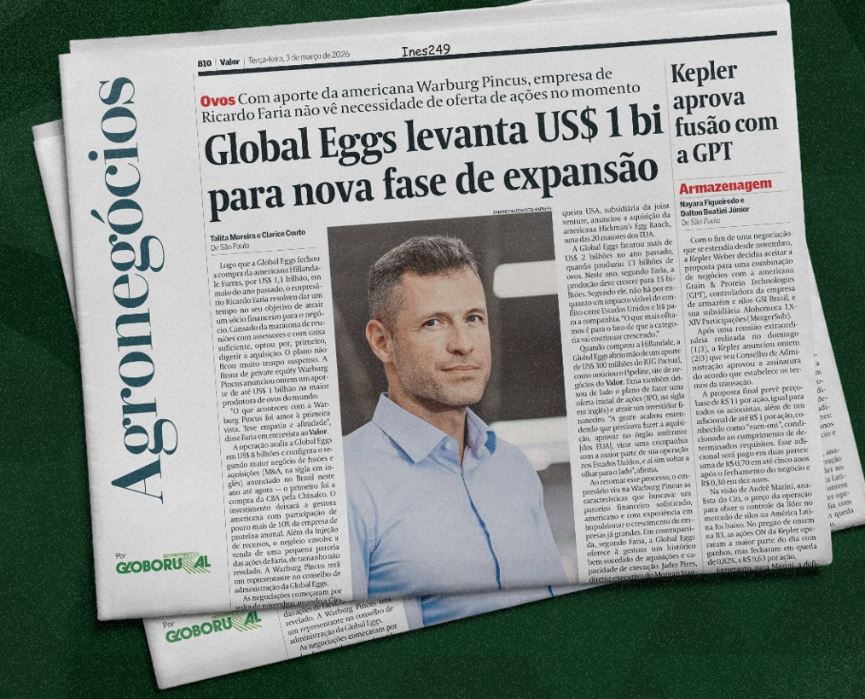
Global Eggs’ business model is vertically integrated, spanning from pullet rearing and feed formulation through to packaging and distribution logistics, offering a complete range that includes conventional, free-range, cage-free and specialty eggs. The group’s combined revenues exceeded USD 2 billion in 2024, and the company has grown through a combination of organic expansion and aggressive strategic acquisitions.
“The signal from major capital is clear: the table egg is not just another commodity, but an asset with structural demand and global consolidation potential.”
A chain of acquisitions reshaping the map
The pace of growth of the Global Eggs holding company, domiciled in Luxembourg, over the past two years has been remarkable. In 2024, the company acquired Grupo Hevo Group, Spain’s second-largest egg company, with 15 farms distributed across Catalonia, the Basque Country, Madrid and Valencia, for EUR 120 million.
The Spanish division, Hevo Group, headquartered in Guadalajara and led by Brazil-born, Spain-based André Baldissera, now brings together eight prominent companies in the poultry sector: Dagu, Huevos Roig, Granja Agas (these three formed the founding core) and five subsequent acquisitions: Avícola Larrabe (August 2024), the Navarrese Granja Legaria (May 2025), the Castile and León-based El Granjero (August 2025), the Galician Avícola Tratante (1 December 2025) and the most recent acquisition, Granja Avícola C Padrino SA (January 2026).
However, the move that truly transformed the group’s scale was the acquisition of Hillandale Farms in 2025 for USD 1.1 billion, one of the five largest egg producers in the United States. That transaction doubled Global Eggs’ production and raised its annual revenues to over USD 2 billion. As part of that deal, the private equity arm of BTG Pactual, Brazil’s largest investment bank, injected USD 300 million in exchange for an 11% stake in the group.
“In less than a decade, Ricardo Faria has gone from being a Brazilian producer to building a poultry empire with more than 50 farms across three continents and a projected output of 15 billion eggs in 2026.”
Why Warburg Pincus is betting on the egg
Warburg Pincus is no ordinary fund. Founded in 1966, the New York-based firm manages over USD 100 billion and maintains more than 215 companies in its active portfolio, diversified across sectors, geographies and stages of maturity. Its Capital Solutions Founders Fund, the vehicle used for this investment, closed in September 2024 with commitments exceeding USD 4 billion and has a flexible mandate that allows it to partner with founders to provide capital solutions focused on balance sheet optimisation, shareholder liquidity, mergers and acquisitions, and growth.
| Warburg Pincus is a leading global private equity firm, founded in 1966 and headquartered in New York, specialising in growth capital investments. It manages over USD 120 billion in assets, with a diversified portfolio of more than 190 companies, and has invested in sectors such as financial services, technology and healthcare across more than 40 countries. Warburg Pincus is one of the world’s largest private equity firms, with a strong track record in growth investments. As of early 2026, the firm manages over USD 100 billion in assets, having invested more than USD 125 billion in over 1,100 companies across more than 40 countries since its founding. |
Gaurav Seth, Managing Director and Head of Capital Solutions Americas at Warburg Pincus, highlighted that Ricardo Faria is an exceptional entrepreneur and that the firm aligned with his vision from the outset to build on a solid foundation in a category underpinned by enduring demand. Allison Ross, a Principal at the firm, will join the Global Eggs board of directors as part of the transaction.
“Warburg Pincus values Global Eggs at USD 8 billion — more than many listed companies in the meat sector. The egg has just moved up to a different league.”
In times of global uncertainty and geopolitical tensions, the fact that one of the world’s largest institutional investors considers the table egg not merely another commodity but an asset with long-term growth potential, underpinned by structural consumption trends that go well beyond the current high-price environment caused by avian influenza, is undoubtedly a signal that should make us proud as a sector of what we have achieved in universalising egg consumption.
| Deal summary Investor: Warburg Pincus (through WPCS Founders Fund) Recipient company: Global Eggs (headquartered in Luxembourg) Founder: Ricardo Castellar de Faria (“Egg King”) Amount: Up to USD 1 billion Valuation: USD 8 billion Production: +45 million birds | +50 farms | +15 billion eggs/year (2026) Geography: USA (Hillandale Farms), Brazil (Granja Faria), Europe (Hevo Group, El Granjero) Advisers: Morgan Stanley and Davis Polk & Wardwell (Global Eggs) | Houlihan Lokey and Latham & Watkins (Warburg Pincus) |
What this means for the laying poultry sector
The Warburg Pincus investment in Global Eggs goes far beyond the figures of the transaction itself. There are several important implications for any professional connected to the laying poultry industry.
First and foremost, it confirms an accelerating consolidation trend. The egg sector, historically fragmented and with strong local roots, is entering a phase of concentration on a global scale. The ability to operate across three continents, with recognised regional brands and an integrated vertical model, becomes a competitive advantage that is difficult to replicate.
Secondly, the deal elevates the status of the egg as a reference protein. Ricardo Faria noted in a recent interview that over the past 15 years there has been a substantial shift in consumption patterns: the egg has ceased to be a food associated with lower-income groups and has become a staple across all socioeconomic classes. Nutritional science, the rise of high-protein diets and the culinary versatility of the egg have all reinforced this perception.
Thirdly, with the new resources available, Global Eggs will accelerate its entry into markets where it does not yet have a direct presence. Warburg Pincus has more than 15 offices worldwide and a network that facilitates the identification of opportunities in Asia, the Middle East and other regions with high egg consumption growth potential.
“The egg has ceased to be a food associated with lower-income groups and has become a cross-cutting protein across all socioeconomic classes. And institutional capital already knows it.”
The avian influenza factor and pressure on supply
nnnnThe health context cannot be ignored. Highly pathogenic avian influenza has strained egg supply chains in the United States and Europe in recent years, driving up prices and reducing available supply. In this scenario, having geographically diversified operations provides a resilience that local producers cannot match. Global Eggs’ scale allows it to redistribute volumes between regions and mitigate the impact of localised outbreaks, a capability that is acquiring growing strategic value in a world where HPAI appears to have become established as an endemic risk.
nnnnnnnnn“With operations in the US, Brazil and Europe, Global Eggs can redistribute volumes between regions and mitigate HPAI outbreaks: a strategic advantage that local producers cannot replicate.”
n
And what about the stock market listing?
nnnnBefore closing the acquisition of Hillandale, Global Eggs was working on an initial public offering (IPO) project in New York, with the support of BTG Pactual. Those plans were shelved following the deal with Hillandale and the securing of financing through Rabobank and Itaú BBA. With the entry of Warburg Pincus, the company obtains the capital it needed to continue growing without an immediate need to turn to public markets, although the possibility of a future stock market listing remains on the table and could become one of the most significant events in the global laying poultry sector in the coming years.
nnnnFederico Castelló
Founder and Director of NeXusAvicultura.com
To learn more:
-. Holding Global Eggs
-. Hevo Group
-. Company news at NeXusAvicultura
-. Purchases and acquisitions and investments in poultry
nnnn
Want to stay one step ahead in poultry?
Subscribe free to our eNewsletter and receive a weekly selection
of the best information to anticipate trends, stay up to date and grow as a poultry professional.
NeXusAvicultura : Vision, Criteria, Quality and Context.