
Federico Castelló
Some trade fairs exist to sell and others exist to think. VIV Europe belongs to the second category, although along the way it has also achieved the first, and in abundance. But its history — which begins well before anyone called it “the poultry fair with the greatest number of innovations in the world” — is the story of an industry that learned to see itself with global ambition from a corner of the Netherlands.
VIV Europe has just taken a historic step, as announced in January 2026, moving from a four-year cycle to a biennial one, and this change reflects the dizzying pace at which poultry innovates today. What you may not know is where this fair really comes from, nor how much ground it has covered from its origins to becoming the world reference event for poultry innovations.
The 1960s: when it all began with live birds
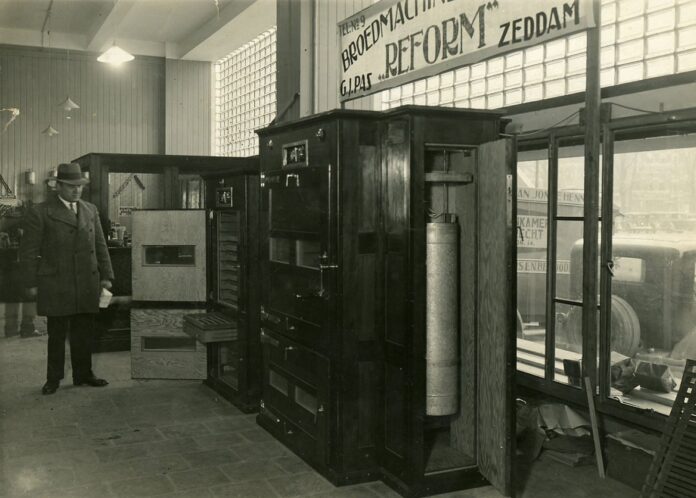
Before VIV itself existed, Utrecht had been hosting, since before 1926, a fair called Ornithophilia, dedicated to both the exhibition of live birds and poultry equipment. It was a peculiar mix, a product of its time, reflecting a poultry sector that was still more artisanal than industrial. But the Dutch — with that entrepreneurial vision that characterises them — understood before anyone else that the future of poultry production lay in technology, not in plumage. Ornithophilia was the embryo from which, in 1974, the first VIV was born as a trade fair specialising in professional poultry and livestock production.
With 204 exhibitors and barely 13,700 visitors in that first year, no one would have bet then on what it was to become. But the model was solid: a fair without live animals, focused on the value chain, on know-how, on business. Utrecht also had a logistical advantage that was hard to match: situated at the geographical heart of Europe, one hour from Amsterdam Airport, accessible by train, road and air from any capital on the continent.
1982: first visits by Spanish professionals
At the 1982 VIV edition, a small group of European specialist journalists were invited to attend. Even then, with 345 exhibitors and 18,800 m² of stands spread across three halls, the fair was a breathtaking experience. The catalogue was published in four languages — Spanish was not yet among them — and international representation was already striking: the Netherlands, Belgium, Germany, Great Britain, Denmark, Italy, France. Spain, sadly, was conspicuous by its absence at the stands, isolated from the European concert it aspired to join.
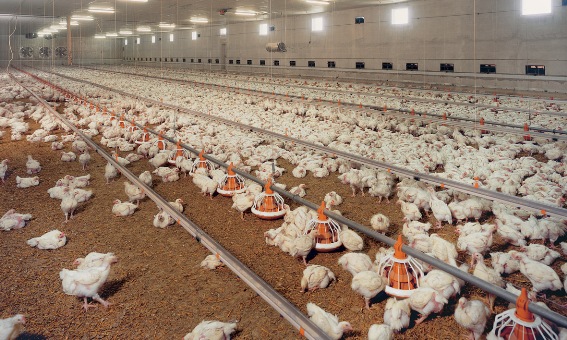
What strikes me about that year was not the size of the fair, but its visionary orientation. While Spain was still debating whether or not to mechanise feeders, Utrecht was showcasing automated systems for ventilation control in poultry houses, heat recovery units for broiler farms, and Dutch machines to mechanise all hatchery operations with electronic systems tailored to each client. It was another world. And that world was about to arrive.
From national fair to global stage (1986–1994)
In 1986, rebranded as VIV Europe to distinguish it from VIV Asia (and the other VIV events on other continents that the organisation would go on to create), the fair already counted 499 exhibitors from 25 countries and attracted more than 54,000 visitors. The now-defunct magazine Selecciones Avícolas organised that year the first of several group trips with Spanish poultry farmers and technicians — around fifty people, including professionals and their families — turning the visit to Utrecht into something akin to a pilgrimage of knowledge. The Spanish group visited state-of-the-art Mobba egg graders, Dutch laying hen farms housing 80,000 birds in controlled environments, poultry slaughterhouses processing 6,000 birds/hour with full automation, the Intervet laboratory, and the genetics company Euribrid in Boxmeer: all of that, together with what was seen at VIV itself, undoubtedly helped the still small number of Spanish attendees when it came to making strategic decisions afterwards.
For the 1990 edition, which was then held in November, VIV again broke its own records: 36,500 m², 1,046 companies represented, 57,852 visitors of whom 11,510 came from abroad. The proportion of foreign visitors grew edition after edition as the most eloquent indicator of its international reach. In 1994, VIV’94 received visitors from 27 countries with direct stands and reached 58,395 attendees — of whom 17,096 were international — over four days in November.
It was the first time the organisers awarded innovation medals to the most outstanding products: incubators with computerised remote control, automated evisceration systems, electronic yolk-colour graders. The fair was no longer just a showcase — it had become a tribunal of innovation.
The 21st century: consolidation of a model
VIV 2001, co-located for the first time with VICTAM International — the compound feed manufacturing technology fair — represented another qualitative leap. The VIV+VICTAM combination brought together the entire chain in Utrecht: from raw material to processed feed, from the genome to the finished ration. In that edition, with 766 VIV exhibitors and 326 additional VICTAM exhibitors, 32 nationalities and a total of 5 continents represented, the fair reached a scale that few agri-food industry events worldwide could match.
The 2010 edition: a truly ashen year (literally)
The Eyjafjallajökull volcano, in 2010, disrupted European air traffic just as VIV was getting under way. That edition, with only 10,000 visitors against those expected, paradoxically demonstrated two things: that the fair was so dependent on international connectivity that a volcanic ash cloud could cut it in half, and that even so exhibitors and organisers held their nerve. In 2014, having weathered the setback, VIV surpassed itself with 20,214 visitors from 136 countries and what was probably its finest edition to that point.
2018: the year poultry looked to the future from Utrecht
VIV Europe 2018 was the most impressive of all the poultry trade fairs I have covered throughout my career. Not only for the figures — 591 exhibitors from 47 countries, 18,363 professional visitors from 144 countries — but for the density of ideas that permeated its halls. Chick hatching directly on the farm floor, vaccination robots for broiler breeders, red mite counting systems using smart perches, cloud-based management software accessible from a mobile phone in real time: none of that was the future of poultry farming any more. It was the present. Trends that the following edition, the 24th, VIV EUROPE June 2022, only served to consolidate.
From Utrecht to the world: the expansion of the VIV model
What began as a Dutch intensive livestock fair has over time become a global brand. VIV Asia in Bangkok, VIV MEA in Abu Dhabi, VIV China in Beijing, VIV Russia in Moscow, VIV Turkey in Istanbul. The Dutch model — a technical fair, without live animals, focused on the value chain and on direct connections between suppliers and buyers — proved exportable to any latitude where a poultry industry with ambitions to grow existed.
But the centre of gravity has always been Utrecht. Because Utrecht is not merely a conveniently located city on the European map: it is the place where, for five decades, the global poultry industry has come to take its own pulse, to discover what lies ahead, and to do the business that cannot be done anywhere else with such a concentration of talent and decision-making power per square metre.
The 2026 edition, from 2 to 4 June, is the 25th. And it is the first of a new biennial cycle. Whoever is not there will not merely miss a trade fair. They will miss the conversation that defines the sector for the next two years.
Federico Castelló
Founder of NeXusAvicultura.com
🔗 Free registration for professionals at: europe.viv.net
For further information:
-. Fair VIV EUROPE 2026
-. International events calendar: https://NeXusAvicultura.com/Calendario/