

NeXusAvicultura | Company News | April 2026
The Consejería de Desarrollo Sostenible of Castilla-La Mancha granted approval on 10 April for the Cuenca-based group’s facility at the Hoya Cabrera site, which will produce barn eggs with 810,000 laying hens and 187,500 rearing pullets
Grupo Avícola Rujamar, one of the ten largest egg producers in Spain, has obtained the Integrated Environmental Authorisation (AAI) to build a large-scale new poultry facility at San Clemente (Cuenca). The resolution was issued by the Consejería de Desarrollo Sostenible of the Junta de Castilla-La Mancha and published in the Diario Oficial de Castilla-La Mancha (DOCM) on 10 April 2026. With this approval, the Cuenca-based company clears the main administrative hurdle for a facility that will reach a total capacity of 997,500 birds and will become one of the largest laying farms in the country.
«810,000 laying hens and 187,500 rearing pullets across eight houses: Rujamar is designing at San Clemente one of the largest barn-egg operations on the Spanish map.»
What exactly the DOCM resolution authorises
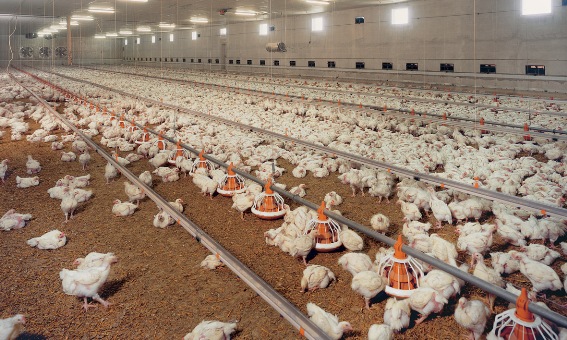
The AAI granted by the Consejería de Desarrollo Sostenible covers the construction and operation of a poultry complex at the Hoya Cabrera site, within the municipal district of San Clemente (Cuenca). The authorised capacity is structured in two complementary production blocks:
→ Six identical laying houses, each with a capacity of 135,000 hens, for a total of 810,000 laying hens.
→ Two rearing houses, one for 135,000 pullets and one for 52,500, totalling 187,500 birds.
With respect to the original project, the regional Administration reduced the rearing flock size—initially planned at 270,000 birds—at the request of the report issued by the Confederación Hidrográfica del Guadiana, with a corresponding adjustment in the water consumption associated with the activity. The total therefore stands at 997,500 authorised birds.
Production system: multi-tier aviary and barn eggs
All production will be carried out under a cage-free multi-tier aviary system, meaning that all eggs marketed will be classified as barn eggs (category 2 under the European labelling system). The rearing houses will be equipped with three-tier aviary systems, consistent with the behavioural learning that future laying hens must acquire before being transferred to the laying houses.
The production cycle of the facility will follow the standard scheme for installations of this type: receipt of day-old pullets in the rearing houses, housing until 17 weeks of age—when they reach sexual maturity—and subsequent transfer to the laying houses, where they will undergo a production cycle of between 52 and 80 weeks, with an approximate annual replacement rate of 60%.
«All production will be barn eggs in multi-tier aviaries: time has vindicated Rujamar as the first major egg producer to commit to having 100% of its laying flock in cage-free systems.»
Ancillary facilities: processing, feed and accommodation
The complex will not be limited to bird housing. The environmental resolution also provides for the construction of an integrated production centre for the grading and preparation of eggs prior to dispatch, as well as the auxiliary infrastructure required to ensure the self-sufficient operation of the facility.
These installations include feed storage silos, changing rooms, offices and on-site housing for farm workers within the complex itself. The design is conceived to operate as a closed production complex, meeting the biosecurity standards now required for the management of high-density livestock facilities in a health context shaped by the pressure of highly pathogenic avian influenza.
In April 2024 the company suffered a devastating fire that affected three of its houses, with an economic impact of more than €17 million, from which it has since fully recovered.
Rujamar strengthens its production hub in Cuenca
Founded in 1984, Grupo Avícola Rujamar has the backbone of its operations in the province of Cuenca, with production centres in San Lorenzo de la Parrilla, Saelices and Honrubia. These will be joined, following the AAI obtained, by the new San Clemente farm. The company also has another expansion project under way in the provincial capital itself, forming a strategy of territorial concentration that consolidates Cuenca as the group’s epicentre.
The Hoya Cabrera facility will become, by volume, the highest-capacity installation in the group and one of the largest in the Spanish laying sector. The fact that all production is oriented towards barn-egg format in aviaries is a clear indicator of the structural change the market is undergoing: the country’s leading operators are reassigning their productive capacity outside the cage, in line with retail commitments and social demand.
«With San Clemente, Rujamar raises its production hubs in Cuenca to four and consolidates the province as its industrial epicentre.»
The outstanding administrative step
The Integrated Environmental Authorisation is the unified permit required under EU and Spanish regulations for livestock farms that exceed certain capacity thresholds. It consolidates into a single procedure the sectoral authorisations covering atmospheric emissions, discharges, waste and contaminated land, and is issued following environmental impact assessment and the mandatory reports from the bodies with jurisdiction over the project—including, in this case, the Confederación Hidrográfica del Guadiana.
With this milestone achieved, Rujamar now has the administrative framework in place to proceed with construction works at Hoya Cabrera. The effective commissioning of the facility and the development of its construction phases will be the next chapters in a project set to mark a turning point in the Spanish poultry landscape over the coming decade.
PROJECT SUMMARY SHEET
| Developer | Grupo Avícola Rujamar, S.L. |
| Location | Hoya Cabrera site · San Clemente (Cuenca) |
| Authorisation | Integrated Environmental Authorisation (AAI) |
| Issuing authority | Consejería de Desarrollo Sostenible · Junta de Castilla-La Mancha |
| DOCM date | 10 April 2026 |
| Total capacity | 997,500 birds |
| Laying hens | 810,000 hens (6 houses × 135,000) |
| Rearing | 187,500 pullets (135,000 + 52,500 in 2 houses) |
| Production system | Cage-free multi-tier aviary · barn eggs |
| Production cycle | Rearing to 17 weeks · laying 52–80 weeks · replacement ≈60% per year |
| Ancillary facilities | Egg processing centre, feed silos, changing rooms, offices, housing |
| Environmental adjustment | Rearing flock reduced from 270,000 to 187,500 birds following CH Guadiana report |
| Group standing | Among the 10 largest egg producers in Spain |
For further information:
-. News on poultry companies at NeXusAvicultura.com
-. Official Gazette of Castilla-La Mancha, 10 April 2026: Resolution of 30/03/2026, of the Dirección General de Calidad Ambiental, granting integrated environmental authorisation for the laying hen and rearing pullet poultry facility located in the municipal district of San Clemente (Cuenca), held by Grupo Avícola Rujamar, SL, file number AAI-CU-161. [2026/2560]
Want to stay one step ahead in poultry?
Subscribe free to our eNewsletter and receive a weekly selection
of the best information to anticipate trends, stay up to date and grow as a poultry professional.
NeXusAvicultura: Vision, Insight, Quality and Context.