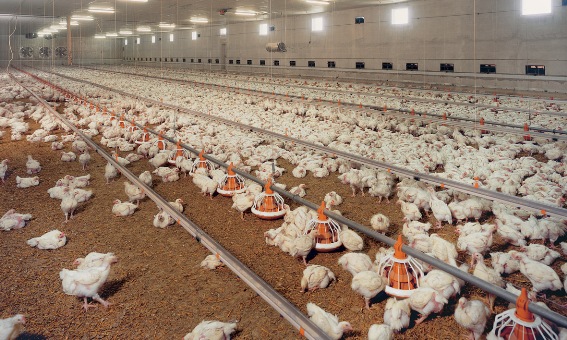


Decoding distress in the first 3 days of life
The first three days on farm, known as the reception period or chick placement phase, represent one of the most critical stages in poultry production. Within this brief window, key variables are determined, including viability, flock uniformity, metabolic start-up and, consequently, the productive performance of the flock throughout the entire cycle. Despite advances in sensor implementation, automated environmental control and standardised protocols, a gap persists between what the equipment indicates and what the chick actually feels and experiences.
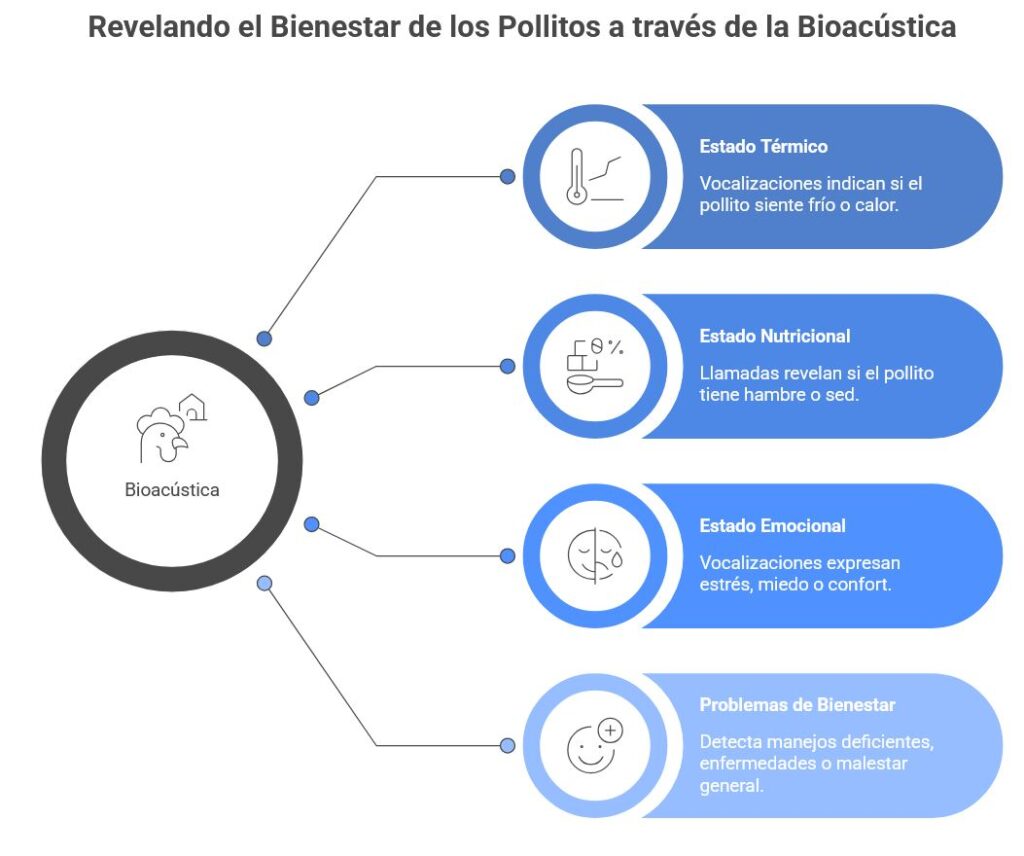
In this context, bioacoustics is emerging as a highly valuable complementary tool. Chick vocalisations contain precise biological information about their thermal, nutritional and emotional state, among other parameters. Stress or distress calls are emitted by chicks when something is wrong and enable the detection of welfare issues, poor management practices, disease, hunger or thirst, and failures in homeothermy.
Detecting these vocalisations allows for direct, real-time assessment of animal welfare and can be key to monitoring the chick placement phase.
Acoustic monitoring on farm is a non-invasive method that enables real-time evaluation of the physiological status and welfare of birds through the analysis of their vocalisations. Thanks to its continuous, automated and non-disruptive nature, acoustic monitoring is an innovative and key tool for optimising management, improving welfare and increasing productive efficiency on poultry farms.
The chick as a poikilothermic organism
During the first days post-hatch, the chick is a poikilothermic organism: it cannot regulate its body temperature efficiently and depends almost entirely on the environment to maintain its thermal homeostasis. Effective thermoregulation requires a precise combination of air temperature, litter temperature, relative humidity, air speed and early access to feed and water.
When any of these factors fails, the chick responds immediately through behavioural and physiological changes. One of the earliest and most sensitive indicators of such disruption is vocalisation. Unlike productive parameters that manifest days later (weight gain, feed conversion, mortality), vocalisation is instantaneous.
The stress spectrum: Cold vs. Heat
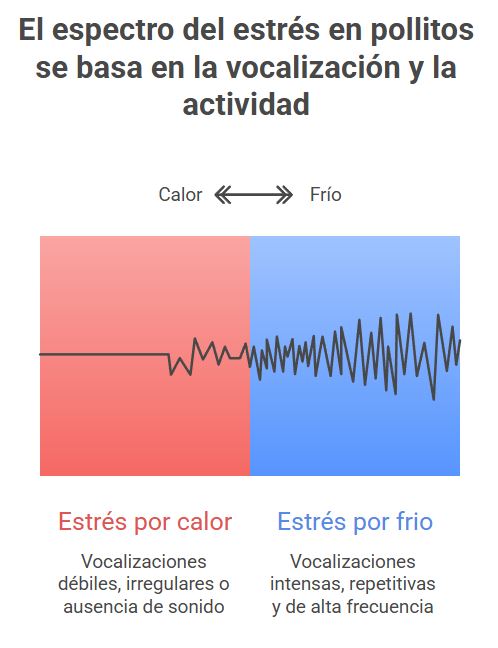
The so-called “distress call” is not a uniform signal. Although to the human ear it may simply be perceived as an increase in ambient noise, acoustic analysis reveals clearly distinguishable patterns depending on the type of stress:
- Cold stress. Cold is, by far, the most potent trigger of vocalisations in newly placed chicks. When body temperature falls below the comfort range, the chick emits intense, repetitive, high-frequency vocalisations, generally above 4 kHz. From an evolutionary perspective, this signal is intended to alert the mother hen for warmth. In a commercial house, a shrill, high-pitched and continuous sound is an unambiguous sign of effective cold at the chick level, even when environmental probes indicate “correct” values. This frequently occurs when heat distribution is poor, draughts exist at litter level, or floor temperature is insufficient.
- Heat stress. Heat stress presents a different acoustic signature and is sometimes more difficult to detect. In situations of extreme heat, the chick reduces its activity and may enter a lethargic state, emitting few vocalisations. Before reaching the intense panting more characteristic of older birds, weak, irregular vocalisations or the disappearance of comfort calls may be observed. In this case, the absence of sound is as informative as an excess of it.
Hunger, fasting and access to resources
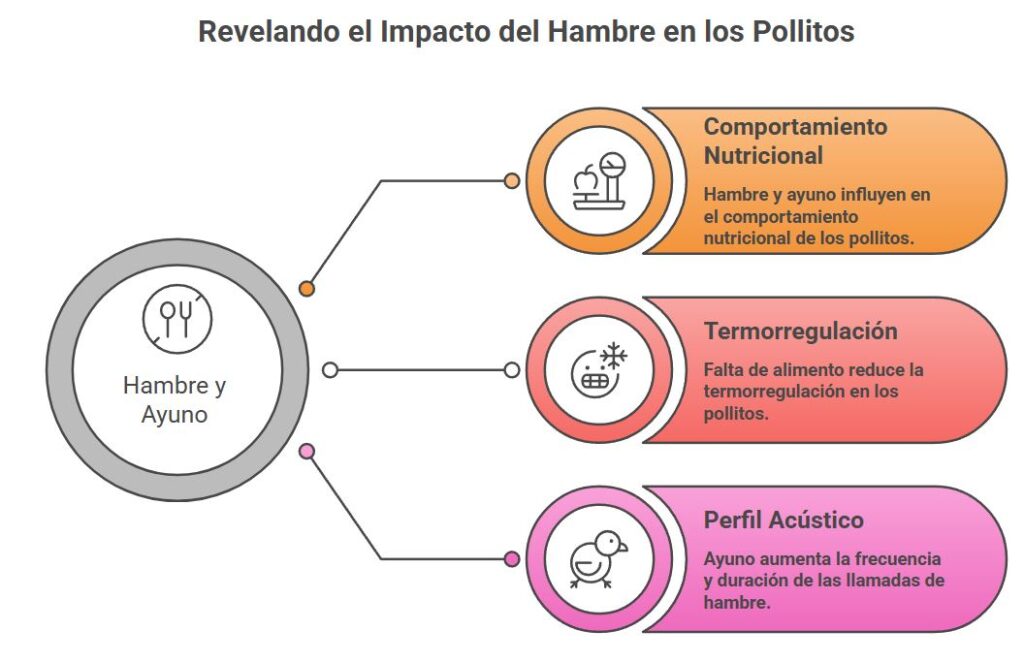
Nutritional behaviour is closely linked to thermoregulation and the acoustic profile of the flock.
A common scenario at farm reception is observing active chicks with pecking behaviour, yet with an ambient sound that remains sharp and penetrating. In these cases, the problem is not always temperature, but rather the actual accessibility of feed and water. Critical factors may include the height and correct distribution of feeders, or the appropriate pressure and flow rate in water lines. A chick that does not consume feed produces less metabolic heat (digestive thermogenesis), cools down more rapidly and enters a vicious cycle of cold-hunger-stress that is clearly detectable from an acoustic standpoint.
Post-hatch fasting, whether due to logistical delays or difficulties in accessing feed on farm, has direct effects on vocalisation. Calls associated with hunger tend to exhibit higher fundamental frequencies, greater individual duration and increased repetitiveness.
Quantifying animal welfare
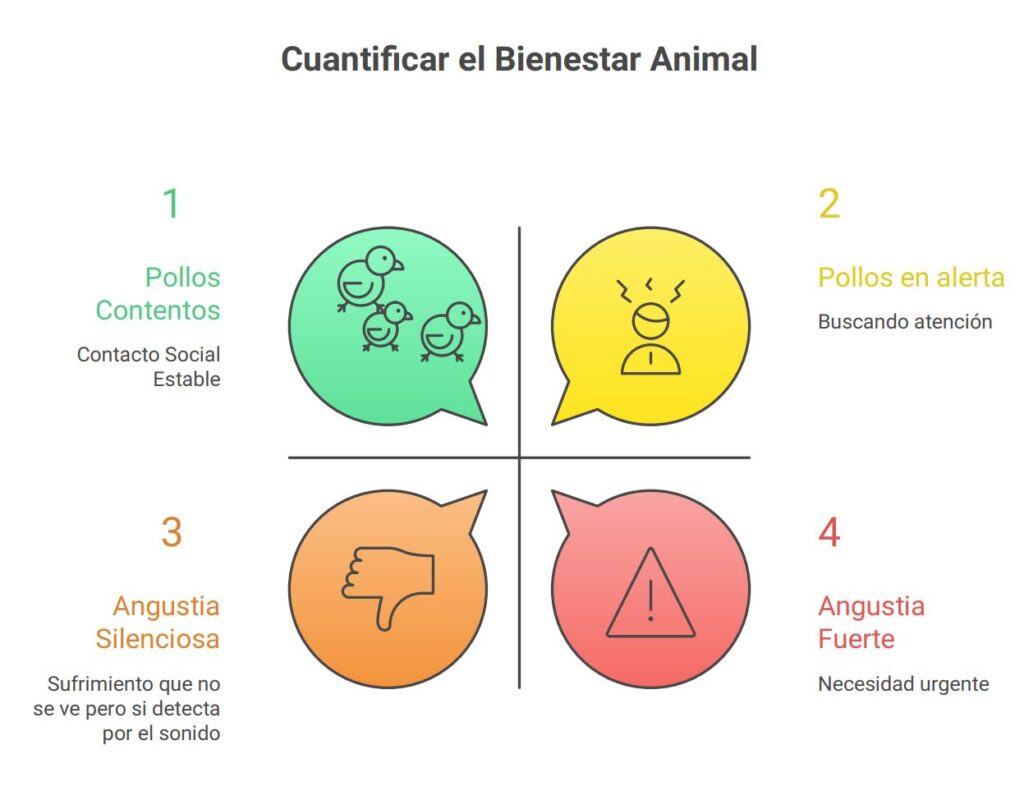
Traditionally, animal welfare has been assessed manually and qualitatively due to the lack of quantitative methods that are easy to implement. Bioacoustics offers an objective and quantitative approach to evaluating animal welfare by systematically analysing the vocalisations produced by birds. Measuring parameters such as frequency, number of vocalisations, intensity, rhythm and entropy, among others, correlates with the physiological and emotional states of the animal, enabling automatic quantification of animal welfare. For example, with regard to vocalisation frequency and number:
- High vocalisation frequency and number: indicates increased physiological arousal and is therefore associated with states of alertness, stress, hunger or thirst, distress or pain. Chicks increase their vocalisation rate to stand out above the flock or background noise.
- Low vocalisation frequency and number: indicates a state of comfort and welfare, suggesting stable social contact.
Currently, some Precision Livestock Farming (PLF) systems use this metric to generate automatic alerts. The system notifies the operator to check heating, ventilation or resource access.
Integrating bioacoustics into daily management
Beyond technology, bioacoustics restores the importance of a traditional yet undervalued tool: the ear of the poultry farmer and the veterinarian. Training active listening to the flock can significantly improve real-time decision-making.
Some practical recommendations include:
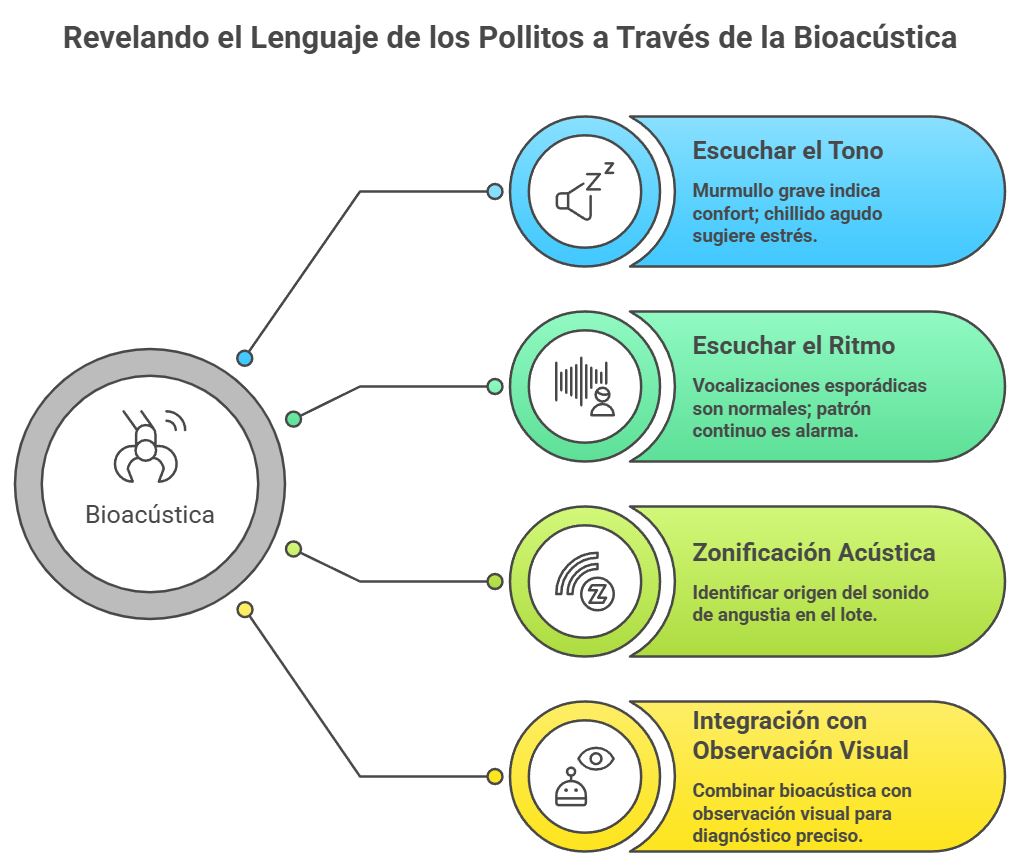
- Listen to the tone: a low, gentle murmur indicates comfort; a sharp, penetrating shriek suggests stress.
- Listen to the rhythm: sporadic vocalisations are normal; a continuous, cyclical pattern is a warning sign.
- Acoustic zoning: identify whether the distress sound is coming from the entire flock or from specific areas, such as the perimeter, air inlets or zones with lower stocking density.
Complementing this information with visual observation (chick distribution, posture, activity) and environmental data enables a more accurate diagnosis.
The type and intensity of sounds emitted by chicks at the start of rearing are extremely valuable signals — if we know how to interpret them.
Bioacoustics applied to poultry farming demonstrates that chicks constantly communicate their welfare status. Distress calls are not simply annoying noise; they are biological signals of high diagnostic value, particularly during the first days of life.
In an increasingly technology-driven production environment, learning to “translate” the chick’s language — whether through trained hearing or automated systems — represents a genuine competitive advantage. Listening to the flock brings us closer to a more efficient, precise production model aligned with the principles of animal welfare.
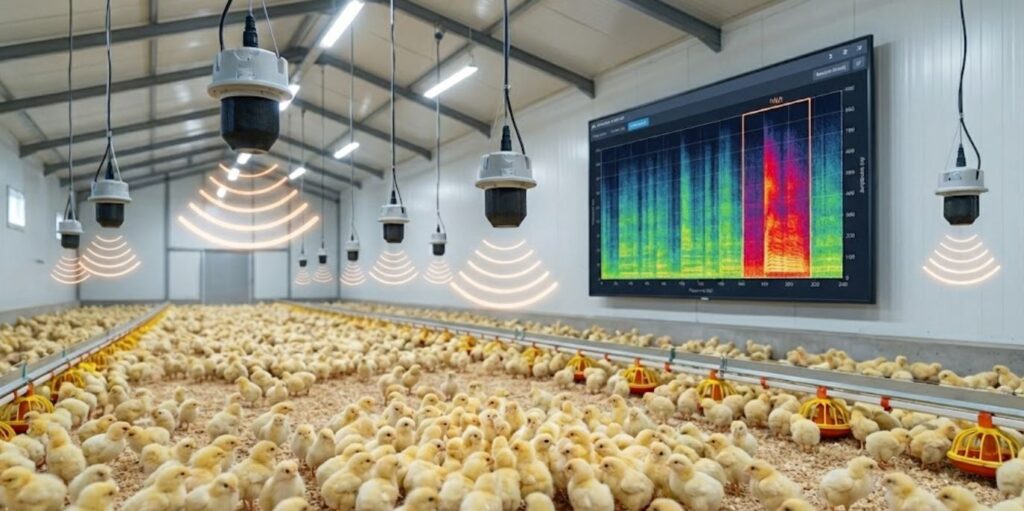
Ultimately, the chick never lies — the challenge for the modern poultry farmer is to rely on the appropriate bioacoustic technology to listen 24/7 and to know how to interpret its language.
Gerard Ginovart, Tesa Panisello and Silvia Riva
www.CEALVET.com
Benefits of bioacoustics in poultry farming:
-. Article 1: Why the chick’s voice matters: scientific foundations of avian bioacoustics
-. Article 2: From egg to first cheep: what chick sounds tell us at the hatchery.
-. Article 3: Thermoregulation, hunger and stress: what chick ‘distress calls’ reveal