
AVIAN HEALTH | EUROPEAN HEALTH ALERT | APRIL 2026
nnnnGenotype VII.1.1 breaks through barriers and penetrates vaccinated flocks. Brussels, Berlin, Warsaw and Valencia are committed to compulsory vaccination, yet outbreaks continue to emerge
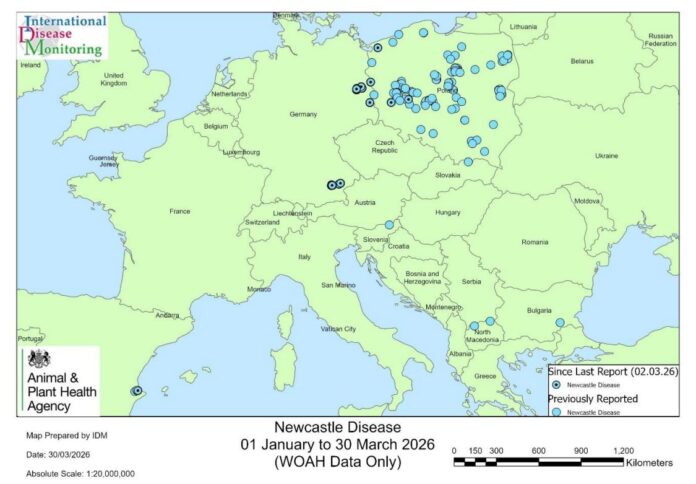
nnnnNeXusAvicultura Editorial Team, 23 April 2026 – The animal health landscape of European poultry farming presents, as of the close of April 2026, a singular situation. Newcastle disease — caused by avian paramyxovirus type 1, APMV-1 — has ceased to be a sporadic threat and has become an ongoing risk across the European map. Poland is facing the worst crisis in its recent history, Germany has lost its commercial outbreak-free status after 18 years, and Spain, which had recorded no outbreaks since 2022, has an active health alert in the Valencian Community with seven confirmed outbreaks to date. The common thread running through the majority of these incidents is a shared protagonist: genotype VII.1.1, a velogenic variant capable of overcoming incomplete vaccine-induced immunity and spreading between countries, partly through migratory corridors and trade routes.
nnnn“The virus has ceased to be a sporadic threat and has become a structural risk across the European poultry map.”
nnn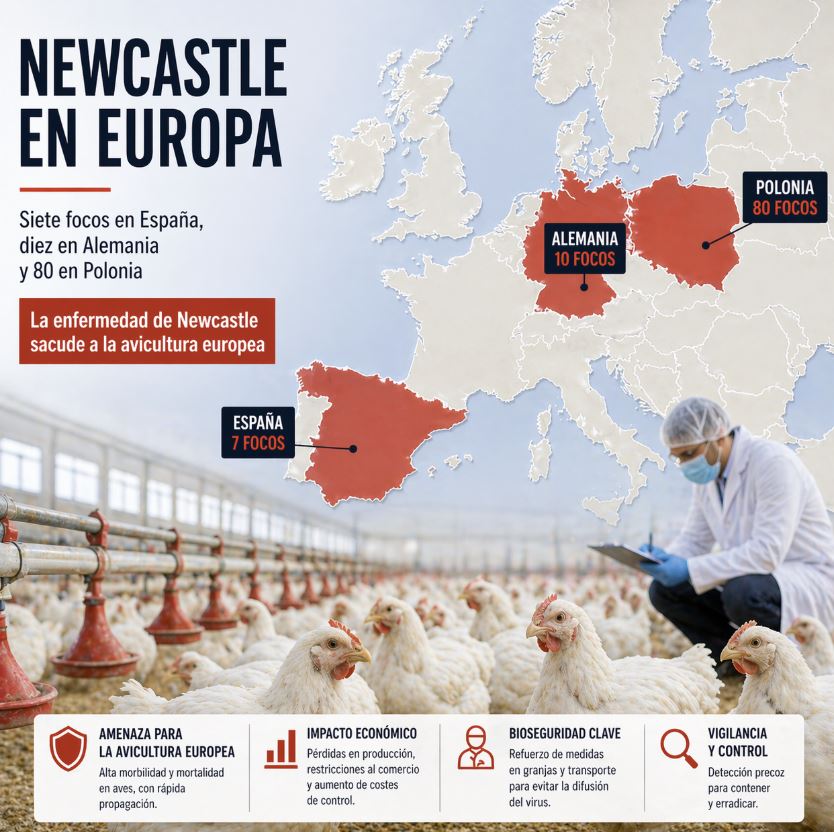
Spain: the Vall d’Albaida, epicentre of seven outbreaks in four months
nnnnThe reappearance of the virus in Spain occurred on 29 December 2025 at a farm of 15,000 broiler chickens in Llutxent (Vall d’Albaida district, Valencia), breaking the disease-free status maintained for three years. NeXusAvicultura’s initial coverage had already warned that the 10-km radius established by MAPA encompassed a considerable poultry density, increasing the risk of secondary outbreaks. These were not long in being confirmed.
nnnnOn 2 January 2026, three simultaneous secondary outbreaks were reported in the same municipality, affecting farms of 28,500, 16,500 and 20,100 birds respectively. On 20 January, a fifth outbreak was confirmed in El Palomar, at a 75,000-broiler facility located 12 km from the initial outbreaks. After several weeks of apparent containment — Valencian veterinary services managed to protect 41 of the 45 holdings within the surveillance perimeter, as we reported at the time — the virus resurfaced.
nnnnOn 9 March 2026, a sixth outbreak was declared in Terrateig, at a farm of 27,000 laying hens aged 23 weeks, with PCR confirmation of a velogenic strain by the Central Veterinary Laboratory in Algete. One month later, on 9 April, the Valencian authorities notified the seventh outbreak, this time in Ráfol de Salem, at a farm of 26,300 broilers aged 35 days with 10% cumulative mortality recorded on 4 April. A key fact: the birds had been vaccinated.
nnnnIn addition to this seventh outbreak, a highly probable suspected case has been identified barely 1 km from the affected farm: a holding of 32,000 laying hens displaying neurological signs and mild mortality, which has already returned a positive PCR result for the virus and is pending pathogenicity results. The geographical concentration is telling: seven confirmed outbreaks — eight probable — across just four municipalities in the Vall d’Albaida.
nnnnnnnnn“In four months, Spain has gone from regaining disease-free status to recording seven outbreaks in a single Valencian district.”
n
Health emergency and compulsory vaccination
nnnnIn response to the persistence of the virus, the Plenary of the Consell de la Comunitat Valenciana approved on 30 January 2026 a formal declaration of health emergency and subsequently moved towards compulsory vaccination across the entire autonomous territory, with a package of measures including enhanced biosecurity, perimeter control and the deployment of dedicated cleaning and disinfection teams. This represents the most ambitious action taken in Spain against the disease since the 2018 outbreak.
nnnn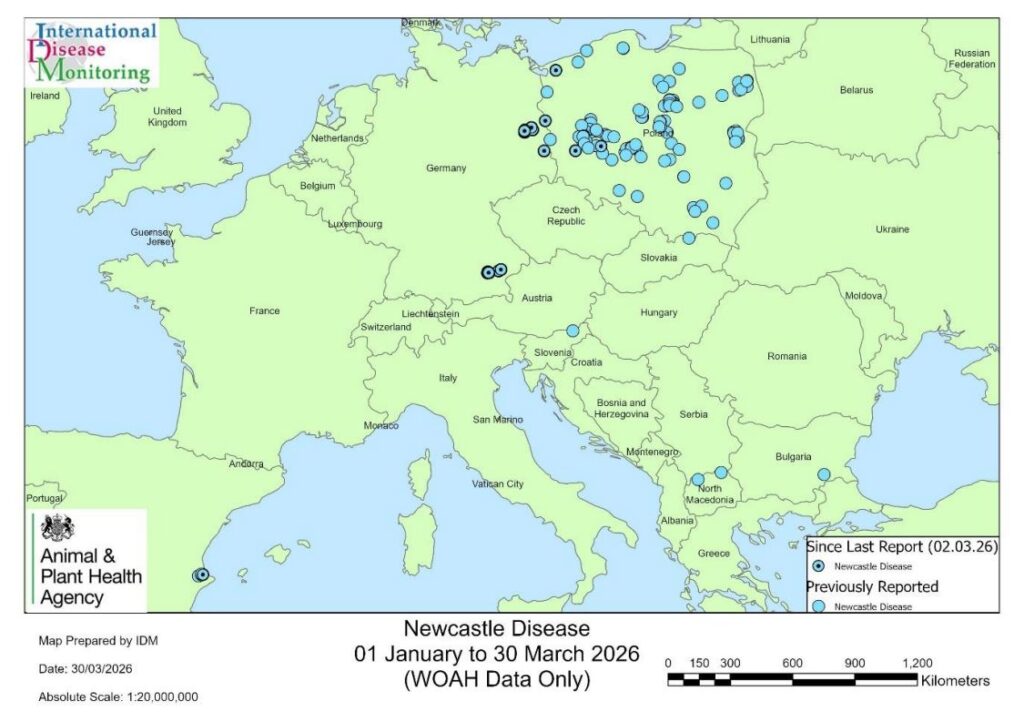
New outbreaks (those occurring since 3 March 2026) are marked with dotted centres.
Poland: 7 million birds culled and compulsory vaccination failing to halt the virus
nnnnIf there is one country setting the pace of the disease in Europe, it is Poland. The EU’s leading poultry meat exporter closed 2025 with 80 confirmed outbreaks and more than 7 million birds culled or lost to the disease — a figure more than double the three million recorded in 2024 — according to the balance published by the Polish Veterinary Services at the end of December. The most devastating episode occurred on 29 May in Adamowo (Mazovia), where 1.35 million broilers were culled in a single outbreak.
nnnnThe Polish government’s response was decisive. On 25 April 2025, compulsory vaccination against Newcastle disease was approved for the entire national territory, covering chickens, hens and turkeys on commercial farms and chicks in hatcheries, with a staggered entry into force between late April and 13 May of that same year. The European Commission concurrently endorsed Poland’s 13-point plan against avian influenza and Newcastle disease as an alternative to more restrictive Community measures. Details of notifications can be consulted on the European Commission’s ADIS portal.
nnnn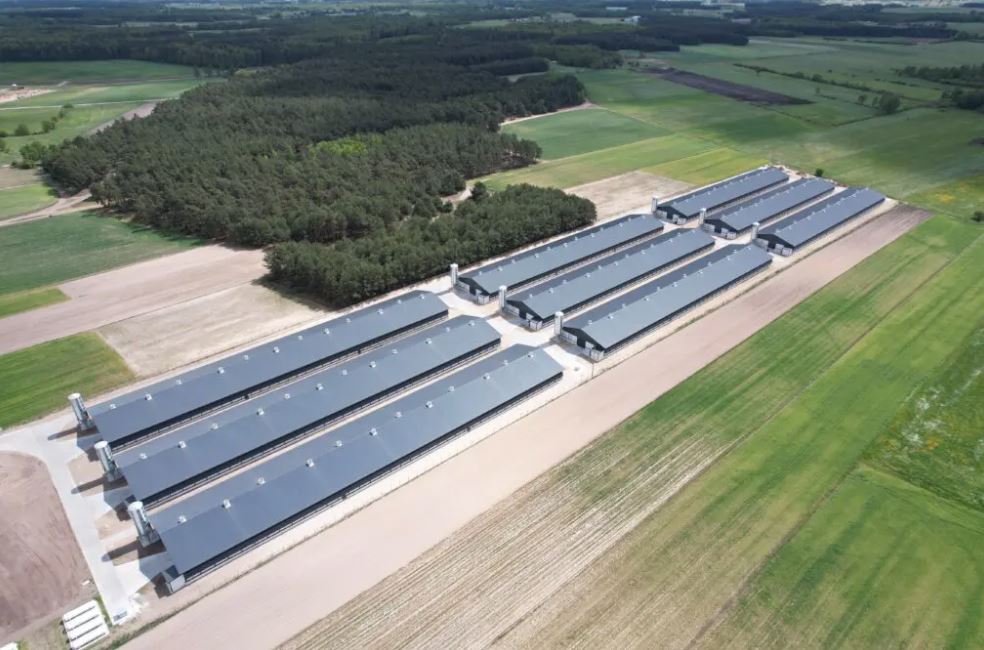
The balance for the first months of 2026 demonstrates, however, the difficulty of containing the virus: from late January to the first week of March, 17 new outbreaks were recorded on commercial farms, widely distributed across central and western Poland, with an estimated impact of 1.8 million birds affected. In March, five additional outbreaks were added and at least half a million birds were culled. The epidemiological reading is concerning: compulsory vaccination reduces incidence but does not eliminate it, particularly when vaccine administration is suboptimal or the vaccination schedule is incomplete — a factor especially relevant in broilers given the short productive lifespan of flocks.
nnnnnnnnn“Poland culled more than 7 million birds in 2025 due to Newcastle disease, a figure more than double that of the previous year.”
n
Germany loses disease-free status after 18 years: Brandenburg, Bavaria and the Polish genotype
nnnnThe most disruptive development of 2026 has undoubtedly occurred in Germany. On 20 February, the country’s first commercial Newcastle disease outbreak since September 2008 — and the first in the federal state of Brandenburg since 1996 — was confirmed at a turkey fattening farm in Neißemünde, less than one kilometre from the Polish border. The holding, with a flock of 18,000 turkeys, recorded an atypical increase in mortality among a group of six-week-old animals.
nnnnThe Friedrich-Loeffler-Institut (FLI), the national reference laboratory, characterised the virus as genotype VII.1.1, highly similar to that circulating in Poland. Days later, a second outbreak was confirmed in Bavaria, northwest of Munich — some 500 km from the first — and in the following weeks the situation escalated to reach, according to the latest figures available in mid-March, approximately ten official outbreaks affecting one turkey house and nine laying hen operations.
nnnnAlthough Germany has maintained compulsory vaccination in chickens and turkeys for decades, the health authorities have pointed to a critical window of vulnerability coinciding with the timing of booster dose administration, as well as to a possible introduction of the virus linked to geographical proximity to active Polish outbreaks. The Spree-Neisse district, which borders Poland, went as far as decreeing additional confinement measures effective 25 February, prohibiting movements and reinforcing disinfection at farm access points.
nnnnnnnnn“Eighteen years free of disease and a single flock of turkeys in Brandenburg were enough to return Germany to the European Newcastle disease map.”
n
The rest of Europe: wild birds and non-commercial holdings as entry points
nnnnBeyond the three major epicentres, virus circulation has been documented in other member states, albeit at considerably lower levels and, in most cases, limited to non-commercial holdings or wild fauna. Czech Republic, Slovakia, Lithuania and Latvia have notified cases throughout the winter of 2025/2026, with backyard poultry, pigeons and — in the Czech Republic — Eurasian collared doves (Streptopelia decaocto) featuring prominently, according to the latest ADIS system bulletins.
nnnnThe cumulative infectious pressure has prompted the British authorities to act. The UK Department for Environment, Food and Rural Affairs (Defra) published on 2 March 2026 a new risk assessment raising the risk of virus introduction into Great Britain from low to medium, expressly citing the German outbreak, the persistence of circulation in Poland and Spain, and the onset of the spring passerine migration. Although introduction through legal trade in live birds or poultry products is considered limited due to regionalisation, the transmission ecosystem via wild birds, vehicles and equipment remains far from under control.
nnnnnnnnn“Eighteen years free of disease and a single flock of turkeys in Brandenburg were enough to return Germany to the European Newcastle disease map.”
n
The immunological factors: why the virus continues to break through vaccine barriers
nnnnThe recurrence of outbreaks in vaccinated flocks — Spain, Poland and Germany have all documented cases in flocks with officially up-to-date vaccination protocols — does not equate to a failure of the available vaccines, but rather to a combination of factors that erode their field efficacy. European veterinary services have identified three as foremost:
nnnn- n
- Immunity gap: between the first and sixth week of life, maternal antibodies decline while the vaccine-induced immune response has yet to consolidate, leaving young birds partially exposed. Defra has identified this factor as determinant in several of the Polish and German outbreaks. nnnn
- Suboptimal administration: issues relating to dosage, water quality, handling of live vaccines or incomplete flock coverage. In broilers, with very short production cycles and intensive rotations, the margin for error is narrower. n
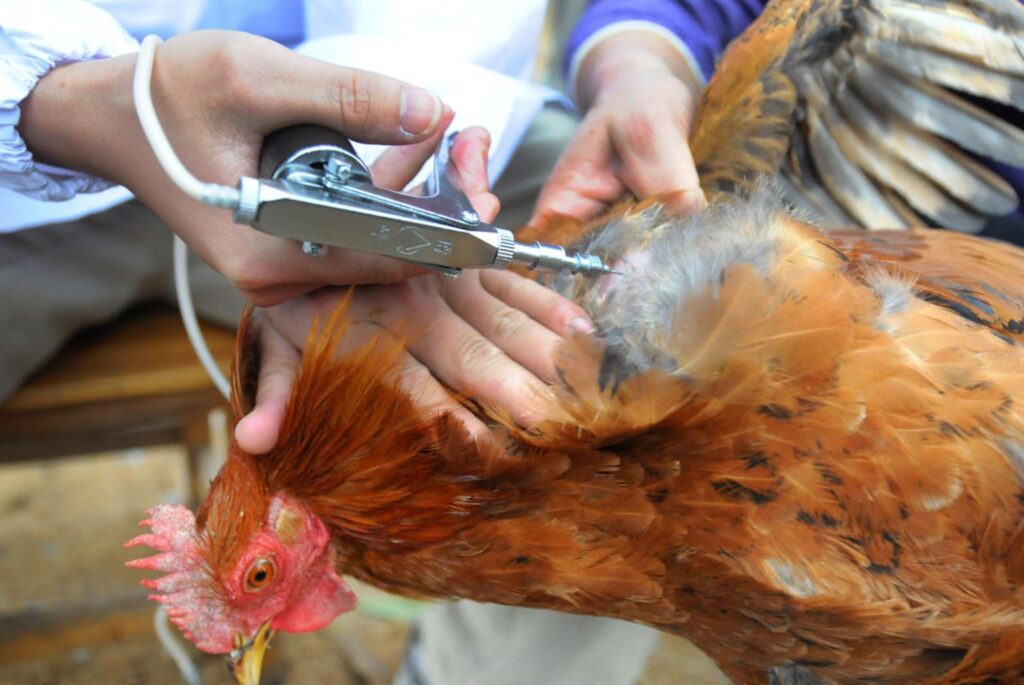
Added to all of this is the environmental pressure from wild bird populations, further compounded by the backdrop of highly pathogenic HPAI H5 that continues to circulate in Europe. The convergence of two viral threats—Newcastle and avian influenza—complicates biosecurity planning and makes it necessary to review the critical entry points of each operation, with particular attention to human contact and the exchange of materials.
nnnnClassification of Newcastle disease strains according to viral tropism and pathogenicity.
nnnn| Pathotype | Clinical characteristics |
|---|---|
| Viscerotropic velogenic | Acute and lethal infection, typically with haemorrhagic lesions in the intestine. |
| Neurotropic velogenic | High mortality preceded by respiratory and nervous signs. Intestinal lesions absent. |
| Mesogenic | Predominantly respiratory and neurological signs. Low mortality. |
| Lentogenic | Mild respiratory disease. |
| Asymptomatic enteric | Avirulent infections; replication occurs primarily in the intestine with no clinical signs. |
Differential diagnosis:
The clinical picture may be common to other respiratory diseases (mycoplasmosis, chronic respiratory disease), but the rapid progression of the condition and animal mortality allows these to be ruled out. The disease is clinically indistinguishable from highly pathogenic avian influenza, except for the characteristic green diarrhoea of Newcastle. (Source: MAPA)
Public health and the European regulatory framework
nnnnIt is worth reiterating, given its communicative importance, that Newcastle disease poses no risk to human health and that the consumption of poultry meat and eggs remains completely safe. The exceptional cases of mild conjunctivitis reported in handlers are limited to very close contact with infected birds in the absence of basic protective measures.
nnnnOn the regulatory front, all actions within the European Union are governed by Commission Delegated Regulation (EU) 2020/687, which establishes protection zones of 3 km and surveillance zones of up to 10 km, movement restrictions on birds and by-products, sanitary standstill with destruction of carcasses and feed at authorised plants, epidemiological surveys, and serological and virological surveillance programmes within the perimeter. Official data are channelled both through the WAHIS system of the World Organisation for Animal Health (WOAH) and, in the case of Spain, via the official MAPA page on Newcastle disease.
nnnnWhat to expect in the coming months?
nnnnThe 2025/2026 wave leaves several conclusions with direct implications for the sector. The first, and perhaps the most uncomfortable, is that the Newcastle virus has once again established itself as an endemic risk in Central and Eastern Europe, with a proven capacity to cross borders and spread southward and westward. The second is that mandatory vaccination—already implemented in Poland and under way in the Valencian Community—is a necessary tool, but insufficient if not accompanied by rigorous administration protocols and reinforced structural biosecurity.
nnnnFrom a market perspective, the health tensions are not translating into wholesale price increases for poultry meat and eggs with the same intensity as HPAI, because the volumes culled due to Newcastle are far smaller—despite being high in absolute terms. However, restrictions on international trade affecting impacted regions are beginning to emerge, particularly for untreated Polish poultry meat. The USDA, in its March 2026 semi-annual report on birds and poultry products for the EU, notes that pressure from avian diseases is easing following recent peaks, but continues to list Poland and Spain among the priority surveillance hotspots.
nnnnGiven this outlook, what can poultry farmers do?: strict and reinforced biosecurity, review of the vaccination schedule with the responsible veterinarian, particular attention to the critical window between the first and sixth week, and immediate notification upon any abnormal mortality. The cost of a suspicion reported in time is, with genotype VII.1.1 in full circulation, infinitely lower than the cost of an established outbreak.
nnnnnnnnn“Mandatory vaccination is necessary but insufficient: without structural biosecurity and impeccable administration, the virus will continue to find gaps.”
n
Situation summary sheet
nnnn| SUMMARY SHEET: NEWCASTLE DISEASE IN EUROPE (April 2026) | |
| Causative agent | Newcastle disease virus (APMV-1 / avian orthoavulavirus 1). Velogenic strains of genotype VII.1.1 circulating in Eastern and Central Europe |
| Spain (2025/2026 season) | 7 confirmed outbreaks + 1 suspected case with positive PCR, all in the province of Valencia (Vall d’Albaida region) |
| First Spanish outbreak | 29 December 2025, Llutxent (Valencia), farm with 15,000 broiler chickens. Loss of disease-free country status maintained since 2022 |
| Poland | 80 outbreaks in 2025 (vs. 21 in 2024) and +7.1 million broilers culled. +17 commercial outbreaks since late January 2026 (1.8 million birds affected) |
| Germany | First commercial outbreak since 2008. 20 February 2026 in Neißemünde (Brandenburg), turkey fattening farm. Genotype VII.1.1 identical to the Polish strain |
| Other affected countries | Czech Republic, Slovakia, Lithuania and Latvia, mainly in non-commercial poultry and wild birds |
| Key EU measure | Commission Delegated Regulation (EU) 2020/687: 3 km protection zone and 10 km surveillance zone |
| Mandatory vaccination | Poland (from 25 April 2025, entire territory). Valencian Community (being implemented following the emergency declaration of 30 January 2026) |
| Risk for Great Britain | Raised from “low” to “medium” by Defra (report of 2 March 2026) |
| Risk to human health | None. Consumption of poultry meat and eggs remains completely safe |
nnnn
Timeline of Newcastle outbreaks in Spain:
nnnnAfter more than three years (since 2022) with no Newcastle cases in Spain, the situation has worsened in the Valencian Community since the resurgence of the disease in December 2025. These are the outbreaks to date:
nnnn- n
- The origin (Outbreak 1): The disease reappeared in Spain in late December 2025 in the municipality of Llutxent (Valencia), on a farm with 15,000 chickens, breaking the disease-free country status that Spain had maintained since 2022. nnnn
- The spread (Outbreaks 2, 3 and 4): On 2 January 2026, three new secondary outbreaks were confirmed in the same municipality, affecting farms with flocks of 28,500, 16,500 and 20,100 birds. The investigation pointed to geographical proximity and links between owners as transmission factors. nnnn
- The fifth case (20 January 2026) on a farm with 75,000 broilers. nnnn
- Sixth outbreak (9 March 2026) in Terrateig, affecting a single shed of 27,000 laying hens within a poultry complex. nnnn
- Seventh outbreak (9 April 2026) on a farm with 26,300 broilers in Ráfol de Salem. n
nnnn
To find out more:
-. What is Newcastle Disease?
-. National Newcastle Surveillance Programme 2026. (14-page PDF from MAPA published in May 2025)
-. Main page on Newcastle Disease Control from MAPA
-. Newcastle Disease on NeXusAvicultura
nnnn
Want to stay one step ahead in poultry farming?
Subscribe for free to our eNewsletter and receive a weekly selection
of the best information to anticipate trends, stay up to date and grow as a poultry industry professional.
NeXusAvicultura: Vision, Criteria, Quality and Context.