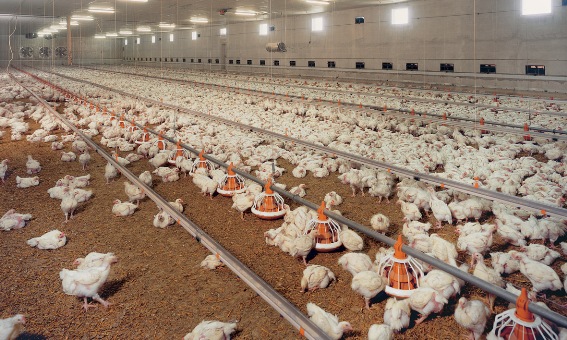


The divergence of standards between the EU and Mercosur, one by one.
AVEC published a detailed technical analysis that dissects, area by area, the regulatory differences between the requirements that European producers must meet and those applied — or, in many cases, not applied — to imports from third countries. The table reproduced below, translated in full into English, is the centrepiece of that analysis and is essential for understanding the scale of the regulatory asymmetry.
“If meeting the EU’s exemplary standards ends up causing our producers to be displaced by less sustainable imports, what is the point of setting such requirements without guaranteeing reciprocity? — Birthe Steenberg, AVEC”
STANDARDS DIVERGENCE AND MERCOSUR INDUSTRY STRUCTURE
| Subject | Requirements under EU legislation | Applied to third countries? |
Animal welfare | ||
| Specific on-farm welfare requirements for broilers — Council Directive 2007/43/EC | Maximum stocking density for broilers set by law (33–42 kg/m²; depending on prevailing factors) Permanent access to dry, friable litter across the entire floor surface Light intensity (20 lux) and lighting pattern (24-hour cycles, 6 hours of darkness) set by law Maximum levels of ammonia (20 ppm), CO₂ and relative humidity applicable when higher stocking densities are used | |
| Welfare requirements during transport — Regulation 1/2005 | All animals must be fit for the journey Maximum journey times (12 hours excl. loading and unloading) set by law Space per bird during transport specified according to live weight Authorisation and certification systems for drivers and attendants | |
Animal health | ||
| Salmonella control on farms — Regulation 200/2010 — Regulation 200/2012 | Legislation in force for farms, hatcheries, feed manufacturing and processing; implemented through National Control Plans in each Member State Mandatory testing of breeders and broilers; slaughter of breeders if positive results are obtained | |
| Avian influenza Regulation 429/2016 Regulations 687, 689 and 690/2020 | Legislation in force for surveillance, control and emergency measures | Equivalence applied to third countries, but DG SANTE audit reports have revealed problems in: Thailand, Brazil, Argentina |
| Use of antibiotics Regulation 6/2019 Regulation 4/2019 | Antibiotics may only be administered on veterinary prescription and the quantity prescribed must be limited to the treatment Preventive use of antibiotics is prohibited List of antibiotics reserved exclusively for human use Medicated feed requires a veterinary prescription, may only be prescribed for two weeks and may not contain more than one antimicrobial substance On-farm monitoring systems for antibiotic use and national surveillance of antibiotic use are mandatory | Residue monitoring plan for third countries, but DG SANTE audits show inconsistencies: Brazil |
Environment | ||
| Environmental controls Directive 2010/75 (under review) — Directive 2011/92 Regulation 1069/2009 | All farms with more than 40,000 birds and all slaughterhouses with a capacity exceeding 50 t/day must hold an environmental permit based on Best Available Techniques (BAT) Environmental impact assessment mandatory for new facilities with more than 85,000 broiler places Disposal of mortalities only by approved methods; composting, on-farm burial and disposal pits are excluded | |
Animal feed | ||
| Poultry feed Regulation 183/2005 Regulation 1372/2021 Regulation 1831/2003 (under review) Regulation 1829/2003 — Regulations 6/2019 and 4/2019 | Only specified animal by-products may be used: porcine PAP and fishmeal only; no-“cannibalism” rule + strict segregation requirements Antibiotics may not be used as growth promoters Feed manufacturers must implement and maintain HACCP systems Only authorised additives and veterinary medicines may be used Restricted list of approved GMOs for feed imports and cultivation in the EU | From 2026, an official declaration by a Brazilian veterinarian is required confirming the non-use of antibiotics as growth promoters |
Food safety | ||
| General food hygiene — Regulation 625/2017 Regulations 852/2004 and 853/2004 — Regulation 2073/2005 | The ‘farm-to-table’ approach is applied, with procedures based on HACCP principles Hygiene requirements in force for primary production (farms) and transport of live animals Additional hygiene requirements for food of animal origin Food safety criteria require absence of Salmonella Typhimurium and Enteritidis in neck-skin samples; process hygiene criteria for Salmonella and Campylobacter | Equivalence required from third countries Equivalence required from third countries Equivalence required from third countries |
| Carcass decontamination | Only the use of authorised substances is permitted; currently, for poultry in the EU only water treatment is authorised | Equivalence required from third countries |
Quality | ||
| Poultrymeat Regulation — Regulation 1337/2013 Regulation 543/2008 | Mandatory origin labelling Class A defined by law Maximum water absorption percentages specified for carcasses Maximum water/protein ratio specified by law for cuts | Applied to third countries only for fresh products (imports are generally destined for processed products and food service, where there is no obligation to indicate origin) Applied to third countries, but inconsistencies do not entail visible penalties Applied to third countries, but inconsistencies do not entail visible penalties |
Source:
-. AVEC EU-MERCOSUR agreement: Impact on Poultry Sector.